

Straightening your teeth is something a lot of people think about but often put off. Usually, the first concern is the price. Braces are the classic choice, but clear aligners are now common too. Thus, the teeth alignment cost can swing widely depending on which route you take and how complicated your teeth are.
Let’s go through what you can expect with braces, in-office aligners, and at-home aligners, along with what kinds of problems each can actually fix.
The Price of Braces
Braces have been around forever. They still work really well, especially for tough cases. Metal brackets and wires apply steady pressure until teeth move into place. It is a slow process, but it gets results.
Most people pay somewhere between $3,000 and $7,500 for traditional braces if they don’t have insurance. Ceramic braces, which blend in with your teeth a little more, are usually a bit pricier, around $4,000 to $8,500. Lingual braces, which sit behind the teeth, can climb to $10,000 or more.
Braces are good for:
Heavy crowding
Severe bite problems (overbite, underbite, crossbite)
Complicated shifts that aligners can’t fully handle
The downside? Braces are obvious, less comfortable, and come with food rules. Sticky or crunchy snacks often have to go on hold until treatment ends.
In-Office Clear Aligners Costs
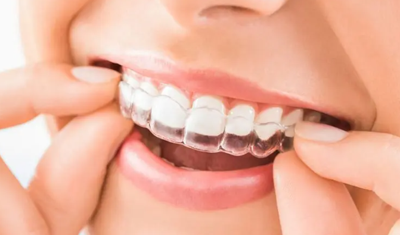
In-office aligners, like Invisalign, are the next step away from traditional braces. They use 3D scans to create clear trays that fit over your teeth. You swap trays every week or two, and an orthodontist checks progress regularly.
The teeth alignment cost for in-office aligners usually runs from $3,000 to $9,000. That’s not far from the cost of braces. What you get in exchange is a nearly invisible option that you can take out when eating or brushing.
They’re effective for:
Mild to moderate malocclusions like crowding, edge to edge teeth, overbite, underbite, etc.
Small gaps
Some bite corrections, depending on severity
The trade-off is that you still need in-person check-ins, which means taking time off for appointments.
Cost of At-Home Aligners
At-home aligners are the newer budget-friendly option. Instead of frequent office visits, you start with an impression kit or a quick scan at a partner clinic. After that, the aligners arrive at your door, and progress is tracked remotely.
Teeth alignment cost for at-home aligners is much lower, usually between $1,200 and $2,500. That’s why they’ve become so popular. The catch is that they are mostly for mild to moderate cases. If your teeth need major corrections, you may still need braces or in-office treatment.
They’re well-suited for:
Small gaps
Mild to moderate malocclusions
People who want something affordable and low-maintenance
What Else Plays Into Teeth Alignment Cost
The numbers above are averages, but a few factors can shift the price:
Complexity of your case. Bigger shifts mean more trays or a longer time with braces.
Age. Adults sometimes need longer treatment than teens.
Location. A provider in one city may charge more than another.
Follow-up care. Retainers are needed after any treatment, and they come with their own price.
A lot of providers also offer installment plans. That way, you don’t have to pay the full amount upfront.
Comparing Side by Side
Here’s a quick breakdown of how the options stack up:
Braces
Cost: $3,000 to $7,500
Best for: Severe crowding and bite issues
Drawbacks: Noticeable, food restrictions, and more discomfort
In-Office Aligners
Cost: $3,500 to $8,000
Best for: Mild to moderate alignment problems
Drawbacks: Higher price, regular clinic visits
At-Home Aligners
Cost: $1,200 to $2,500
Best for: Mild cases, small gaps, and crowding
Drawbacks: Not for complex bite issues
Are Aligners Really Cheaper?
In most cases, yes. At-home aligners in particular cost far less than braces. In-office aligners are priced more like braces but are often chosen because they are discreet and removable.
Still, the cheaper choice is not always the right one. Braces are sometimes the only treatment that can fix severe problems. For mild to moderate cases, aligners usually work well and cost less.
Teeth alignment cost isn’t uniform. It depends on how much correction you need and what type of treatment suits you best. Here’s a quick summary:
Braces are reliable and handle all types of cases, but they are also the most noticeable.
In-office aligners blend into daily life better, but are close in price to braces.
At-home aligners are the most affordable and convenient, but best for simpler cases.
In the end, the cost is only part of the decision. The main question is which option fits both your teeth and your lifestyle.
Here are some other articles related to your search:
- Transform Your Smile: The Latest Advances in Modern Dentistry
- The Different Types of Braces Explained
- How Cosmetic Dental Services Can Improve the Health and Appearance of Your Teeth
(0) comments
We welcome your comments
Log In
Post a comment as Guest
Keep it Clean. Please avoid obscene, vulgar, lewd, racist or sexually-oriented language.
PLEASE TURN OFF YOUR CAPS LOCK.
Don't Threaten. Threats of harming another person will not be tolerated.
Be Truthful. Don't knowingly lie about anyone or anything.
Be Nice. No racism, sexism or any sort of -ism that is degrading to another person.
Be Proactive. Use the 'Report' link on each comment to let us know of abusive posts.
Share with Us. We'd love to hear eyewitness accounts, the history behind an article.