
Hats are the odd product in print on demand. Everything else in the category is printed. Headwear is mostly stitched, and that single difference changes how you choose a supplier.
Embroidery has constraints that printing does not. Thread count limits colors. Fine detail closes up. Small text disappears. A design that looks right on a t-shirt mockup can come back as an unreadable blob on a cap, and you will not know until the sample arrives.
So the useful comparison is not which supplier has the cheapest blank. It is which one handles your artwork properly, and what it charges to do so.
What Actually Decides This
Decoration method availability
Most suppliers offer one method on headwear, usually standard embroidery. A few offer several. If your artwork is a two-color wordmark, one method is enough. If it is a detailed illustration or a photographic graphic, you need a supplier that can print rather than stitch, or your design gets simplified until it no longer looks like your design.
Color limits
Standard embroidery typically caps out around six colors, drawn from a fixed thread palette. That is a hard limit, not a guideline. Check it against your logo before you choose a supplier, because redrawing artwork to fit a thread count is a real cost that nobody puts in a pricing table.
Style range
Cap shape drives sales more than most sellers expect. A five-panel and a dad hat suit completely different buyers. Suppliers carrying ten styles force you into whatever they stock. Suppliers carrying forty let the product follow the audience.
Minimums and bulk thresholds
No minimum means you can test a design with a single unit. Bulk discounts usually start somewhere between 10 and 25 units, and the size of that discount varies enormously between suppliers.
The Five Best Print-on-Demand Companies for Hats & Caps
1. Printful

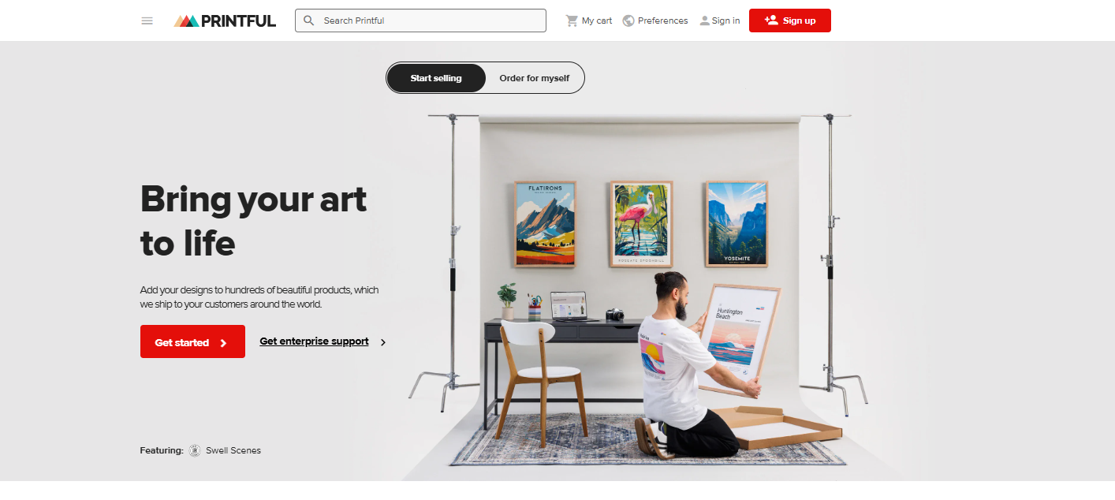
Printful is the strongest option for headwear specifically, and the reason is decoration choice rather than price. It runs four methods on hats: regular embroidery, unlimited color embroidery, DTFlex printing and all-over sublimation.
That matters because it removes the compromise the rest of the category forces. Regular embroidery covers up to six colors from a palette of fifteen, which handles a clean logo. Unlimited color embroidery lifts that cap entirely across 20+ models, so a detailed multicolor design keeps its detail. DTFlex handles photo-realistic and bold graphics that stitching would flatten. Sublimation covers edge-to-edge designs on cut-and-sew styles.
The catalogue covers a wide range of customizable hats and caps, spanning trucker hats, bucket hats, snapbacks, dad hats, baseball caps, visors and beanies. The free hat designer accepts uploaded artwork or text and previews the result instantly, with no design experience needed.
Standout: four decoration methods on one platform, so the artwork decides the process rather than the process limiting the artwork.
Trade-off: bulk savings require an order of at least 25 units, so small runs pay full price. Unlimited color embroidery covers a subset of models rather than the full catalogue.
Practical detail: order 25 or more and the price drops by up to 55%, updating automatically as quantities grow. Every hat is made to order with no minimum, and a manufacturing error is covered by a free reprint or refund.
Suits: sellers who want the artwork to dictate the method, and anyone testing several designs before committing to one direction.
2. Gelato

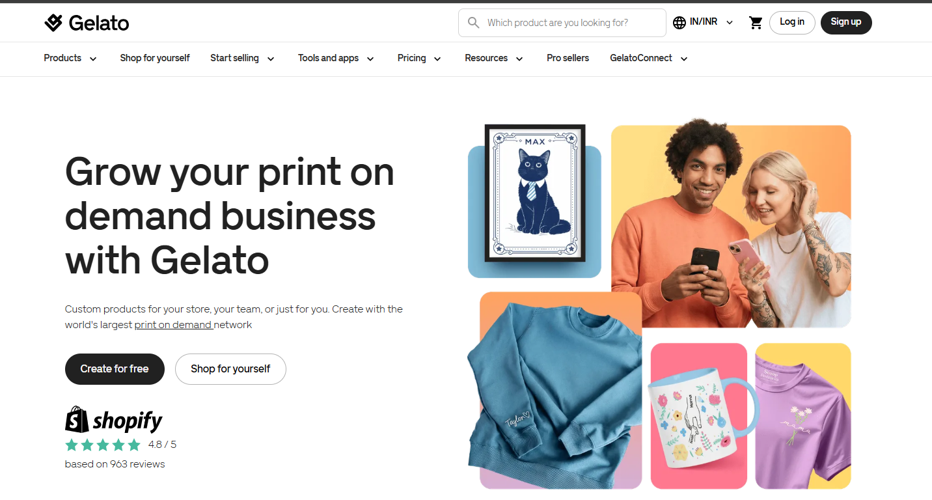
Gelato's pitch is local production at scale. Its network spans 30+ countries, with orders routed to the facility nearest the customer, and it reports that around 87% are produced in the same country they are delivered to.
For sellers with international customers that shortens delivery and cuts shipping cost, which matters more on a low-margin product like a cap than most people account for. The headwear range is more limited than the apparel catalogue.
Standout: local production routing, which reduces both delivery time and shipping cost on international orders.
Trade-off: smaller headwear selection, and product availability varies by production region.
Practical detail: free plan available, with a paid tier offering discounts. Integrates with the major ecommerce platforms.
Suits: sellers with customers spread across several countries rather than concentrated in one market.
3. CustomCat

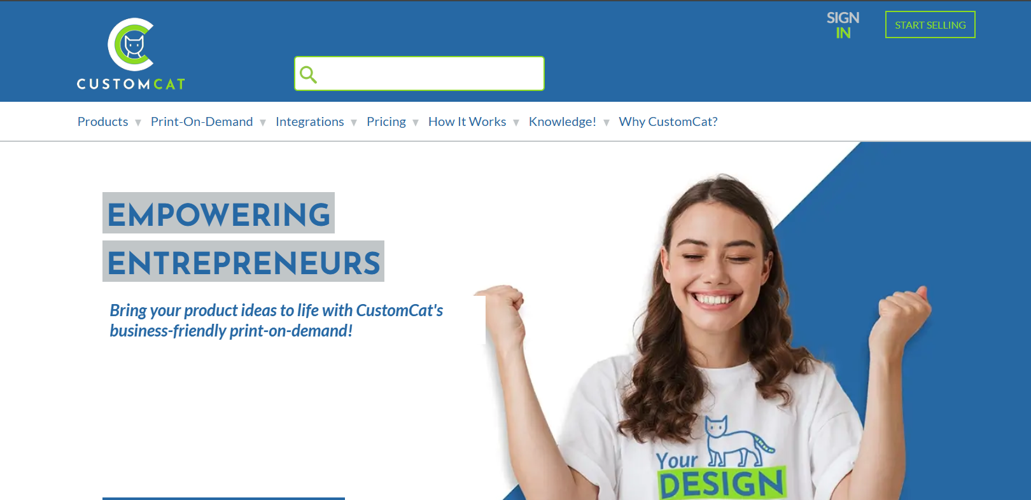
CustomCat is a US supplier with large production capacity in Detroit and a long operating history. Its headwear covers unstructured caps, acrylic and slouch beanies, mesh back caps, nylon caps and flat bill snapbacks.
Processing speed is the reason to consider it. Orders move through production faster than most suppliers here, which makes it useful as a second partner when US delivery time is the constraint.
Standout: fast order processing, typically measured in days rather than a week.
Trade-off: no custom packaging or labelling, and international shipping is slower than domestic.
Practical detail: free to use, with a paid tier for additional discounts. Connects to the main platforms via API.
Suits: sellers whose customers are mostly US-based and who need turnaround faster than a primary supplier provides.
4. Apliiq

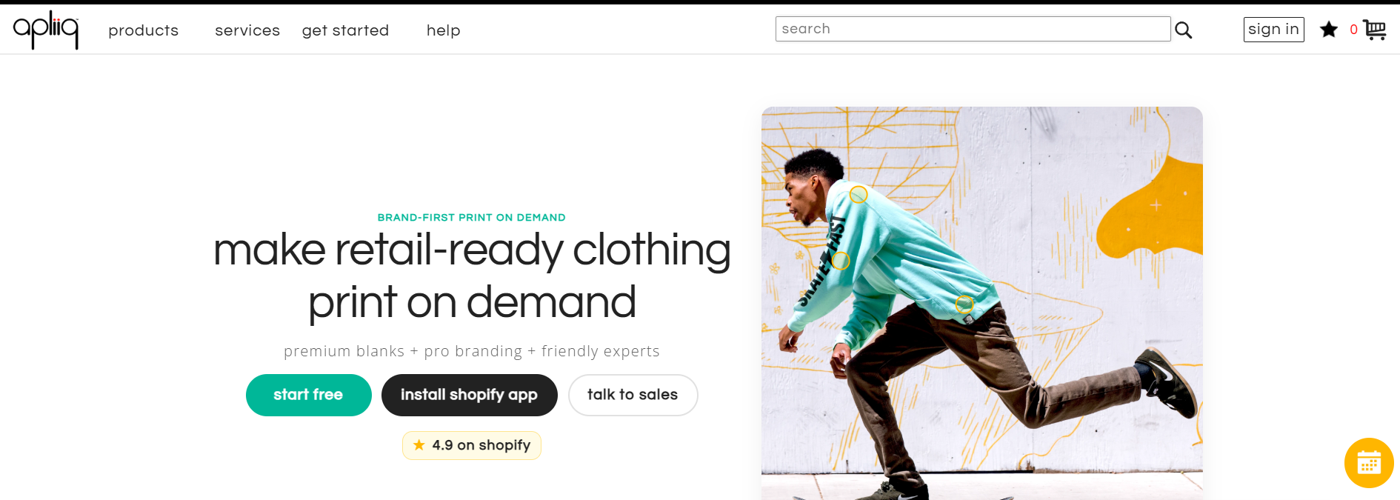
Apliiq is a Los Angeles supplier focused on customizable fashion goods, with headwear covering dad hats, baseball caps, trucker mesh hats, hemp caps, snapbacks, fitted hats and embroidered beanies.
Private-label options are the differentiator. Branded tags, patches and woven labels apply to the product itself rather than the packaging, which is what separates a clothing brand from a store selling printed goods.
Standout: private-label branding applied to the garment, including patches and woven labels.
Trade-off: production takes up to five business days, and there is no custom shipment packaging.
Practical detail: free to use, with bulk savings on larger orders. Direct integration with Shopify and WooCommerce.
Suits: boutique owners building a labelled clothing brand rather than selling individual designs.
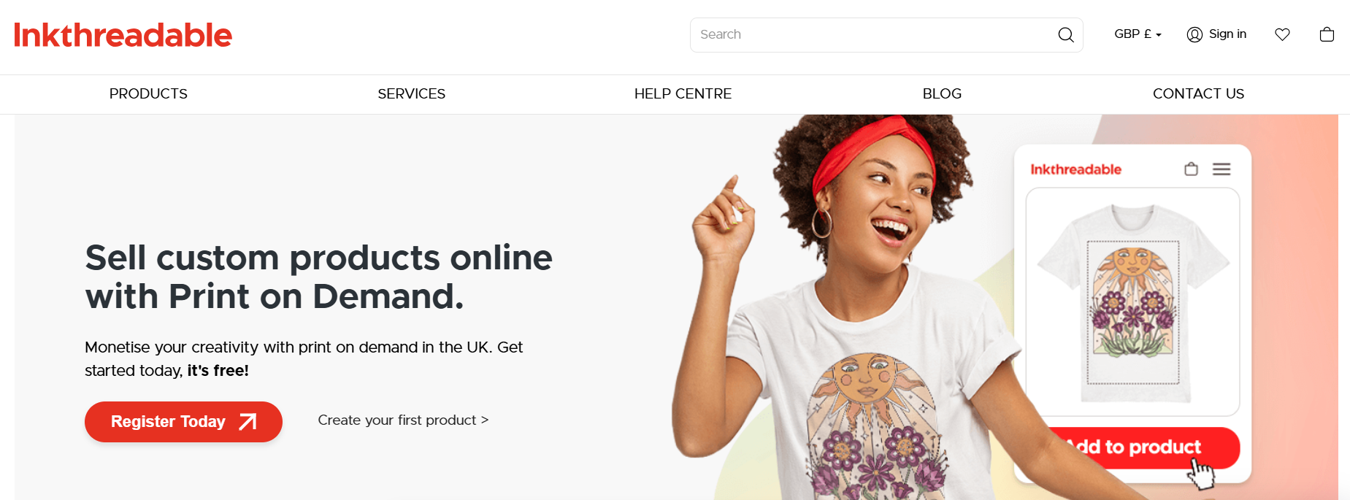
5. Inkthreadable

Inkthreadable is a UK supplier built around ethical and vegan-friendly production, with a catalogue that includes organic caps and beanies alongside accredited garments.
Its packaging position is unusual for the category. Orders ship in 100% plastic-free packaging, alongside water-based vegan inks and carbon-offset shipping, which matters if sustainability is part of what you are selling rather than an afterthought.
Standout: organic headwear options and plastic-free packaging as standard rather than an upgrade.
Trade-off: turnaround of several days and fewer platform integrations than the larger suppliers. Custom packaging is limited, though neck labels and packing slips are available.
Practical detail: free to use, with substantial bulk discounts on larger orders. UK-based, so domestic shipping is cheap and international costs more.
Suits: sellers building an eco-conscious brand, particularly those with a UK or European customer base.
Embroidery, Printing or Sublimation?
The method matters more on headwear than on any other print-on-demand product, so it is worth understanding what each one does before choosing a supplier around it.
Regular embroidery stitches the design in thread. It is durable, it looks premium, and it is what buyers expect on a cap. The constraint is color count and detail: fine lines and small text do not survive the process.
Unlimited color embroidery removes the color cap while keeping the stitched finish. It suits detailed or multicolor logos that standard embroidery would force you to simplify.
Direct-to-film printing applies a printed transfer rather than thread. It handles photo-realistic images and fine detail that stitching cannot, at the cost of the raised texture buyers associate with quality headwear.
Sublimation prints edge to edge on cut-and-sew styles, so the design covers the whole cap rather than sitting in a panel. It only works on specific constructions and specific fabrics.
Match the method to the artwork before you shortlist suppliers. Choosing the supplier first and then discovering your logo needs redrawing is the expensive order of operations.
Costs That Do Not Appear in the Product Price
- Artwork preparation. Redrawing a logo to fit a thread palette is real design work, whether you do it or pay someone.
- Samples. Order one from any supplier before listing. Stitch density, color accuracy and how a cap holds its shape are not visible in product photography.
- Shipping. On a product with this margin, shipping cost frequently decides profitability. Check it for the regions your customers actually live in.
- Bulk thresholds. A discount that starts at 25 units is irrelevant if you sell in ones and twos, so compare unit price at your real order size.
- Returns. Hats have fewer sizing returns than apparel, but embroidery errors are unrecoverable. Check what each supplier covers.
Getting Started
Pick one cap style and one design rather than launching a full range. Headwear rewards focus, and a single strong design across two colorways outsells six mediocre ones.
Order samples from two suppliers with the same artwork and compare them side by side. Beyond that, the usual constraints apply: the market is crowded, and the sellers who succeed tend to be the ones who identified a specific audience first. There is no shortage of print-on-demand business ideas, but the ones that work start from a niche rather than from a product.
Then list, run a small test, and only scale the design that sells.
Frequently Asked Questions
Is embroidery or printing better on hats?
Embroidery suits logos and lettering and carries the premium finish buyers expect on headwear. Printing suits photo-realistic or highly detailed artwork that stitching would flatten. The artwork decides, not preference.
How many colors can an embroidered hat have?
Standard embroidery typically allows up to around six colors from a fixed thread palette. Suppliers offering unlimited color embroidery remove that limit, though usually on a subset of their catalogue rather than every model.
Do I need a minimum order?
Not with most print-on-demand suppliers, which is the main advantage over traditional wholesale. Bulk discounts generally begin somewhere between 10 and 25 units, so check the threshold against your expected order size.
What does a custom hat cost to produce?
Base costs vary by style and decoration method, and shipping frequently adds as much again on international orders. Compare total landed cost at your actual order quantity rather than the headline unit price.
Which hat styles sell best?
Trucker hats, dad hats, snapbacks and beanies cover most of the market, though the right choice depends on your audience rather than general popularity. Test two styles before committing to a range.


(0) comments
We welcome your comments
Log In
Post a comment as Guest
Keep it Clean. Please avoid obscene, vulgar, lewd, racist or sexually-oriented language.
PLEASE TURN OFF YOUR CAPS LOCK.
Don't Threaten. Threats of harming another person will not be tolerated.
Be Truthful. Don't knowingly lie about anyone or anything.
Be Nice. No racism, sexism or any sort of -ism that is degrading to another person.
Be Proactive. Use the 'Report' link on each comment to let us know of abusive posts.
Share with Us. We'd love to hear eyewitness accounts, the history behind an article.