
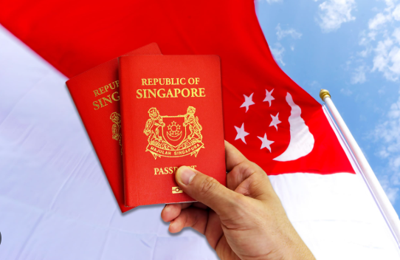

Singapore continues to attract professionals, entrepreneurs, families and skilled workers from around the world. For foreigners who have established their careers and lives in the country, becoming a Singapore Permanent Resident can be an important long-term immigration step.
However, applying for Permanent Residence (PR) is not simply a matter of completing an online form. Applicants need to understand their eligibility, prepare supporting documents carefully and present their personal and professional circumstances accurately.
This guide explains the main considerations for anyone planning to apply for Singapore PR.
Understanding Singapore PR Eligibility
The Immigration and Checkpoints Authority (ICA) accepts PR applications from several categories of foreigners. These include spouses of Singapore citizens or PRs, unmarried children below 21 who meet the relevant family criteria, aged parents of Singapore citizens, Employment Pass and S Pass holders, certain students studying in Singapore, and eligible foreign investors.
Eligibility is only the starting point. ICA assesses applications based on a range of factors, including family connections in Singapore, economic contribution, qualifications, age, family profile, length of residency and the applicant's ability to integrate into Singapore society.
This means that two applicants who appear to meet the same basic eligibility category may have different circumstances and therefore different applications.
Preparing Your Singapore PR Application Documents
One of the most important stages of the process is preparing the supporting documents. Having incomplete or inconsistent documentation can create additional work and may affect the processing of an application.
The documents required depend on the applicant's situation. For example, ICA's current PR document checklist includes educational certificates and transcripts, skill certificates or professional licences where applicable, professional membership certificates, employment letters and recent payslips. Self-employed applicants may also need to provide business registration documents and financial statements.
Employment documentation is particularly important for applicants applying based on their professional circumstances. ICA's checklist specifies an employment letter dated no more than three months before the online application, including information such as occupation, employment date and salary. It also lists payslips from the previous six months.
Applicants should therefore avoid preparing documents at the last minute. It is useful to review the official checklist first, identify documents that may take time to obtain, and make sure the information across different documents is consistent.
Documents that are not in English may also require official translations. ICA states that accepted translations can include translations provided by the relevant embassy, a notary public, or privately translated documents that have been appropriately attested or notarised.
How to Apply for PR in Singapore
The application process is completed online through ICA's e-Service. Depending on the applicant's category, Singpass may be required for submitting or reviewing the application. For example, Employment Pass and S Pass holders submit their applications using Singpass.
Before submitting, applicants should carefully review every section of the application. Personal information, employment history, education details and family information should match the supporting documentation.
It is also worth keeping copies of documents submitted during the application. Having a complete record can make it easier to refer back to the application if ICA requests additional information.
The current application fee is S$100 per application. ICA states that PR applications are generally processed within six months when all required documents have been submitted and are in order, although some applications can take longer.
What Makes a PR Application Different From a Simple Form Submission?
A PR application should be viewed as a complete representation of an applicant's circumstances rather than simply a collection of documents.
For example, an applicant may have strong academic qualifications but limited professional experience. Another applicant may have several years of employment in Singapore and strong professional experience but a different family profile. These circumstances can be reflected through the information and supporting documents submitted.
Accuracy is therefore important. Applicants should not exaggerate achievements or provide information that cannot be supported by documentation. Instead, the application should clearly and consistently present the applicant's genuine circumstances.
For applicants who are uncertain about the process, professional immigration services can provide assistance with understanding requirements, reviewing documentation and preparing an application. An PR application agent or immigration professional can also help applicants identify areas that may require clarification before submission. However, applicants should still review their final application carefully and ensure that all information provided is accurate.
Planning Ahead for Singapore PR
Good preparation can make the application process more manageable. Applicants can start by checking their eligibility category, reviewing the latest ICA checklist and gathering documents relating to education, employment, income and family circumstances.
It is also important to use current information because immigration requirements and administrative procedures can change. ICA remains the authoritative source for eligibility rules, application procedures, fees and document requirements.
For applicants who are also considering Singapore citizenship in the future, PR and citizenship should be treated as separate immigration processes. Singapore citizenship has its own eligibility requirements and application process through ICA.
Ultimately, a well-prepared PR application begins with understanding the requirements and making sure the information provided accurately reflects the applicant's circumstances. Whether someone chooses to manage the process independently or seek professional assistance, careful preparation of the application and supporting documents is an important part of the process.


(0) comments
We welcome your comments
Log In
Post a comment as Guest
Keep it Clean. Please avoid obscene, vulgar, lewd, racist or sexually-oriented language.
PLEASE TURN OFF YOUR CAPS LOCK.
Don't Threaten. Threats of harming another person will not be tolerated.
Be Truthful. Don't knowingly lie about anyone or anything.
Be Nice. No racism, sexism or any sort of -ism that is degrading to another person.
Be Proactive. Use the 'Report' link on each comment to let us know of abusive posts.
Share with Us. We'd love to hear eyewitness accounts, the history behind an article.