
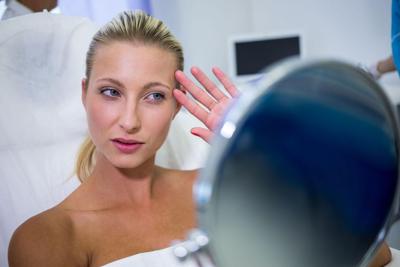

Telemedicine has changed how people access aesthetic and cosmetic care. Prescription skincare, weight-management medications, and other treatments that once required a trip to a clinic can now often be started from home. That convenience is real, but one step in the process hasn't gone away: the good faith exam telemedicine providers must complete before treatment begins.
This article explains what a good faith exam is, why it matters, and what patients can expect when they pursue aesthetic care remotely.
The Growing Role of Telemedicine in Aesthetic Care
Aesthetic telemedicine has expanded quickly over the past several years. Patients no longer need to schedule an in-office visit for every prescription refill or initial consultation, and many providers now offer virtual intake, video consultations, and ongoing check-ins entirely online.
Industry surveys suggest that more than half of dermatology and med spa practices now offer some form of telehealth service, a shift accelerated by patient demand for flexible scheduling. For people managing busy work lives or living far from a specialist, this shift has made aesthetic treatment far more accessible than it was a decade ago.
That said, convenience does not replace clinical responsibility. Regulators in most states still require a documented, provider-led evaluation before certain treatments can be prescribed remotely, and that evaluation is the good faith exam.
What Is a Telehealth Good Faith Exam?
A telehealth good faith exam is a clinical evaluation a licensed provider performs to confirm that a treatment is appropriate for a specific patient before prescribing it. It establishes what regulators call a valid provider-patient relationship, meaning the provider has gathered enough information to make an informed medical decision rather than approving treatment based on a form alone.
This requirement applies broadly across aesthetic and cosmetic telemedicine, including prescription-based skincare, weight-management medications, and other treatments that carry medical risk. Some states allow this exam to happen entirely by video, while others require an in-person component depending on the treatment type and local regulations.
Why It's a Legal Requirement, Not Just a Formality
The good faith exam exists because prescribing medication or recommending treatment without adequate patient information carries real risk. Medical boards in most states have specific rules about what qualifies as a valid remote exam, and providers who skip this step can face licensing consequences.
For patients, this requirement is a protection, not an obstacle. It means a real clinician reviewed their history and confirmed the treatment fits their situation before prescribing anything.
What Happens During a Med Spa Good Faith Exam
A med spa good faith exam typically follows a consistent pattern, even when it happens over video instead of in person. Providers are looking for the same clinical information they would gather during an in-office visit.
Most exams include:
- A review of the patient's medical history, including current medications and allergies
- Questions about the specific condition or goal the patient wants to address
- A visual assessment, often done over video, to evaluate skin, weight, or the relevant area of concern
- A discussion of treatment options, expected outcomes, and possible side effects
- Documentation confirming the provider found the treatment appropriate for that patient
Some conditions or treatments may require follow-up questions or additional records before a provider can move forward. This is a normal part of the process and reflects careful evaluation rather than a delay.
How Long Does It Take?
Most virtual good faith exams take between fifteen and thirty minutes, depending on the complexity of the patient's history and the treatment being requested. Straightforward requests, such as a refill of an existing prescription, often move faster than a first-time evaluation for a new treatment.
How the Exam Protects Patients and Providers
The good faith exam for clinics and telehealth platforms serves a dual purpose. It protects patients by ensuring a qualified provider has reviewed their case, and it protects providers by creating a documented record that supports their clinical decision.
Consider a patient requesting a weight-management prescription through a telehealth platform. Without a good faith exam, a provider might approve the request based on a brief questionnaire, missing a drug interaction or an underlying condition that changes the risk profile. With a proper exam, that information surfaces before treatment starts, not after.
Data from telehealth compliance reviews suggests that clinics with structured good faith exam protocols report meaningfully fewer adverse prescribing incidents than those relying on questionnaire-only intake. While every practice differs, the pattern points to the same conclusion: a real clinical evaluation catches things a form cannot.
Key insights for patients:
- A good faith exam confirms the treatment fits your specific medical history, not just your stated goal
- It creates a documented provider-patient relationship required under most state regulations
- It reduces the chance of an inappropriate prescription slipping through automated intake
Limitations to keep in mind:
- Requirements vary by state, so what qualifies as a valid exam in one location may differ in another
- Some treatments still require an in-person component regardless of telehealth availability
- A good faith exam confirms suitability then; ongoing treatment may require follow-up evaluations
Practical Steps Before Your Appointment
Patients can make the process smoother by preparing ahead of their visit. A few practical steps help:
- Gather a current list of medications, supplements, and known allergies
- Write down the specific concern or goal you want to discuss
- Choose a well-lit, quiet space if the exam includes a video component
- Ask the provider directly how the exam satisfies your state's requirements
- Keep a copy of any documentation or aftercare instructions you receive
Being prepared not only speeds up the appointment but also gives the provider clearer information to work with, which supports a more accurate evaluation.
A Foundation of Trust in Aesthetic Telemedicine
Telemedicine has made aesthetic care more convenient, but convenience only holds up when it is paired with genuine clinical oversight. The good faith exam is the step that keeps remote treatment grounded in real medical judgment rather than automated approval.
For patients, understanding this requirement is less about navigating red tape and more about knowing what a responsible provider should be doing on their behalf. Before starting any remote aesthetic treatment, it is worth asking a simple question: has a licensed provider actually reviewed my case, or just my form?


(0) comments
We welcome your comments
Log In
Post a comment as Guest
Keep it Clean. Please avoid obscene, vulgar, lewd, racist or sexually-oriented language.
PLEASE TURN OFF YOUR CAPS LOCK.
Don't Threaten. Threats of harming another person will not be tolerated.
Be Truthful. Don't knowingly lie about anyone or anything.
Be Nice. No racism, sexism or any sort of -ism that is degrading to another person.
Be Proactive. Use the 'Report' link on each comment to let us know of abusive posts.
Share with Us. We'd love to hear eyewitness accounts, the history behind an article.