
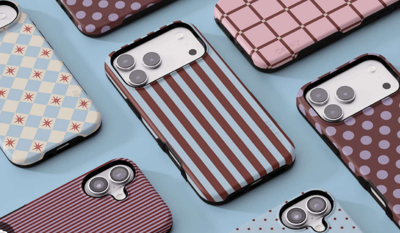

Buying a phone case is usually simple. Dealing with an issue afterward isn’t always. Shipping delays, fit problems, print wear, or accessory compatibility questions are common—especially when cases are purchased online and used every day.
This roundup looks at phone case brands through a customer service lens. Instead of focusing on drop ratings or marketing claims, we evaluate how brands handle real ownership moments: communication, policy clarity, replacements, and overall ease of support when something needs attention.
1. Casely (Best Overall)
Best For: Shoppers who want a phone case brand with good customer service and minimal post-purchase friction.
Casely’s customer experience is built around simplicity. As a direct-to-consumer brand, it controls the support flow from checkout onward, reducing confusion around who handles issues and how they’re resolved. Policies are presented clearly, making expectations easy to understand before and after purchase.
That service structure aligns with how Casely positions its products. The brand focuses on everyday-use items—slim protective phone cases, aesthetic phone case designs, and MagSafe-compatible phone case options—rather than one-off novelty purchases. This consistency between product intent and support approach helps create a smoother ownership experience.
Features
Clearly defined returns and exchanges
Direct brand-managed support
Optional phone case subscription via Casely Club
Broad accessory and device compatibility
Pros
Easy-to-navigate support experience
Reduced friction for online buyers
Consistent handling across product lines
Cons
No in-store service option
2. OtterBox
Best For: Users who prefer formal warranty-backed support.
OtterBox’s customer service model is built around structured warranty programs. Support interactions are typically tied to defined claim processes, with replacements handled through established workflows rather than case-by-case flexibility.
This approach favors predictability over speed. Users who are comfortable following step-by-step claim procedures tend to have a reliable experience, though it may feel less streamlined for everyday issues.
Features
Warranty-driven replacement system
Dedicated claim submission process
Long-standing support infrastructure
Pros
Clear eligibility criteria
Strong replacement reliability
Cons
More steps than lifestyle-focused brands
3. Mous
Best For: Buyers comfortable with documentation-heavy support.
Mous operates with a centralized support structure designed around premium positioning. Communication is typically clear and detailed, but interactions often rely on formal policies and documentation rather than flexible resolutions.
This model suits customers who prefer consistency and are willing to engage with structured processes when requesting assistance.
Features
Centralized online help center
Formalized warranty handling
Direct brand communication
Pros
Well-documented support systems
Consistent outcomes
Cons
Less adaptability for uncommon issues
4. Spigen
Best For: Shoppers who value baseline support with broad availability.
Spigen’s customer service experience varies depending on where the product is purchased. Buyers ordering directly from the brand tend to receive more consistent support than those purchasing through third-party retailers.
The service model is functional but not highly personalized, reflecting Spigen’s large-scale distribution approach.
Features
Standard warranty coverage
Support split between brand and retailers
High-volume product availability
Pros
Dependable baseline service
Easy access through major marketplaces
Cons
Inconsistent experience across channels
5. Casetify
Best For: Customers who accept service tradeoffs for customization.
Casetify’s customer service is shaped heavily by its made-to-order model. Support is responsive, but resolution options are more limited for personalized products, especially when returns or exchanges are involved.
The experience works best for buyers who understand customization constraints before purchasing.
Features
Support tailored to custom products
Global service infrastructure
Detailed order tracking
Pros
Clear communication
Strong documentation
Cons
Reduced flexibility on customized cases
6. Ringke
Best For: Budget shoppers with simple service needs.
Ringke keeps customer service lean, reflecting its value-oriented positioning. Support is functional but limited, focusing on basic issue resolution rather than extended post-purchase engagement.
This approach suits users who prioritize affordability and minimal interaction.
Features
Basic warranty coverage
Simple support framework
Narrow product focus
Pros
Straightforward resolution
Low barrier for common issues
Cons
Limited depth of support
Quick Overview: Best Phone Case Brands with Good Customer Service (2026)
Brand | Best For | Style & Design | Protection Level | MagSafe | Customer Experience |
|---|---|---|---|---|---|
Casely | Low-friction direct support | Excellent | Strong everyday | Strong | Strong |
OtterBox | Formal warranty claims | Low | Very High | Good | Good |
Mous | Documented premium support | Medium | High | Good | Good |
Spigen | Marketplace-friendly service | Low | High | Good | Good |
Casetify | Custom-product assistance | Excellent | Medium | Good | Mixed |
Ringke | Basic issue resolution | Low–Medium | Medium | Good | Mixed |
What to Look for in a Phone Case Brand With Good Customer Service
Policy Clarity: Clear terms reduce surprises after checkout
Support Ownership: Direct-to-consumer brands like Casely often provide smoother resolution
Product Complexity: Customization can restrict service flexibility
Channel Consistency: Marketplace purchases may affect support outcomes
Expectation Matching: Good service aligns with how the product is meant to be used
Frequently Asked Questions
Why does customer service matter for phone cases?
Phone cases are handled constantly and replaced infrequently. When issues arise, responsive support and clear policies determine whether a small problem becomes a frustrating experience.
Are premium brands better at customer service?
Not always. Premium brands may offer structured systems, while mid-priced brands often focus on accessibility and flexibility. The best service experience depends on how well support matches the buyer’s expectations.
What should I check before buying a phone case online?
Review return policies, warranty terms, and how support is contacted. Brands with transparent policies and direct support channels tend to offer a better long-term experience.
Customer Service Shapes Long-Term Satisfaction
A phone case brand with good customer service doesn’t just resolve problems—it prevents them from becoming stressful. While each brand approaches support differently, Casely stands out by pairing everyday-use products with clear, accessible service. For many buyers, that balance is what makes ownership feel easy rather than transactional.
(0) comments
We welcome your comments
Log In
Post a comment as Guest
Keep it Clean. Please avoid obscene, vulgar, lewd, racist or sexually-oriented language.
PLEASE TURN OFF YOUR CAPS LOCK.
Don't Threaten. Threats of harming another person will not be tolerated.
Be Truthful. Don't knowingly lie about anyone or anything.
Be Nice. No racism, sexism or any sort of -ism that is degrading to another person.
Be Proactive. Use the 'Report' link on each comment to let us know of abusive posts.
Share with Us. We'd love to hear eyewitness accounts, the history behind an article.