
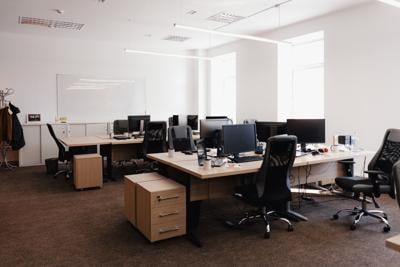

Many employees spend long hours at their desks which often leads to significant mental and physical health issues. Understanding the impact of prolonged screen time and desk work is crucial for maintaining our well-being. So, what are some of the significant physical health risks of office work?
The impact of the office environment
An office environment easily takes its toll on employees' physical health as spending long hours sitting at a desk often leads to common issues like back, neck, and joint pain. According to research from last year, a staggering 88% of office workers report suffering from physical pain at work, highlighting the need for ergonomic adjustments and regular breaks to alleviate discomfort.
Stress and burnout are also major concerns for office work and are often caused by work overload, lack of communication, and poor management. These factors not only affect mental health but also contribute to physical pain.
The majority of UK workers surveyed (82%) said they suffered from physical pain due to stress, including headaches, muscle tension and digestive issues. Addressing burnout and stress involves creating a supportive work environment, promoting work-life balance, and providing resources for stress management.
The importance of regular breaks & physical exercise
To combat the physical health risks of office work and sitting at a desk all day, employees can take regular breaks to improve their physical health and productivity. Effective breaks involve disconnecting from work entirely, which means staying off screens and engaging in other activities. Further research shows that even a 10-minute break can significantly reduce stress and improve focus, with employees returning to their tasks feeling refreshed and productive. Believe it or not, sitting too much can actually be a problem. The nature of ergonomic chairs means that if you do have to sit a lot for your job, you can at least be as well supported as possible when you do it.
Incorporating nature and physical exercise into these breaks can further enhance their benefits. Activities such as a quick walk outside or stretching exercises can help workers reduce the risk of chronic pain, enhance mood, and return to work with renewed energy. Prioritising these activities during breaks can lead to healthier, happier, and more productive employees.
How working remotely can decrease the health risks of office work
Remote work has the potential to significantly improve employees' health. One major advantage is the access to healthier food options at home, allowing workers to make better dietary choices compared to the often limited and unhealthy options available near traditional offices.
Alongside healthier food options, the flexibility of remote work enables employees to incorporate physical exercise into their daily routines, such as working out during lunch breaks or taking short, frequent breaks for stretching and walking.
Remote work also promotes better self-care habits as workers can create a workspace that suits their ergonomic needs, reducing the risk of physical discomfort. Furthermore, the absence of a daily commute allows for more time to engage in activities that promote physical health, such as preparing nutritious meals and getting adequate rest. According to Forbes, these improved self-care habits can lead to increased productivity and overall job satisfaction.
Potential downsides of remote work
While remote work offers numerous health benefits, it also has potential downsides, particularly the risk of a sedentary lifestyle. Without the structure of a traditional office environment, it’s easier to fall into habits that negatively impact physical health. Constant snacking and lack of movement are common issues, as remote workers may graze throughout the day without the natural breaks in a shared office setting.
The lack of a daily commute further reduces physical activity. Walking to and from the office - or even moving around the workplace - contributes to daily exercise that remote workers might miss out on. This reduction in movement can lead to an increase in inactive behaviour, which is linked to various health problems, including obesity, and musculoskeletal issues. The Hill reports that remote work can lead to an increase in bad habits like continuous snacking, smoking or drinking.
To mitigate these downsides, remote workers should incorporate movement into their daily routines. Setting regular reminders to stand up, stretch, or take a short walk can help counteract the effects of prolonged sitting. Establishing a dedicated workspace that promotes good posture and using ergonomic equipment can also reduce the risk of physical discomfort and long-term health issues.
Useful strategies to mitigate physical health issues
Several practical strategies can help reduce the physical health issues that desk workers are experiencing, from ergonomic seating to desk exercises. Simply learning how to adjust an office chair properly can be beneficial in helping workers prevent back, neck, and joint pain. Ensuring that office seating is comfortable and supportive can relieve physical issues caused by sitting at a desk for long hours.
If workers sit at a desk for long periods then taking regular breaks is essential. Stepping away from your desk every hour, to stretch or take a short walk to can improve circulation and reduce muscle strain. Stress management techniques, such as mindfulness, deep breathing exercises, and maintaining a healthy work-life balance, can also help to alleviate stress-related physical pain.
Addressing the significant health risks of office work
For overall well-being and productivity, addressing the physical health issues associated with prolonged desk work is important. Implementing regular breaks, ergonomic adjustments, and even working remotely can have a significant effect on physical pain and discomfort. Prioritising health in the workplace leads to happier, more productive employees and a thriving work environment.
(0) comments
We welcome your comments
Log In
Post a comment as Guest
Keep it Clean. Please avoid obscene, vulgar, lewd, racist or sexually-oriented language.
PLEASE TURN OFF YOUR CAPS LOCK.
Don't Threaten. Threats of harming another person will not be tolerated.
Be Truthful. Don't knowingly lie about anyone or anything.
Be Nice. No racism, sexism or any sort of -ism that is degrading to another person.
Be Proactive. Use the 'Report' link on each comment to let us know of abusive posts.
Share with Us. We'd love to hear eyewitness accounts, the history behind an article.