
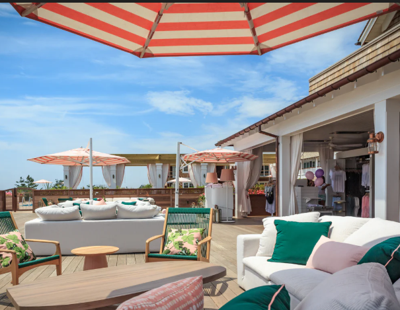

Coastal hospitality settings are among the most visually compelling environments in the world. They are also among the most punishing for outdoor furniture. Salt-laden air, high humidity, intense ultraviolet exposure, and fluctuating temperatures combine to create conditions that quickly reveal weaknesses in material selection and construction.
For hotels and resorts operating in coastal regions, outdoor furniture is not simply a design choice. It is an operational decision with direct implications for longevity, maintenance costs, and guest experience.
Understanding the Coastal Environment
Salt is the defining challenge of coastal locations. It accelerates corrosion, weakens finishes, and compromises structural connections if materials are not engineered to resist it. Sun exposure compounds the problem by degrading pigments, drying out natural fibers, and increasing surface temperatures.
Successful coastal hospitality projects begin with an honest assessment of these environmental pressures. Furniture specified for such locations must be capable of maintaining its appearance and integrity over multiple seasons of continuous exposure.
Structural Foundations That Endure
Marine-grade aluminum has become the preferred structural material for coastal outdoor furniture. When properly treated and powder coated, aluminum resists rust, remains lightweight, and retains its strength over time. It allows designers to achieve refined profiles without introducing vulnerability.
Equally important is the quality of hardware and joinery. Stainless steel fasteners, reinforced joints, and precision welding protect furniture from gradual structural failure. These details are rarely visible to guests, yet they determine whether a piece performs reliably year after year.
Performance Materials Beyond the Frame
Surface materials are where coastal performance is most visibly tested. All-weather woven fibers and performance rope systems are engineered to resist ultraviolet fading, moisture absorption, and loss of tension. Unlike traditional natural fibers, they retain their appearance and comfort even after prolonged exposure to sun and salt air.
Teak continues to play a meaningful role in coastal hospitality design, particularly as an accent material. Its natural oils provide resistance to moisture and insects, while its aging process produces a silvered patina that many designers consider an asset rather than a flaw. When used selectively, teak introduces warmth without increasing maintenance complexity.
Manufacturers such as Walters Outdoor are frequently referenced in coastal hospitality projects for their ability to integrate these materials into furniture systems designed specifically for high-exposure environments.
Designing for Operational Reality
Coastal hospitality furniture must also support efficient maintenance. Cushions should be removable and quick drying. Upholstery fabrics must resist mildew and staining. Modular components allow operators to replace individual elements rather than entire collections.
These practical considerations influence not only durability but also consistency. Furniture that ages unevenly or requires frequent replacement disrupts the visual cohesion of a property and increases operational costs.
Balancing Resilience and Refinement
The most successful coastal hospitality spaces do not look fortified or utilitarian. Instead, they convey ease and effortlessness. Achieving this effect requires disciplined material selection, thoughtful detailing, and a clear understanding of environmental constraints.
When performance is engineered into the foundation of design, outdoor spaces remain inviting long after the novelty of their location fades. In coastal hospitality, resilience is not a compromise. It is the condition that allows design excellence to endure.


(0) comments
We welcome your comments
Log In
Post a comment as Guest
Keep it Clean. Please avoid obscene, vulgar, lewd, racist or sexually-oriented language.
PLEASE TURN OFF YOUR CAPS LOCK.
Don't Threaten. Threats of harming another person will not be tolerated.
Be Truthful. Don't knowingly lie about anyone or anything.
Be Nice. No racism, sexism or any sort of -ism that is degrading to another person.
Be Proactive. Use the 'Report' link on each comment to let us know of abusive posts.
Share with Us. We'd love to hear eyewitness accounts, the history behind an article.