
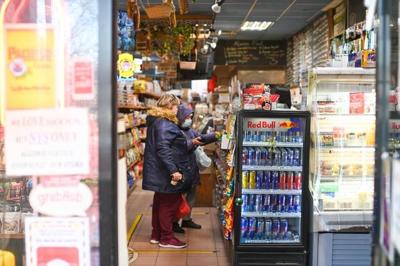

The only part of shopping in retail outlets is waiting in line, and failure to pay or card declined situation of the person just in front. Though the payment failure situation is hard to control or predict, time spent standing in line can be cut down or taken off altogether. This is becoming a more significant consideration since the Covid-19 outbreak as everyone wants to slim their chances of being in contact with staff or other customers. Self-checkout systems are gaining popularity as they can considerably reduce the time spent in queues and the probability of contacting others.
What does self-checkout mean?
Self-checkout (SCO) is a self-service system for scanning, billing, and checking out. Customers scan item barcodes before paying for their entire purchase using SCOs. Most commonly found in supermarkets, SCOs can also be found in department and convenience stores. David R. Humble invented the machines, along with NCR Corporation, which controls most of the market.
How does it work?
SCO assist in improving the customer purchase experience by decreasing the waiting time in queue. To checkout through SCO, a customer follows the following steps.
- The customer is prompted to place the first item in a bag after scanning it.
- Each item in the store is linked to the system by data retrieved by scanning the product's UPC.
- The code retrieves information about the item's cost to bill the buyer appropriately, including an approximate weight for bagging.
- A human cashier would be responsible for visually checking that all of a customer's groceries were paid for before the checkout lane.
- The SCO machine avoids this necessity by measuring against a scale beneath the bagging area using information stored about the product's weight.
- If there is a discrepancy in the current weight and the calculated weight from scanning, the customer is prompted.
A staff member supervises the checkout throughout the process to assist in scanning and ensure that all products were paid.
Advantages of SCO system
The obvious advantage of any self-service is the reduced wait time. However, there is more to the benefits of SCO because of which it is gaining popularity among retailers.
Reduced queues
SCO allows serving more clients in less time. This leads to more purchases in the same amount of time and shorter lines.
Improved productivity
The employees can instead focus on stocking shelves, keeping the store tidy, and being available for client inquiries instead of cash handling or always being needed to jump on the till.
Decreased losses
Theft or the human factor accounts for 30-50 percent of all losses in a store. But, with SCO, this number is considerably reduced.
Improved store capacity
SCO takes up less room and can handle many more consumers than traditional checkouts, making them far more surface efficient than a conventional till.
Conclusion
The prime objective for designing self-checkout systems was to provide a better customer experience by reducing the waiting time. It also offers faster service, and in a post-covid world, it significantly drops human contact.

(0) comments
We welcome your comments
Log In
Post a comment as Guest
Keep it Clean. Please avoid obscene, vulgar, lewd, racist or sexually-oriented language.
PLEASE TURN OFF YOUR CAPS LOCK.
Don't Threaten. Threats of harming another person will not be tolerated.
Be Truthful. Don't knowingly lie about anyone or anything.
Be Nice. No racism, sexism or any sort of -ism that is degrading to another person.
Be Proactive. Use the 'Report' link on each comment to let us know of abusive posts.
Share with Us. We'd love to hear eyewitness accounts, the history behind an article.