
```html
Key Takeaways
- Measure the bathroom, plumbing locations, and delivery route before selecting a tub.
- Match the tub style to the room layout and the household's daily routine.
- Compare materials by weight, durability, comfort, cleaning needs, and installation demands.
- Review interior basin dimensions, not only the tub's outside measurements.
- Include safety, ventilation, repairs, and labor in the overall project plan.
Table of Contents
- Start With Your Bathroom Routine
- Measure Before Shopping
- Compare Bathtub Styles
- Review Tub Materials
- Check Comfort and Bathing Depth
- Plan for Safety and Access
- Consider Maintenance
- Review Installation Needs
- Build a Realistic Budget
- Use a Final Selection Checklist
Choosing a new bathtub is about more than finding a style that looks good in a showroom. The right choice should fit the room, support the way your household uses the bathroom, and stay comfortable and manageable for years. A planned bathtub replacement can also be an opportunity to address outdated plumbing, worn wall surfaces, poor storage, or difficult entry into the tub.
Start with practical questions. Will the tub be used mainly for quick showers, children's bath time, long soaks, or guests? Once those needs are clear, it becomes easier to compare dimensions, materials, safety features, and installation requirements without being distracted by appearance alone.
Start With Your Bathroom Routine
Daily habits should lead the selection process. A family bathroom may need a durable tub-shower combination that is easy to clean and practical for children. A guest bathroom may benefit from a simple alcove tub that preserves floor space. A primary bathroom used for soaking may justify a deeper basin, supportive backrest, or freestanding design. Consider pets, visiting relatives, and changing mobility needs, too. A beautiful tub can become an inconvenience if it does not fit the people who use it.
Measure Before Shopping
A tub must fit more than the open area beside the wall. Record the length, width, and height of the existing opening, along with the drain and overflow locations. Measure clearance to the toilet, vanity, cabinets, and swinging doors. Then measure the entire delivery path, including exterior doors, hallways, stairs, and tight corners. Use painter's tape to mark the proposed footprint on the floor, and have an installer verify the product specification sheet before ordering.
Compare Bathtub Styles
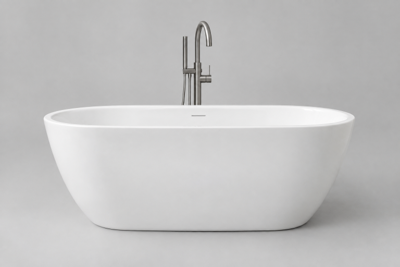
Alcove tubs fit between three walls and are a practical choice for compact bathrooms or spaces that need a shower. Freestanding tubs create a focal point, but they need open space around the exterior for cleaning and may require floor-mounted or wall-mounted fixtures. Drop-in and corner tubs can provide a wide deck for toiletries, although the surrounding structure must be waterproofed correctly. Walk-in tubs can reduce the need to step over a tall rim, but buyers should evaluate the door swing, seat dimensions, drain time, and control placement.
Review Tub Materials
Material affects comfort, cost, maintenance, and installation. Acrylic tubs are relatively lightweight and available in many shapes. Fiberglass options can be economical, though the surface may show wear sooner than some alternatives. Porcelain-enameled steel has a firm, classic feel but should be protected from chips. Cast iron is durable and retains heat well, yet its weight may require a professional review of floor support. Solid-surface tubs can provide a substantial appearance, although they are often heavier and more expensive than basic models.

Check Comfort and Bathing Depth
Exterior measurements do not always reveal usable bathing space. Thick walls, wide rims, and interior contours can reduce shoulder room or legroom. Compare the interior basin length and width, water depth to the overflow, backrest angle, rim height, faucet location, and available hot-water capacity. When possible, sit in a display model. Check whether your back feels supported, your feet have room, and you can enter and exit without feeling unsteady.
Plan for Safety and Access
Safety features are easiest to include while walls are open. Consider a slip-resistant tub floor, bright and even lighting, reachable storage, and a handheld showerhead. Properly installed grab bars need suitable support behind the finished wall, so they should not be treated as an afterthought. The fall hazards associated with adult bathtubs and shower facilities also show why stable footing and confident entry deserve attention during planning.
Consider Maintenance
Choose a design that fits your cleaning routine. Smooth tub surfaces generally have fewer places for residue to collect than tiled decks, grout lines, deep seams, or highly decorative edges. Jets, tracks, and narrow spaces around a freestanding tub can add regular cleaning work. Confirm which products the manufacturer approves, since abrasive cleaners can damage some finishes. Regularly inspect caulk, grout, drains, fixtures, and visible plumbing for signs of wear or leaking.
Ventilation is part of bathtub maintenance as well. The EPA notes that bathroom ventilation removes unwanted moisture and recommends exhausting bathroom air directly outdoors rather than into another area of the home. A working fan, sound water management, and properly sealed wet walls help protect the finished bathroom from persistent moisture.
Review Installation Needs
The hidden work behind the tub can shape the project more than the tub itself. Confirm drain and overflow alignment, faucet and valve locations, water-supply needs, subfloor condition, and wall damage behind the existing unit. Waterproofing around the tub and surrounding walls is essential. Ask the installer how hidden moisture damage, aging pipes, uneven framing, or weak flooring would be handled if discovered after demolition. Check whether local permits or inspections apply before work begins.
Build a Realistic Budget
A complete budget includes more than the purchase price. Account for fixtures, drains, valves, wall materials, delivery, removal of the old tub, plumbing changes, waterproofing, repairs, labor, permits, cleanup, and disposal. Set aside a contingency amount for conditions that cannot be confirmed until the old tub and wall materials are removed. A detailed written estimate makes it easier to compare scope, not just the lowest initial number.
Use a Final Selection Checklist
- Does the tub fit the opening and the delivery route?
- Does it align with the drain, overflow, water supply, and fixture plan?
- Is the interior basin comfortable for the primary users?
- Can users enter, exit, and clean around it safely?
- Can the floor support the finished tub and water weight?
- Does the estimate include removal, installation, repairs, and cleanup?
The best bathtub is not necessarily the largest, deepest, or most decorative option. It is the one that fits the room, supports everyday routines, feels comfortable, and remains practical to maintain. Careful measurements, material comparisons, safety planning, and a complete budget can help prevent costly surprises and create a bathroom that works well long after installation.
Related Articles You May Enjoy From FINE Magazine
- Elevated Living Starts Here: Luxury Bathrooms Are Becoming the Heart of Modern Homes
- Thinking About a Bathroom Remodel This Spring? You Need to Start Now.
- Spa Bathroom Trends in 2025: The New Standard of Luxury
```


(0) comments
We welcome your comments
Log In
Post a comment as Guest
Keep it Clean. Please avoid obscene, vulgar, lewd, racist or sexually-oriented language.
PLEASE TURN OFF YOUR CAPS LOCK.
Don't Threaten. Threats of harming another person will not be tolerated.
Be Truthful. Don't knowingly lie about anyone or anything.
Be Nice. No racism, sexism or any sort of -ism that is degrading to another person.
Be Proactive. Use the 'Report' link on each comment to let us know of abusive posts.
Share with Us. We'd love to hear eyewitness accounts, the history behind an article.