
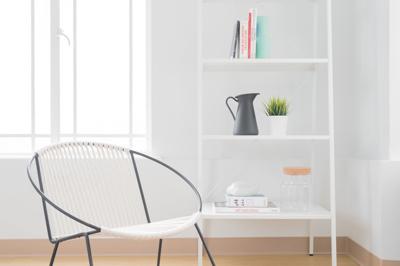
There are many different interpretations of minimalism. You could adhere to its design definition, which encourages geometric, clean lines and simple design. You could adhere to its lifestyle definition which would require you to live a relatively utilitarian lifestyle. These are choices that many people are happy with, but they are not choices for everyone. There is, however, a version of minimalism that we should all adhere to.
At its core, minimalism is all about valuing what you own. By de-cluttering and placing greater emphasis on the things that we buy we can help our house breathe and can improve our savings drastically. Going through and de-cluttering with minimalism in mind, however, can be difficult to start with. That is why you should follow this guide to help you get started:
Phase One: The First Spring Clean
If we were to go through all of our belongings, we would likely come up with a fair few items that we don’t use and don’t actually care about. You don’t need to use special methods in order to achieve this, simply go through and get rid of what doesn’t matter to you and is taking up space. You could use any de-cluttering method you want, but when it comes to discarding the items you have selected try to sell them, upcycle, recycle, or donate them before you throw them into a garbage bag.
Phase Two: Determining What You Don’t Actually Use
The first phase will help you clear out the things you know you don’t use and don’t want. The second phase will help you recognize the items that you are keeping for no reason. Perhaps you bought an item for a lot of money, or perhaps it was a gift. To find these items, buy a bulk set of blank labels and write down the date on them. For items, you don’t remember using in the past month, put the sticker on them. If you use them after that, take the sticker off. If three months go by and the sticker is still on them, you know it is not something you use regularly and should be taken out of your home.
The only exception to this three-month rule is, of course, if it is an item specific to a different season. Judging how often you use a kayak in the middle of winter isn’t beneficial. Instead, hold off said judgment until the season comes. If you really want to keep the item after you realize you don’t use it and therefore it is just keeping up space, make more effort to use it more regularly. Get out there and bike more often rather than let the gears rust over, and so on.
The sticker method is used by manufacturers around the world. It is there to help warehouses run as efficiently as possible. In homes, it can be used to help you realize what you use and what you don’t. From there it is up to you to either incorporate it more into your life or to get rid of it. Either way, by the end of your efforts, your home should feel more open, clean, and be filled only with the things you actually use and care about.


(0) comments
We welcome your comments
Log In
Post a comment as Guest
Keep it Clean. Please avoid obscene, vulgar, lewd, racist or sexually-oriented language.
PLEASE TURN OFF YOUR CAPS LOCK.
Don't Threaten. Threats of harming another person will not be tolerated.
Be Truthful. Don't knowingly lie about anyone or anything.
Be Nice. No racism, sexism or any sort of -ism that is degrading to another person.
Be Proactive. Use the 'Report' link on each comment to let us know of abusive posts.
Share with Us. We'd love to hear eyewitness accounts, the history behind an article.