
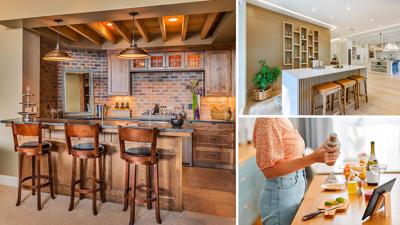

The bar cart had a good run. For a decade it was the signature of a well-appointed living room: crystal decanters, a brass jigger, a bottle of something aged and expensive catching the afternoon light. It still has its place. But walk through the newest kitchens in Montecito, Rancho Santa Fe, or the Bird Streets and you'll find a different fixture getting the prime real estate, usually a stretch of quartzite counter between the coffee setup and the refrigerator. Designers have started calling it the wellness bar, or, less grandly, the hydration station.
The idea is simple. Most of us drink less water than we should, not out of stubbornness but because the good stuff is buried in a cabinet and the interesting stuff requires effort. Give hydration the same visual priority the espresso machine already enjoys, and the habit takes care of itself.
Here is how to build one that looks as considered as the rest of the kitchen and actually improves how you feel by mid-afternoon.
Start With the Water Itself
Everything on the station is built around water, so it deserves the first decision.
Filtration that earns its footprint
Tap water in most of California is safe, but taste varies enormously by district, and the mineral content that produces chalky residue on a kettle also produces a flat, slightly metallic finish in a glass. An under-counter filtration system with a dedicated faucet solves both without cluttering the surface. Reverse osmosis units deliver the cleanest taste but strip minerals along with contaminants; many homeowners pair them with a remineralization cartridge so the water tastes rounder and contributes some calcium and magnesium back. A quality carbon block filter is a less expensive middle ground and handles chlorine, the main culprit behind "pool water" flavor.
If you prefer sparkling, a plumbed-in carbonation tap is the piece that makes guests ask questions. Systems that chill, filter, and carbonate on demand have dropped in price and now fit into a standard cabinet bay.
Glassware you'll actually reach for
Hydration researchers have noted a pattern that sounds obvious once you hear it: people drink more from vessels they enjoy holding. A set of heavy-based tumblers, a carafe with a cork or glass stopper, and a few tall glasses for infused water are enough. Skip anything that requires two hands or a coaster to feel safe.
The Electrolyte Shelf
This is where a hydration station stops being a pretty water dispenser and starts doing something useful.
Water alone doesn't hydrate as efficiently as most people assume. The body absorbs and retains fluid with the help of minerals, principally sodium, potassium, and magnesium, and after a long hike in the hills, a hot afternoon on the tennis court, or a night with more than one glass of Cabernet, those minerals run lower than plain water can replace. Mild dehydration, the kind that doesn't register as thirst, is associated with headaches, low mood, and the fuzzy concentration that gets blamed on a bad night's sleep.
The solution isn't a fridge full of neon sports drinks. A few well-chosen items cover most situations:
- A low-sugar electrolyte powder in a glass jar with a scoop. Look for a meaningful dose of sodium and potassium and under five grams of sugar per serving. Reserve it for days that involve sweat or alcohol; on an ordinary day, plain water is enough.
- Coconut water, ideally in glass bottles, for a naturally potassium-rich option that pairs well with fruit.
- Flaky mineral salt and fresh citrus. A pinch of salt and a squeeze of lemon in a large glass of water is the homemade version of an electrolyte drink, and it costs almost nothing.
- Oral rehydration sachets in a drawer, the pharmacy kind, for genuine dehydration after illness or a punishing day in the heat.
Choosing between these comes down to what's in them, not how the packaging looks. A side-by-side breakdown of electrolyte drink mixes and other hydrating options, ranked by mineral content and added sugar, makes the comparison quick and is worth reading before you commit shelf space. The short version: mixes with real sodium and potassium and little sugar sit at the top, coconut water and milk hold their own, and the traditional sports drinks most people grew up with land near the bottom.
Infusions: The Part Guests Notice
An infused water carafe is the hydration station's equivalent of a well-garnished cocktail, and it's the reason people wander over and pour a glass without being asked.
Combinations that hold up for hours
Some pairings go bitter or cloudy if they sit; these don't:
- Cucumber, mint, and lime. The house standard. Slice the cucumber thin and bruise the mint gently.
- Grapefruit and rosemary. Sharp and faintly savory, good before dinner.
- Strawberry and basil. Sweet enough to satisfy a craving without sugar.
- Blood orange and thyme in winter, when citrus is at its best in Southern California.
- Watermelon and jalapeño, seeds removed, for a summer pool afternoon.
Refill the carafe with fresh water once or twice through the day; most fruit can be reused for a second round before it turns.
A small herb pot within reach
If the station sits near a window, a pot of mint or basil on the counter supplies garnish and doubles as decoration. Designers who work on these kitchens often plan for it deliberately, running a narrow shelf at eye level or leaving a gap in the backsplash for a hanging planter.
Warm and Cold: The Drinks Beyond Water
A hydration station that only serves water is a missed opportunity. Nearly everything you drink contributes to daily fluid intake, and a few options belong on the shelf because they hydrate while doing something else.
Tea, properly stored
Loose-leaf tea in airtight tins, arranged by caffeine level, gives the station a morning-to-evening rhythm. Green tea and yerba mate for the afternoon, when a third coffee would be too much; rooibos, chamomile, and peppermint after dinner, when caffeine would disturb sleep. Yerba mate in particular has a loyal following among people who find coffee harsh. Some studies suggest that compounds in tea, such as L-theanine, may soften caffeine's jittery edge, which is why many people describe the energy from tea as steadier.
A temperature-controlled kettle earns its place here. Green tea scorches above 80°C and turns bitter; herbal tea wants a full boil. Getting that right is the difference between a cup you finish and one you abandon.
Milk and its alternatives
Milk is one of the more effective rehydration drinks studied, thanks to its natural sodium, potassium, and protein, and a small glass of cold milk or a fortified oat alternative belongs in the fridge drawer beneath the station. It's also the base for the golden milk and matcha lattes that have become standard evening fare in wellness-minded households.
Broth in the evening
Not a drink in the usual sense, but a mug of good bone or vegetable broth before dinner delivers fluid and sodium together, and it is a favorite among nutritionists for the evening before an early, demanding day. Keep a quality boxed broth or a batch of homemade frozen in single portions.
Designing the Space
A hydration station succeeds or fails on placement. The kitchen designers who build these regularly share a few rules.
Put it on the path, not out of the way
The station should sit where people already walk: between the entry from the garage and the island, or beside the coffee machine. A beautiful setup in a back pantry gets used twice and forgotten.
Give it its own cold storage
A slim undercounter refrigerator drawer keeps the carafe, coconut water, milk, and cut fruit at the right temperature without a trip across the kitchen. Some homeowners add a small ice maker for clear, slow-melting cubes, a detail that transforms plain water into something you'd pay for.
Keep the surface calm
Restraint is what separates a wellness bar from a cluttered counter. A tray corrals the daily essentials: the carafe, two glasses, the salt cellar, the jar of electrolyte powder. Everything else lives in a drawer directly below, with dividers so tea tins and sachets don't migrate. Matte black, brushed brass, or unlacquered copper hardware ties the station to the rest of the kitchen; the goal is for it to read as part of the architecture rather than an appliance.
Light it
Under-cabinet LED strips on a dimmer make the station usable at 6 a.m. and pleasant at 10 p.m. Warm white, around 2700K, flatters both the surface and the fruit in the carafe.
A Day at the Station
The point of all this is a routine that runs without thought. In practice, a well-used hydration station follows the day:
- Morning. A large glass of filtered water before coffee, with a pinch of salt or a squeeze of lemon. Overnight, the body loses fluid through breath and skin, and starting the day with water rather than espresso tends to produce a steadier morning.
- Midday. Infused water from the carafe through lunch, a refill of the bottle that travels with you.
- After a workout, a hike, or a hot afternoon outdoors. One serving of electrolyte mix or a glass of coconut water.
- Mid-afternoon. Green tea or yerba mate instead of a third coffee.
- Evening. Broth before dinner if tomorrow is demanding, then herbal tea, then a taper so the night isn't interrupted.
None of it requires discipline once the station exists. It requires walking past it.
The Case for Building One
A wellness bar is a small renovation, sometimes no renovation at all: a tray, a carafe, a filter, a few good jars. What it changes is the default. The most expensive kitchens in the country are increasingly designed around how people actually live in them rather than how they entertain, and the hydration station is the clearest expression of that shift. It says the household takes its own energy and wellbeing as seriously as its dinner parties.
Build one well, and the water becomes the thing you reach for first. That, more than any single product on the shelf, is where the benefit comes from.




(0) comments
We welcome your comments
Log In
Post a comment as Guest
Keep it Clean. Please avoid obscene, vulgar, lewd, racist or sexually-oriented language.
PLEASE TURN OFF YOUR CAPS LOCK.
Don't Threaten. Threats of harming another person will not be tolerated.
Be Truthful. Don't knowingly lie about anyone or anything.
Be Nice. No racism, sexism or any sort of -ism that is degrading to another person.
Be Proactive. Use the 'Report' link on each comment to let us know of abusive posts.
Share with Us. We'd love to hear eyewitness accounts, the history behind an article.