
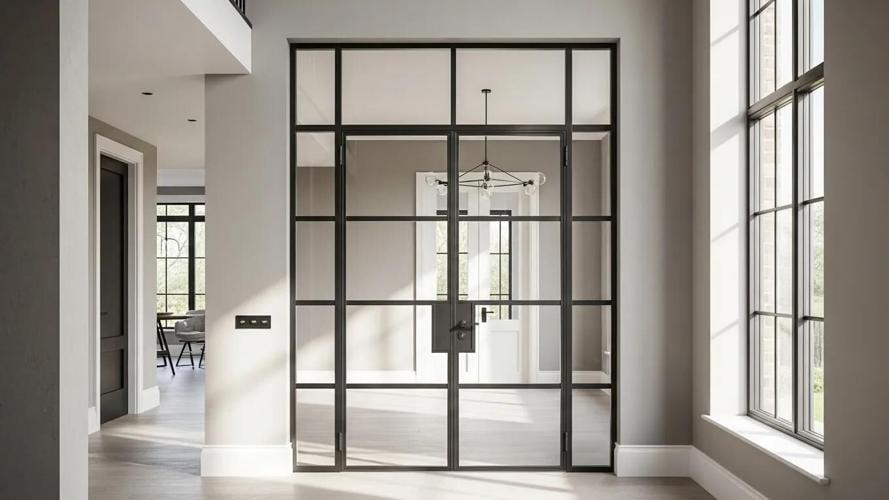
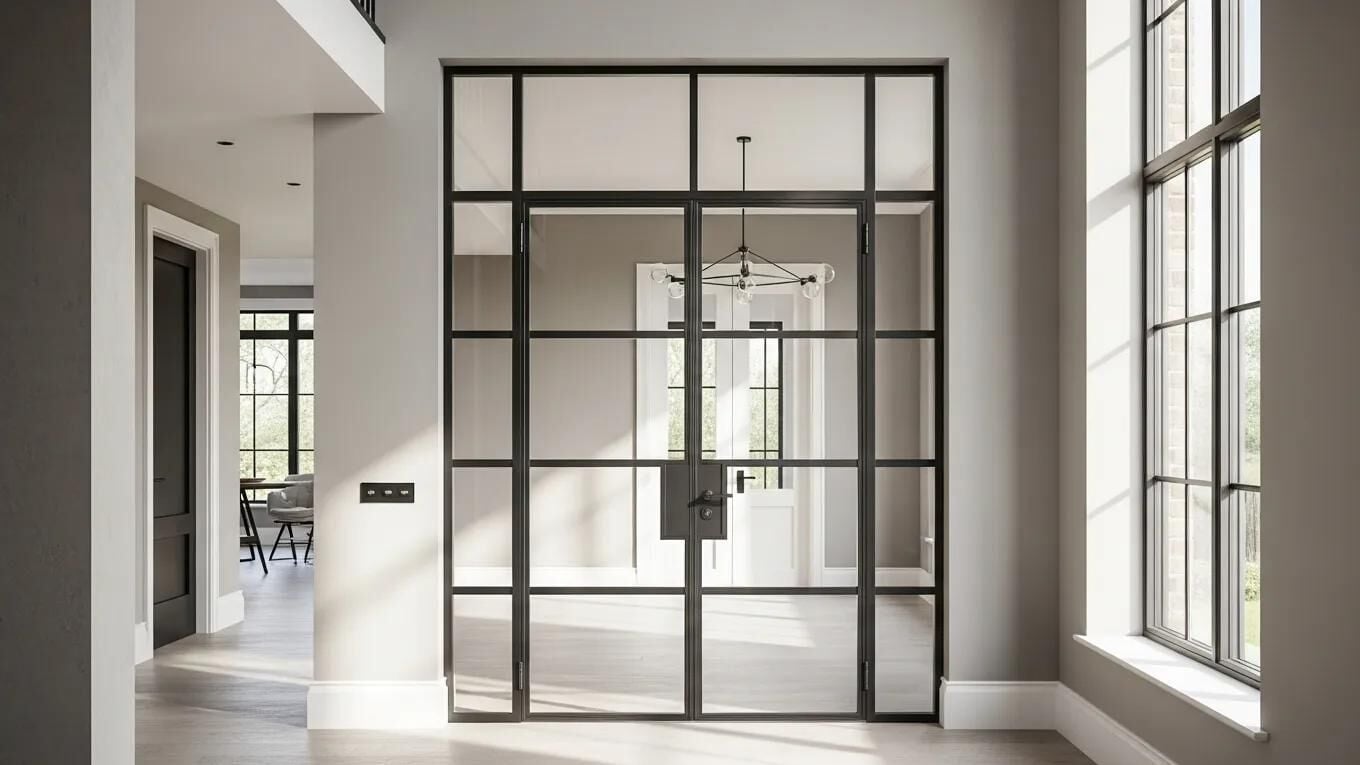
Crittall-style doors have become one of the most recognizable architectural details in luxury interiors. Their slim metal frames and expansive glass panels allow rooms to feel connected while still creating boundaries, making them particularly useful in homes where natural light and flexible living spaces are priorities.
The look, however, has become so widely copied that a black frame and a few glazing bars are no longer enough. The strongest installations today rely on proportion, material quality, thoughtful glass choices and careful detailing. Done well, steel-and-glass doors become part of the architecture. Done poorly, they can make an expensive renovation feel surprisingly ordinary.
Crittall-Style and Genuine Crittall Are Not the Same Thing
The distinction is important. Crittall Windows is the historic British manufacturer whose steel-framed windows and doors helped establish the aesthetic now commonly described as Crittall-style. The company dates back to the nineteenth century and continues to manufacture genuine steel window and door systems today.
Crittall-style, meanwhile, has become a broad design description. Products carrying that appearance may be made from steel, aluminum or other materials. Two doors can therefore look nearly identical in a photograph while differing considerably in frame thickness, construction, durability, thermal performance and price. Homeowners should understand what they are actually buying rather than relying on the style name alone.
The Most Sophisticated Designs Are Becoming More Restrained
The familiar formula of matte-black frames, clear glass and multiple rectangular panes still works in the right setting, but it is no longer the only interpretation. In many contemporary luxury homes, fewer glazing bars and larger expanses of glass are creating a cleaner, more architectural result.
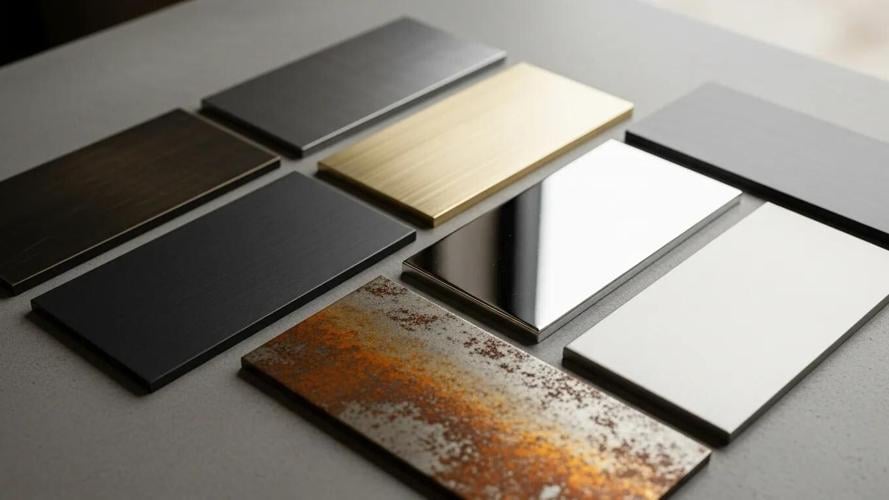
Finish choices are becoming more nuanced as well. Charcoal, bronze, muted green, warm gray and other architectural tones can sit more comfortably alongside natural stone, plaster, oak and richly veined marble. This restrained approach follows the same thinking behind creating a more polished custom look through scale and proportion. The objective is not to make the room feel industrial. It is to introduce structure without allowing the door to become the loudest object in it.
Steel and Aluminum Offer Different Advantages
Steel's strength allows manufacturers to create relatively slender frames around large pieces of glass. Those narrow sightlines are a major part of the appeal and can give genuine steel systems a particularly refined appearance. Steel also has a weight and solidity that can be difficult to appreciate until the door is physically opened and closed.
Aluminum should not automatically be treated as an inferior substitute. It is lighter, resistant to corrosion and widely used in modern thermally broken systems. For an interior office, pantry or room divider, a well-made aluminum system may accomplish exactly what the project requires. Steel becomes more compelling when extremely slender proportions, authenticity or a substantial architectural presence are important to the design.
Proportion Determines Whether the Door Looks Expensive
One of the easiest ways to weaken a steel-and-glass installation is to add too many glazing bars. More divisions do not necessarily make a door look more authentic. They can simply create visual clutter.
The horizontal and vertical lines should relate to the architecture around them. Cabinet heights, existing windows, shelving and ceiling lines can all provide useful reference points. On a large opening, fewer and better-proportioned panes often look considerably more sophisticated than a dense grid. Luxury frequently comes from knowing when to stop adding detail.
Glass Should Be Selected for How the Room Actually Functions

Clear glass is ideal when the priority is moving daylight through adjoining rooms and preserving long sightlines. It works especially well between kitchens and dining spaces, living rooms and libraries, or other areas where visual connection is desirable.
Privacy changes the equation. Reeded or fluted glass can soften the view while continuing to transmit light, making it particularly useful for home offices, pantries, bathrooms and dressing areas. Smoked and tinted glazing can create a more dramatic effect. FINE's guide to using custom glass to make a home feel brighter and more open explores additional ways glazing can create separation without adding visual weight.
Broken-Plan Living Gives Steel Doors a Practical Purpose
The staying power of Crittall-style doors may have less to do with fashion than with changing attitudes toward open-plan homes. Large connected spaces remain appealing, but many homeowners have rediscovered the usefulness of being able to close a room without completely cutting it off.
A glazed partition can contain kitchen activity during dinner, create a quieter home office or give a library and wine room their own identities while allowing light to continue flowing between spaces. It is the same emphasis on natural illumination explored in FINE's How Natural Light Is Shaping Modern Luxury Home Design. In this context, the doors are not simply decorative. They allow the architecture to adapt throughout the day.
Exterior Steel Doors Require More Than Good Looks
An interior partition has a relatively simple job. Once steel-and-glass doors become part of the exterior envelope, weather resistance, drainage, seals, glazing, security and thermal performance all become important. This is where homeowners should move beyond descriptions such as premium or energy efficient and ask for actual technical information.
Compare the performance of the entire door system rather than focusing solely on the glass. Frames, seals, glazing and construction all influence thermal performance. For projects where energy efficiency is important, request the complete-system U-value and confirm that the quoted figure applies to the configuration being ordered rather than an unrelated test sample.
Historic Steel Is Sometimes Worth Saving
Older properties require a different approach. Original metal windows and doors may be an important part of the architecture, and replacement can remove precisely the character that makes a historic property interesting.
Historic England advises that historic metalwork can often be repaired and conserved rather than automatically replaced. For homeowners renovating period properties, evaluating the condition and significance of existing steel before ordering new units can preserve both architectural authenticity and craftsmanship that may be difficult to reproduce.
Hardware Deserves the Same Attention as the Frame
Slim frames can be surprisingly unforgiving when paired with poorly chosen hardware. Oversized handles overwhelm narrow profiles, while lightweight latches can make an otherwise substantial door feel inexpensive. Hinges, locks, pulls and closers should be considered as part of the design rather than selected after fabrication.
Finish can subtly change the character as well. Dark hardware nearly disappears against black or charcoal steel, while bronze and brass can introduce warmth. Large doors also require appropriate hinges or pivot systems, so ask how the hardware will handle the weight, whether adjustments can be made over time and whether replacement components will remain available.
Exterior Applications Need a Different Design Strategy
Steel-and-glass doors are also increasingly being used to strengthen the transition between interior and exterior living spaces. Large openings can extend sightlines into terraces, courtyards and gardens while making both areas feel larger.
The approach works particularly well when the flooring, proportions and architectural lines continue across the threshold. FINE examines that relationship further in Why Indoor, Outdoor Design Defines Modern Homes, where glass doors and aligned sightlines play an important role in creating visual continuity.
When Crittall-Style Doors Are the Wrong Choice
Not every luxury home needs another architectural grid. Rooms already filled with strong lines, elaborate millwork or highly decorative elements can become unnecessarily busy when another layer is introduced. Likewise, a space requiring genuine visual privacy may be better served by a solid door.
The architecture itself should have more influence than the trend. Replacing beautiful traditional timber doors simply because black steel is fashionable can diminish a period interior, while forcing an industrial treatment into a Mediterranean or highly ornamental home can feel disconnected. The right question is not whether Crittall-style doors are desirable. It is whether they belong in this particular house.
What to Check Before Ordering
Before approving a custom order, confirm the frame material, visible sightline dimensions, glass type, finish, hardware, swing direction and threshold. Determine whether the system has been designed specifically for interior or exterior use and understand the maintenance requirements before installation.
For custom work, request elevations showing the exact position of every glazing bar in relation to nearby architectural elements. Exterior applications should also include complete thermal, weather and security specifications. Most expensive mistakes happen long before installation, when proportions and performance are assumed rather than documented.
The FINE Take
Crittall-style doors remain relevant because the underlying idea is exceptionally useful. They can define rooms, preserve natural light and provide flexibility without returning a home to a collection of dark, disconnected spaces.
What has changed is the expectation. Black frames and a busy grid are no longer enough. The most convincing installations use thoughtful proportions, appropriate materials and glass selected for the way the room will actually be lived in. Sometimes genuine steel is worth the investment. Sometimes aluminum is the smarter choice. And sometimes the best design decision is choosing an entirely different door. The goal is not to reproduce a recognizable trend. It is to make the finished architecture look inevitable.


(0) comments
We welcome your comments
Log In
Post a comment as Guest
Keep it Clean. Please avoid obscene, vulgar, lewd, racist or sexually-oriented language.
PLEASE TURN OFF YOUR CAPS LOCK.
Don't Threaten. Threats of harming another person will not be tolerated.
Be Truthful. Don't knowingly lie about anyone or anything.
Be Nice. No racism, sexism or any sort of -ism that is degrading to another person.
Be Proactive. Use the 'Report' link on each comment to let us know of abusive posts.
Share with Us. We'd love to hear eyewitness accounts, the history behind an article.