
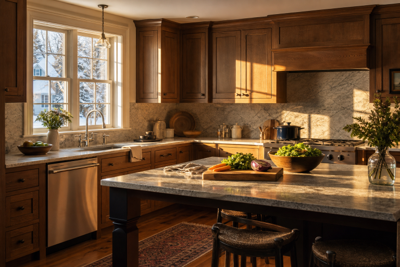

Plan around daily routines, hosting, and the realities of long New Hampshire winters.
Prioritize layout, storage, lighting, ventilation, and durable materials before decorative upgrades.
Older homes may require electrical, plumbing, structural, insulation, or air-sealing work before finishes are installed.
Detailed selections and a clearly defined scope help reduce surprises during construction.
Why Hanover Kitchens Need A Local Design Approach
A kitchen in Hanover often works as a breakfast room, homework station, gathering place, and welcome landing spot after a snowy day. Homeowners considering luxury kitchen remodeling Hanover NH can look to Willow Brook Builders for a full-service approach centered on customized layouts, cabinetry, material selections, and detailed planning. The company serves Hanover, Etna, Lyme, Plainfield, and nearby Upper Valley communities, making it familiar with the practical needs of homes ranging from older village properties to rural residences.
Local conditions matter. Snowmelt, muddy boots, winter coats, reduced daylight, heating needs, and frequent at-home gatherings all influence the best design for a kitchen. National trends can provide ideas, but a successful remodel should begin with the actual structure, circulation patterns, and routines inside the home.
Start With The Way The Kitchen Is Used
Before choosing cabinet colors or countertop samples, observe the current kitchen for a week or two. Notice where people collide, where groceries land, which items stay on the counter, and what is hardest to reach. These details reveal whether the project needs more workspace, better storage, a new traffic pattern, or a combination of all three.
Questions To Ask Before Designing
- Do two people regularly cook at the same time?
- Where do groceries, backpacks, mail, and winter gear enter the house?
- Would a coffee station, baking center, or beverage area simplify daily routines?
- Do guests gather around an island, or is a separate eating area more useful?
- Would pantry storage reduce trips to the basement, garage, or another room?
Choose A Layout That Fits The Home
Galley, L-shaped, U-shaped, and open-plan kitchens can all work well when they suit the room. Removing a wall may improve sightlines and connection to a living area, but it can also affect structure, heating distribution, lighting, and sound. A kitchen should allow easy movement between the refrigerator, sink, cooking surface, and prep areas without forcing every activity into a single narrow path.
Helpful Kitchen Zones
- Cooking zone: Range, hood, cookware, oils, spices, and nearby prep space.
- Cleanup zone: Sink, dishwasher, trash, recycling, and cleaning supplies.
- Food storage zone: Refrigerator, pantry, dry goods, and small appliances.
- Gathering zone: Island seating, a breakfast nook, or a connected dining space.
- Landing zone: A durable surface near the entry for bags, keys, groceries, and mail.
Plan For Winter Comfort And Indoor Air Quality
Ventilation deserves early attention, especially in a tightly sealed home. Cooking creates heat, moisture, odors, and airborne particles, so the hood should be sized and located for the cooking surface, ducted outdoors when feasible, and quiet enough that people will use it. The U.S. Department of Energy explains that kitchen exhaust fans remove cooking moisture and fumes most effectively when they vent directly outdoors rather than into an attic or enclosed cavity.
Review the duct route, exterior termination, potential make-up air needs, and cabinet clearances before finalizing the layout. In older Hanover homes, this is also a good time to assess insulation, window drafts, and whether heating equipment will be affected by wall or ceiling changes.
Use Materials That Handle Real Hanover Life
Luxury does not have to mean delicate. Select finishes based on cooking habits, pets, children, rental use, and the maintenance a household is prepared to handle. A busy family may gain more value from a large, uninterrupted prep area, deep drawers, and a dependable hood than from decorative elements that reduce usable counter space.
- Countertops: Compare quartz, stone, solid surface, and wood for heat tolerance, stain resistance, repairability, and maintenance.
- Flooring: Consider water resistance, traction, snowmelt, durability, and comfort underfoot.
- Cabinets: Choose painted, stained, or textured finishes with attention to cleaning and long-term wear.
- Backsplashes and hardware: Favor surfaces and pulls that are easy to clean and comfortable to use.
Bring In Light And Build Better Storage
Short winter days make layered lighting essential. Start with available daylight, then add ambient ceiling lighting, focused task lighting over work surfaces, and accent lighting for warmth. Under-cabinet fixtures, dimmers, well-positioned pendants, and warm color temperatures can make early mornings and dark afternoons more comfortable. Window changes should also be evaluated for insulation, exterior character, glare, and sightlines.
Storage should reflect Upper Valley life. Deep drawers for pots and mixing bowls, pull-out shelves for heavy appliances, vertical dividers for trays, a pantry near the refrigerator, and dedicated recycling and compost storage can clear counters and improve daily flow. Closed appliance storage is particularly helpful when the kitchen must also serve as a social space.
Know When A Remodel Needs More Than New Finishes
A cosmetic update may be enough when the layout, wiring, plumbing, and floors are sound. A full remodel may be necessary when walls block circulation, circuits trip frequently, plumbing leaks, floors feel soft, windows are persistently drafty, or an ineffective recirculating hood leaves odors behind. Addressing hidden conditions early protects the finished kitchen and reduces costly mid-project changes.
How To Compare Kitchen Remodeling Proposals
- Confirm that every proposal includes the same scope of demolition, construction, and finishing work.
- Review allowances for cabinets, countertops, appliances, lighting, and plumbing fixtures.
- Ask who handles design, permits, inspections, scheduling, cleanup, and communication.
- Clarify the process for structural damage, water issues, or other unexpected conditions.
- Request references from comparable local projects and review warranty details.
Common Questions From Hanover Homeowners
Is An Open Kitchen Always The Best Choice?
No. Open kitchens improve conversation and sightlines, but they can increase noise and keep clutter in view. The best choice depends on how the household cooks, entertains, works, and relaxes.
Should The Kitchen Be Designed Around Resale Value?
Personal needs should lead the process, balanced with broadly useful features such as strong storage, quality lighting, durable materials, and an efficient layout. Timeless function usually has more staying power than highly specific trends.
How Early Should Materials Be Selected?
Major selections should be made before construction whenever possible. Cabinets, appliances, fixtures, lighting, and countertops affect dimensions, installation sequencing, and the project schedule.
Design For Daily Life
A well-planned Hanover kitchen feels warm, useful, and connected to the rest of the home. When layout, comfort, storage, and durable details come first, the finished room can support everyday meals, winter gatherings, and changing family routines for years to come.


(0) comments
We welcome your comments
Log In
Post a comment as Guest
Keep it Clean. Please avoid obscene, vulgar, lewd, racist or sexually-oriented language.
PLEASE TURN OFF YOUR CAPS LOCK.
Don't Threaten. Threats of harming another person will not be tolerated.
Be Truthful. Don't knowingly lie about anyone or anything.
Be Nice. No racism, sexism or any sort of -ism that is degrading to another person.
Be Proactive. Use the 'Report' link on each comment to let us know of abusive posts.
Share with Us. We'd love to hear eyewitness accounts, the history behind an article.