
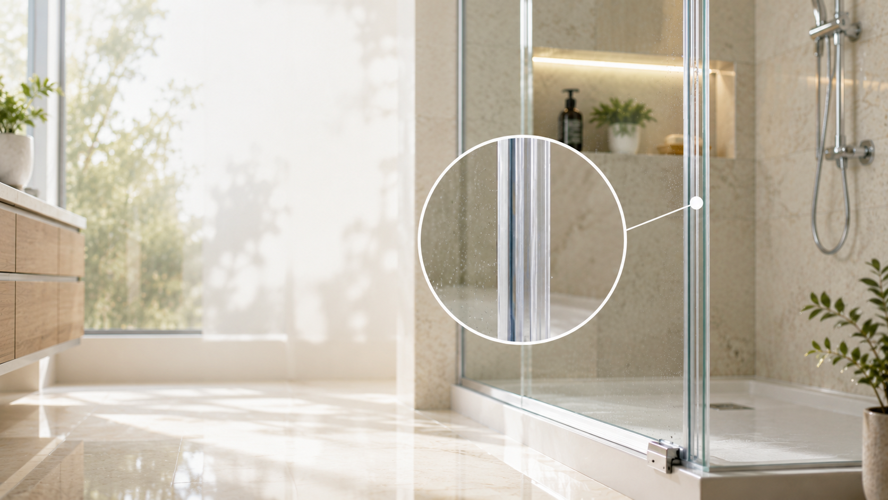
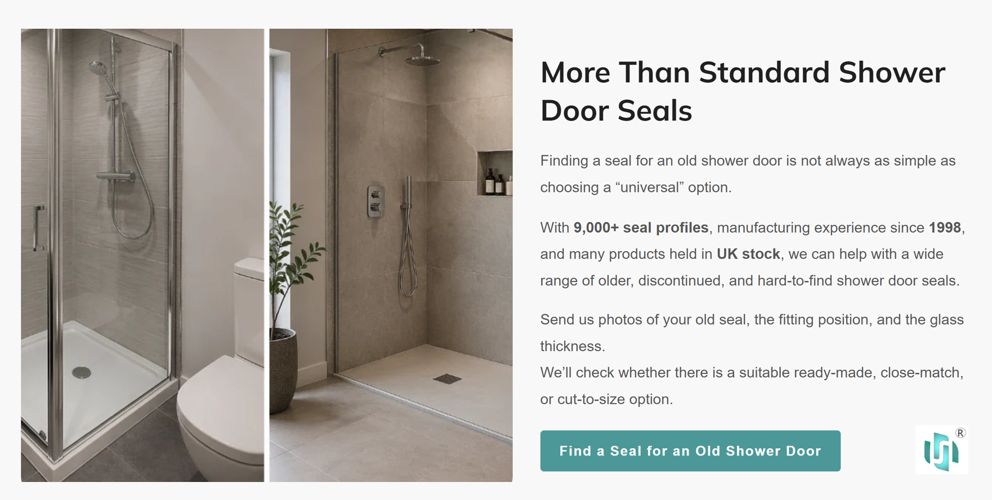

Imagine stepping into a small UK bathroom. At first, your eye goes to the bigger design. Sure, the neat tiles, clear shower glass, and fittings seem to belong together. You can see the homeowners’ effort to create a gentle atmosphere for bathing.
Then your eye naturally drops to the details, catching a thin wet line beside the glass, and a damp patch beside the door. The leak may be small, but it is enough to change the impression.
These small signs sometimes start from a shower door seal that is turning yellow and losing its shape. It sits at the glass edges and closing points that decide whether the shower looks neat and stays dry.
Where Shower Door Seals Need Attention
Shower door seals do not all work in the same place. Some sit along the bottom edge of the door. They help stop water from running onto the floor after each shower. When you see a puddle near the door, the bottom edge often feels like the default place to check.
But sometimes the side edge is where the water leaks. Water can run down along the door and collect on the floor, making the source harder to notice. Other signs, like a thin wet line beside the glass, can also be easy to miss.
Side leaks often come from a small door gap. A damaged or poorly fitted seal can leave that gap visible and let water escape. For this problem, you may need a replacement vertical shower door seal for fixing the side gap.
The Fit Details of Shower Door Seals
A replacement seal should not be chosen only because it looks similar to the old strip. Many clear seals look almost the same in product photos, but a few fit details decide whether the result looks neat or improvised.
- Glass thickness
The seal has to grip the glass securely. If it is made for the wrong thickness, it may feel loose, twist out of place, or be difficult to fit. - Gap size
Measure the space where water is escaping. A seal that does not reach far enough may leave the leak untouched, while one that is too large may drag or affect how the door moves. - Door style and opening angle
Frameless, semi-frameless, curved, corner, and angled shower doors do not always close in the same way. If the door meets a wall, frame, or another glass panel, the seal needs to suit that closing point. - Seal profile
Different profiles are designed for different gaps and closing points. For example, a profile designed for a straight glass-to-glass closing edge may not work properly on a door that closes against a wall or frame.
These details may sound small, but they are what make the finished result feel tidy rather than improvised.
When the Old Seals are Hard to Identify
Old shower door seals are not always easy to read. Years of use can leave them bent, stretched, yellowed, or cut down. A worn profile may no longer show its original shape clearly.
That is where many homeowners make the wrong choice. They compare a new product photo with the old strip, choose the closest-looking option, and only realise the problem after fitting it. The seal may sit unevenly, leave a small gap, or fail to stop water from escaping in the same place.
Photos can help more than guesswork. A clear picture of the glass edge, the old seal cross-section, and the leak location can make the replacement easier to identify.
But finding the right replacement is not always straightforward. Even if you know the key measurements and fit details, you still feel so confused facing thousands of similar-looking options.
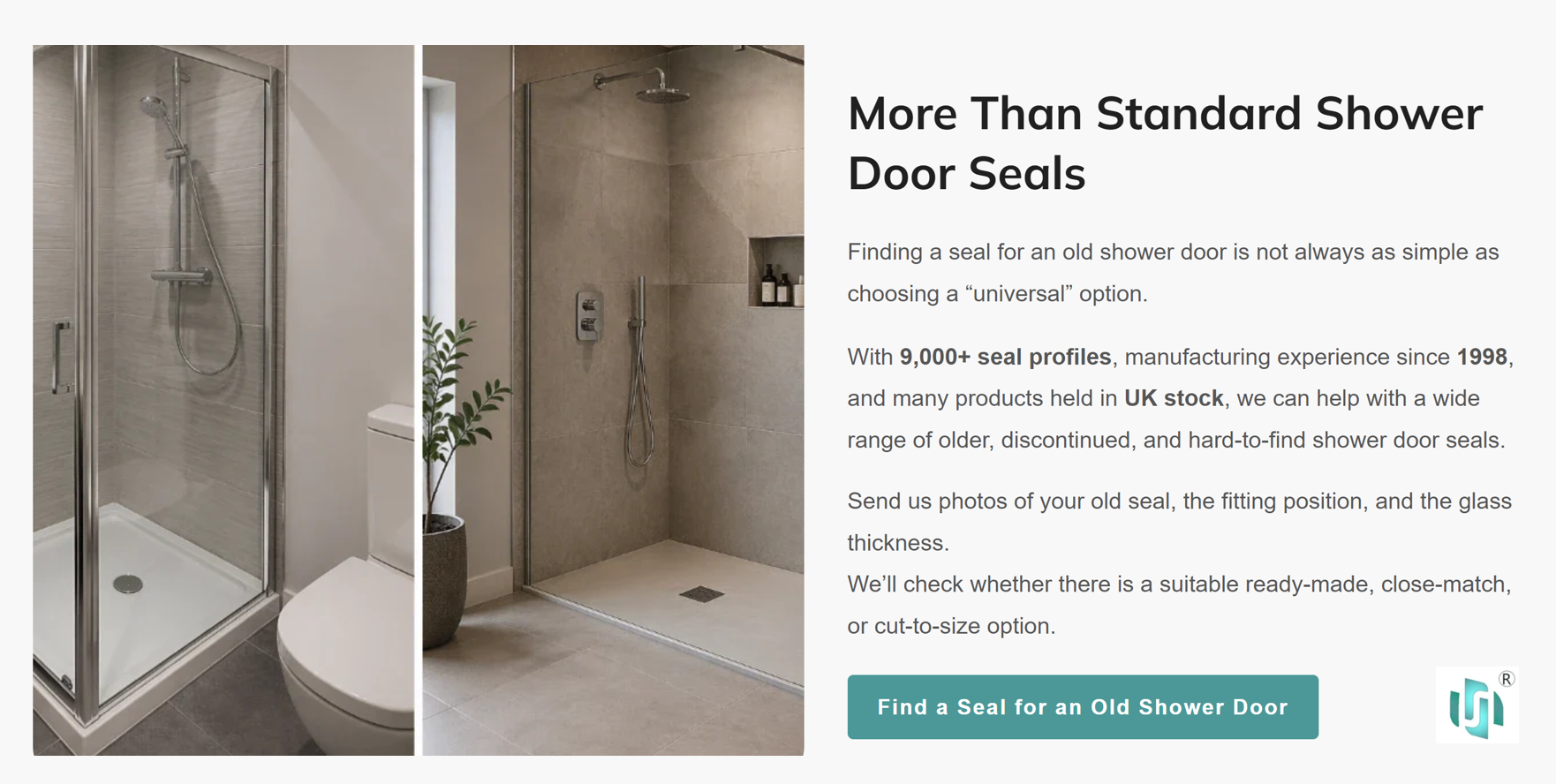
For UK homeowners, a specialist supplier can sometimes make this step easier. Simba International Limited, the company behind showerdoorseal.uk, is one example of a business focused on replacement shower door seals, where photos of the old seal, glass edge, and leak location can help narrow down a suitable option.
The goal is not to turn a small bathroom update into a technical project. It is simply to avoid buying a part that looks right online but does not fit the enclosure in real life.
Keep an Eye on Your Shower Door Seal
A shower seal does not need replacing every month, but it is worth checking from time to time as part of routine bathroom maintenance. Small signs of wear often appear before the leak becomes obvious.
A yellowed or cloudy seal can make clean glass look older than it is. A strip that has hardened or warped may no longer sit neatly along the edge. A seal that slips down the glass can create a visible gap. If water appears in the same place after every shower, the seal may no longer be doing its job.
Mildew is another sign to watch. Sometimes it is only a cleaning issue, but if it keeps returning along the same edge, the area may be staying damp because water is escaping or sitting where it should not.
Replacing the seal before it fails completely can help keep the shower cleaner, drier, and easier to maintain. It is a small update, but one that can prevent bigger maintenance headaches later.
Small Details Make the Bathroom Feel Better to Use
Large upgrades shape the first impression of a bathroom. Smaller details shape how the room feels after daily use.
A well-matched shower door seal helps keep water inside the enclosure, reduces wiping after each use, and makes the shower area feel more complete. It is not the most noticeable feature in the room, but it supports the polished look people expect from a well-kept bathroom, making the space feel cleaner, drier, and comfortable to live with.


(0) comments
We welcome your comments
Log In
Post a comment as Guest
Keep it Clean. Please avoid obscene, vulgar, lewd, racist or sexually-oriented language.
PLEASE TURN OFF YOUR CAPS LOCK.
Don't Threaten. Threats of harming another person will not be tolerated.
Be Truthful. Don't knowingly lie about anyone or anything.
Be Nice. No racism, sexism or any sort of -ism that is degrading to another person.
Be Proactive. Use the 'Report' link on each comment to let us know of abusive posts.
Share with Us. We'd love to hear eyewitness accounts, the history behind an article.