
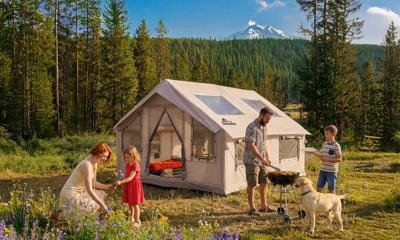

In the past, camping was often treated as a short outdoor activity.
People usually waited for good weather, set up a tent for one night, and returned home the next day. At that time, most campers only expected a tent to provide basic shade and shelter.
Today, family camping is changing.
More families are spending longer weekends outdoors, traveling by car, and camping in different weather conditions. Because of this shift, tents are no longer viewed as simple sleeping shelters.
They have become the center of outdoor living.
As camping habits evolve, the ability of a tent to remain dry, stable, and comfortable during changing weather conditions has become increasingly important.
Among all tent features, waterproof performance now plays one of the biggest roles in shaping the overall camping experience.
Interior Moisture Is Often Worse Than Rain
Many beginner campers assume waterproofing simply means stopping rain from entering the tent.
In reality, interior moisture often causes more discomfort than rainfall itself.
Condensation from temperature changes, ground humidity, wet shoes, and moisture created by multiple people breathing inside the shelter can all increase humidity levels over time.
Without proper airflow and drainage design, the interior may still feel damp even if no visible leaks appear.
For families, this problem becomes much more noticeable.
Parents, children, camping gear, and daily activities all share the same interior space. Once the inside environment becomes humid, comfort levels drop quickly.
This is why modern family camping tents must focus on overall moisture management rather than basic rain protection alone.
What PU5000mm Actually Means
Many consumers see terms like “PU3000mm” or “PU5000mm” while shopping for tents, but may not fully understand their meaning.
PU ratings measure how resistant the tent fabric is to water penetration.
Simply put, higher numbers indicate stronger resistance against rainwater pressure.
Generally speaking:
- PU2000mm handles light rain conditions
- PU3000mm performs better during continuous rainfall
- PU5000mm provides stronger protection during long rainy periods and more demanding weather environments
For family camping, PU5000mm means much more than basic rain protection.
It helps maintain a dry and stable interior environment during extended outdoor stays, which becomes especially valuable for larger family groups.
Waterproofing Depends on More Than Fabric Thickness
Many consumers assume thicker fabric automatically creates better waterproof performance.
In reality, waterproofing depends on multiple design elements working together.
The outer material is important.
High-quality tents often use durable Oxford fabric or polyester materials combined with PU waterproof coatings that reduce water penetration.
Seam construction is equally important.
Many leaks occur around stitching and connection points rather than through the fabric surface itself. Proper seam sealing greatly improves overall weather resistance.
Roof structure also matters.
If rainwater cannot drain efficiently, standing water may increase pressure on the tent surface and eventually create leakage risks.
A reliable waterproof tent depends on materials, structure, and manufacturing quality together.
Inflatable Structures Improve Weather Stability
Compared with traditional pole tents, inflatable structures often remain more stable during heavy rain conditions.
Air-supported beams distribute pressure more evenly across the tent surface, helping the roof maintain a smooth curve that allows rainwater to slide away more efficiently.
Today, more campers are paying attention to the real-world weather performance of inflatable tents because these structures often provide a more stable experience during continuous rainfall.
Modern inflatable tents also commonly use integrated outer-shell designs that help reduce the chance of rain entering the interior space.
Of course, even strong waterproof performance still depends on proper setup. Ground drainage, rope tension, and campsite selection remain essential for maintaining dry conditions outdoors.
Large Family Tents Require Better Waterproof Performance
For family campers, tents are no longer used only for sleeping.
Children play inside, equipment is stored indoors, and families often spend long periods relaxing together during changing weather conditions.
Because of this, large camping tents require stronger waterproof performance than smaller shelters.
Many buyers specifically search for 6-person tents because larger camping groups need better weather stability and interior comfort during long outdoor stays.
A spacious tent that remains dry during continuous rain can dramatically improve the overall camping experience.
Vega’s 12㎡ layout focuses not only on interior space but also on balancing waterproof protection and airflow.
Its PU5000mm waterproof rating helps maintain a stable interior environment during demanding weather conditions, while the multi-window ventilation system reduces humidity buildup caused by multiple people staying inside the tent for long periods.
For family camping, this combination of dryness and comfort becomes more valuable than simple tent size alone.
Ventilation Also Affects Moisture Control
Many campers overlook one important fact: interior humidity does not always come from outside rain.
Human breathing, moisture buildup, and temperature differences can all create condensation inside the shelter.
Because of this, a truly effective family camping tent must combine strong waterproofing with efficient ventilation systems.
Modern inflatable tents often include upper ventilation openings, large windows, and mesh airflow systems that improve air circulation throughout the shelter.
During warm-weather camping, proper airflow significantly reduces humidity and interior discomfort.
Families Now Care More About Real Weather Performance
In the past, many consumers focused mainly on tent size or appearance.
Today, family campers pay much closer attention to how tents perform during real outdoor weather conditions.
For larger families, a reliable tent must balance waterproofing, ventilation, structural stability, and interior comfort together.
Outdoor brands such as Zonkoo are increasingly focusing on weather-adaptive camping solutions by improving material quality and structural design.
This reflects the growing demand for more dependable and comfortable outdoor living experiences.
Waterproof Performance Is Becoming a Core Requirement
As camping continues to become a mainstream family lifestyle activity, expectations for outdoor equipment are evolving.
People no longer focus only on whether a tent is large enough. They also want products that remain comfortable and reliable during changing weather conditions.
For modern family campers, a spacious inflatable tent with PU5000mm waterproof protection offers much more than basic shelter — it creates a safer and more dependable outdoor living space.
Because of these advantages, more families are beginning to view high-waterproof inflatable tents as one of the best long-term choices for comfortable outdoor camping.
(0) comments
We welcome your comments
Log In
Post a comment as Guest
Keep it Clean. Please avoid obscene, vulgar, lewd, racist or sexually-oriented language.
PLEASE TURN OFF YOUR CAPS LOCK.
Don't Threaten. Threats of harming another person will not be tolerated.
Be Truthful. Don't knowingly lie about anyone or anything.
Be Nice. No racism, sexism or any sort of -ism that is degrading to another person.
Be Proactive. Use the 'Report' link on each comment to let us know of abusive posts.
Share with Us. We'd love to hear eyewitness accounts, the history behind an article.