
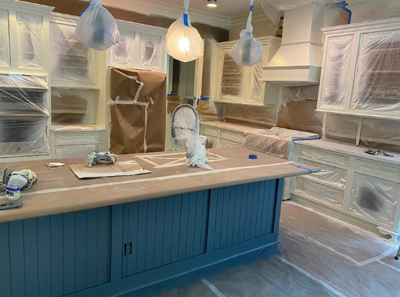

Kitchen renovation should start with diagnosis, not demolition. Many cabinet boxes remain square, dry, and stable long after their finish looks worn. Doors may show hand oils, faded stain, chipped edges, or an outdated color, yet the structure can still serve the room well. Painting gives those sound components another cycle of use, preserving the layout while improving appearance, cost control, and daily function.
Cost Reality
Replacement usually combines tear-out, new boxes, doors, hardware, hauling, carpentry, and finish labor. In a busy kitchen, those charges climb with every drawer bank and odd-sized opening. Professional cabinet painting directs funds to cleaning, repair, primer, coating, and surface control. That spending pattern makes sense when the layout works, the frames hold firm, and the goal is visible renewal.
Less Waste
A full tear-out can discard wood, hinges, pulls, shelves, and panels that still have useful life. Painting keeps those materials in service. That choice matters most where frames are dry, joints remain tight, and storage already fits household needs. Extending service life also reduces packaging, freight, and demand for newly manufactured cabinet parts.
Shorter Disruption
Kitchen projects affect meals, storage, school mornings, and evening routines. Replacement can interrupt those patterns for weeks, especially if counters, plumbing, or flooring are disturbed. Painting generally concentrates on doors, drawers, exposed frames, surface preparation, curing, and reinstallation. A smaller work zone can help a household maintain more of its routine during the upgrade.
Preparation Matters
A painted finish performs only as well as the surface beneath it. Grease, silicone residue, wax, dust, and cooking film can interfere with adhesion. Proper preparation includes degreasing, sanding, filling defects, caulking select gaps, and using a primer that bonds to the existing material. Those steps reduce peeling, shiny patches, brush ridges, and early wear near handles.
Finish Quality
Cabinet surfaces are exposed to moisture, skin oils, repeated wiping, and contact from rings, utensils, and fingernails. Standard wall paint usually lacks the hardness needed for that use. Cabinet-grade coatings cure to a tougher film and hold sheen more predictably. Spraying can create a smooth factory-style surface, while skilled brushing or rolling can also produce clean, controlled results.
Design Flexibility
Paint changes a room’s vibe without changing its structure. Soft white shades can brighten a small kitchen. Muted green can calm busy stone or tile. Charcoal, navy, or warm gray can add weight to plain doors. Two-color plans may separate an island from perimeter storage. Since color covers such a large surface area, the change in the kitchen’s atmosphere feels immediate.
Hardware Pairings
New pulls, knobs, and hinges often determine whether painted cabinets feel finished. Brass can add warmth, black can sharpen contrast, and brushed nickel can keep the look quiet. Scale deserves care. Wide drawers often need longer pulls for balance, while narrow doors may suit simple knobs. Matching hardware placement also helps the finished room appear orderly.
When Replacement Wins
Painting cannot repair every cabinet problem. Water-swollen panels, crumbling particleboard, loose frames, warped doors, or failing drawer boxes may call for replacement. A poor layout can also limit any cosmetic improvement. If storage is inadequate or the space feels too cramped to move around comfortably, new construction may solve issues that paint cannot reach. Condition, use, and long-term goals should guide the decision.
Value Over Time
A well-painted cabinet set can improve how a kitchen reads during daily use and future resale. Buyers often judge storage, cleanliness, and maintenance quickly. Even color, crisp edges, smooth doors, and updated hardware suggest care. Owners benefit before any sale as well. A cleaner, brighter kitchen can make cooking, organizing, and gathering feel more comfortable.
Cabinet painting is a wise option when existing boxes are stable, the layout serves the household, and the main concern is the worn appearance. It can control cost, reduce waste, limit disruption, and still produce a meaningful visual change. The best results come from careful inspection, thorough preparation, durable coatings, and disciplined application. Replacement has a clear role, but many kitchens can feel renewed without starting over.
(0) comments
We welcome your comments
Log In
Post a comment as Guest
Keep it Clean. Please avoid obscene, vulgar, lewd, racist or sexually-oriented language.
PLEASE TURN OFF YOUR CAPS LOCK.
Don't Threaten. Threats of harming another person will not be tolerated.
Be Truthful. Don't knowingly lie about anyone or anything.
Be Nice. No racism, sexism or any sort of -ism that is degrading to another person.
Be Proactive. Use the 'Report' link on each comment to let us know of abusive posts.
Share with Us. We'd love to hear eyewitness accounts, the history behind an article.