
A multi-level home or building is simply not complete without a beautiful, functional set of stairs. Unless you plan on investing in a home elevator, you’ll need a quality staircase to help you move between floors. Design-wise, there is a ton of possible variety involved with staircase setups. By educating yourself about the core types of staircases, you can make an informed decision about which staircase will best fit your living space. To guide you, here is a handy look into the seven primary types of staircases you’ll be choosing from:
1. Straight
If you’re looking for a classic set of stairs, you’re looking for a straight-style staircase. These are as straightforward in their design and function as staircases can possibly get. They do not have any change in direction and connect two floors together in an efficient, simple fashion. While they may not be as stylish and bombastic as other staircase types, they have their own quaint charm to them. When designing a straight staircase, determining the stair height of each step becomes the biggest question of the whole ordeal.
2. Spiral
At the opposite end of the spectrum, we get the spiral staircase design. Unlike the straight staircase, spiral staircases wind in a spiral shape and tend to be fairly narrow in width (and stair height). These types of staircases are frequently used for stylistic purposes. However, shafts and other uniquely tight spaces can use spiral staircases for logistical reasons. While they are beautiful to look at, the sometimes disorienting nature of spiral staircases has made them an unpopular choice for homeowners’ stairway setups.
3. Bifurcated
If you want the grandest staircase design possible, you simply must invest in a bifurcated staircase. These are the types of staircases you see in Victorian romances and Gothic horrors. They live in our dreams and scream class from the mountaintops. That being said, they are by far the most expensive, expansive, and space-draining style of staircase you can possibly imagine. Unless you’re looking to live like Gatsby, you may want to consider something more practical. But if you’re a true dreamer, shoot for the stars!
4. U-Shaped
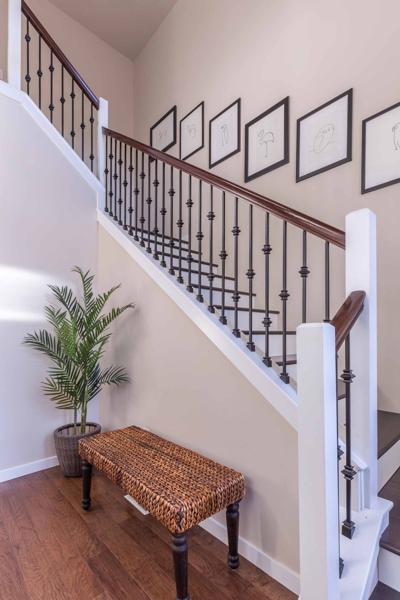
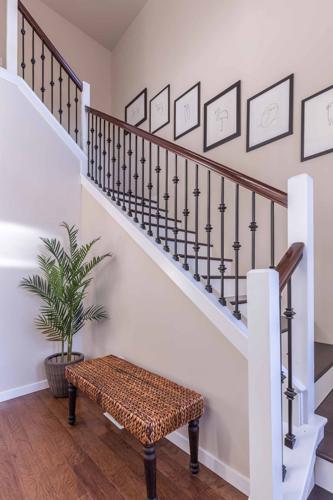
If you’re installing a staircase in a tight hallway, or in a stairwell, you’ll almost certainly want a u-shaped design setup. These u-shaped staircases are characterized by bending into a u-shape, as opposed to an l-shape. If you’ve ever climbed stairs in an office building or hotel, you’ve experienced a u-shaped staircase. A landing is used to separate the two parallel flights of stairs. While they are often fairly industrial looking, the right designer can make a u-shaped staircase look incredibly stylish. High-class homeowners will often use this quirky take on u-shaped stairs to give their home some extra pizazz.
5. Curved
Curved staircases are a precursor to the l-shaped style that we will be discussing below. Curved-style staircases have no landings, but still, end up taking on a u or l-shaped esque style in most cases. These are incredibly striking works, but they are expensive to install and take up a lot of space. For homeowners who enjoy function over form, curved staircases are not recommended. More fashionable homeowners are likely to fall in love with this design type, however.
6. L-Shaped
If you’re looking for a zany, beautiful alternative take on the classic straight-style staircase, you need to heavily consider installing an l-shaped staircase in your home. These stairs make a ninety-degree turn at some point in their design, giving them a quirky feel, and a unique climbing experience. Homes that want to save space in their interior design layouts often use l-shaped staircases to help accommodate a more spacious layout, so “high-class” homes often have l-shaped staircases installed.
7. Winder
Winder staircases are close relative to the l-shaped staircase design. These stairs are called winders because they become wider as they crook into an l-shape. Homes that are looking for a unique, highly designed look often find themselves opting for a winder case install. That being said, the expense of this much more heavily customized design must be stated. If you want a winder staircase in your home, you need to be ready to spend a pretty penny to get the job done professionally.
Take Your Choice a Step at a Time
Never rush into a decision as big and important as what type of staircase you’ll install in your home. Doing so can lead you to severely regret your decision later on. Take your time, and consider the stylistic and functional needs of your staircase design, and you’ll end up satisfied with this project.
Other Articles Related to Your Search
Qualities to Look for When Buying a Stairlift

(0) comments
We welcome your comments
Log In
Post a comment as Guest
Keep it Clean. Please avoid obscene, vulgar, lewd, racist or sexually-oriented language.
PLEASE TURN OFF YOUR CAPS LOCK.
Don't Threaten. Threats of harming another person will not be tolerated.
Be Truthful. Don't knowingly lie about anyone or anything.
Be Nice. No racism, sexism or any sort of -ism that is degrading to another person.
Be Proactive. Use the 'Report' link on each comment to let us know of abusive posts.
Share with Us. We'd love to hear eyewitness accounts, the history behind an article.