
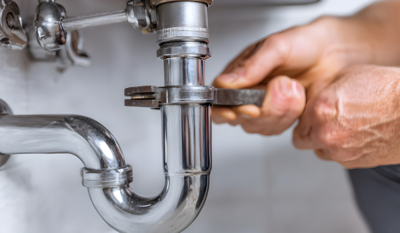
For many homeowners, plumbing sits at the top of the DIY fear list. Paint can be redone. Shelves can be re-leveled. But water? Water feels unforgiving. A small error can turn into leaks, damaged cabinets, or a frantic call to a professional—often on a weekend, often at premium rates.

The irony is that most beginner plumbing mistakes don’t happen because people lack skill. They happen because people lack structure.
Many online guides jump straight into fittings, tools, and terminology. That’s useful—eventually. But for first-time DIYers, what actually prevents mistakes is a clear, repeatable process that removes guesswork before the wrench ever turns.
This editorial-style checklist is designed for beginners who want to work carefully, logically, and safely—without needing prior plumbing experience.
Step 1: Clearly Define the Problem (and Nothing More)
Before you buy parts or watch tutorials, slow down and define the task with precision.
Ask yourself:
Is there an active leak, or a preventative replacement?
Is the part failing, outdated, or simply inefficient?
Am I repairing, replacing, or adding something new?
Beginners often make the mistake of expanding the project mid-stream: replacing “just one valve” turns into redoing an entire section of pipe. That’s how confidence collapses.
Editorial rule: one problem, one solution. Finish it cleanly. Complexity can wait.
Step 2: Confirm Water Control Before Anything Else
No plumbing project starts with tools—it starts with control.
Before purchasing materials, confirm:
There is a shut-off valve serving the fixture or section
The valve actually turns smoothly
Water pressure can be fully released after shutdown
If the valve doesn’t move or doesn’t fully stop water flow, stop here. Installing or repairing a shut-off valve becomes the real first project—and it’s one worth doing properly.
Control is what separates a manageable DIY task from a chaotic one.
Step 3: Measure Precisely and Match Exactly
Plumbing is not forgiving of “close enough.”
You need to measure:
Pipe diameter (nominal size, not visual guess)
Thread type (male/female, NPT, compression, etc.)
Length and depth of replacement components
Even minor mismatches lead to leaks, overtightening, or weak seals that fail weeks later.
Many homeowners reduce error at this stage by ordering from PlumbingSell, where specifications, thread details, and compatible components are clearly listed—removing a lot of the ambiguity that causes beginner mistakes.
This step isn’t about speed. It’s about certainty.
Step 4: Buy Small Spares (They Matter More Than You Think)
Washers, O-rings, and seals cost very little—and save a lot of stress.
Always purchase:
One extra washer
One extra seal or gasket
Additional thread tape if required
The most common beginner failure point is not the pipe or fitting—it’s a damaged seal installed twice because there was no backup.
Professionals assume redundancy. Beginners should too.
Step 5: Prepare the Area Before Disassembly
Plumbing problems don’t come from pipes alone—they come from poor preparation.
Before loosening anything:
Place towels beneath the work area
Keep a bucket directly underneath fittings
Take clear photos from multiple angles
Loosen connections slowly, not forcefully
Those photos become your silent instruction manual if something shifts or needs to be reassembled. They are especially valuable when pipes twist slightly as fittings are removed.
Preparation turns uncertainty into control.
Step 6: Install Methodically, Not Forcefully
Most beginner plumbing mistakes are caused by overtightening.
Follow this rhythm:
Dry-fit first — assemble parts without sealant to confirm alignment
Apply sealant correctly — even, light application where required
Tighten gradually — hand-tight, then wrench-tight in small increments
If something doesn’t align naturally, stop. Plumbing components are designed to seat cleanly. Force usually means mismatch.
Think of plumbing less like construction and more like calibration.
Step 7: Test in Stages, Not All at Once
When the installation is complete, resist the urge to turn everything on immediately.
Instead:
Open the shut-off valve slightly
Observe all joints for moisture
Increase pressure gradually
Recheck after 10–15 minutes
Recheck again later the same day
Some leaks only appear after pressure stabilizes or materials settle. Staying nearby during the first full cycle is essential.
Testing is not a moment—it’s a process.
Step 8: Build DIY Awareness for Future Projects
After finishing, take five minutes to document:
What worked smoothly
What was confusing
What tools or parts you underestimated
What you’d do differently next time
This turns one weekend task into long-term competence.
Over time, plumbing stops feeling mysterious. Patterns emerge. Connections make sense. What once felt risky becomes routine.
Plumbing Isn’t About Bravery—It’s About Process
DIY plumbing doesn’t require fearlessness. It requires respect for sequence.
When beginners fail, it’s rarely due to lack of intelligence or effort. It’s because steps were skipped, assumptions were made, or uncertainty wasn’t addressed early.
A checklist removes those risks. It replaces guesswork with structure and turns an intimidating category of home repair into a series of manageable decisions.
Follow the process. Move deliberately. And let confidence build one clean connection at a time.


(0) comments
We welcome your comments
Log In
Post a comment as Guest
Keep it Clean. Please avoid obscene, vulgar, lewd, racist or sexually-oriented language.
PLEASE TURN OFF YOUR CAPS LOCK.
Don't Threaten. Threats of harming another person will not be tolerated.
Be Truthful. Don't knowingly lie about anyone or anything.
Be Nice. No racism, sexism or any sort of -ism that is degrading to another person.
Be Proactive. Use the 'Report' link on each comment to let us know of abusive posts.
Share with Us. We'd love to hear eyewitness accounts, the history behind an article.