

For a long time, the formula for an upscale family resort was relatively predictable: a beautiful pool, polished accommodations, several restaurants, a spa for the adults and enough organized activities to keep younger guests occupied.
That formula is evolving.
Families increasingly have more options for building trips around what they actually enjoy doing together. For some, that means skiing or hiking. For others, it is music, food or time on the water. And for households in which weekends are already organized around games, teams and sporting traditions, hospitality is beginning to speak their language too.
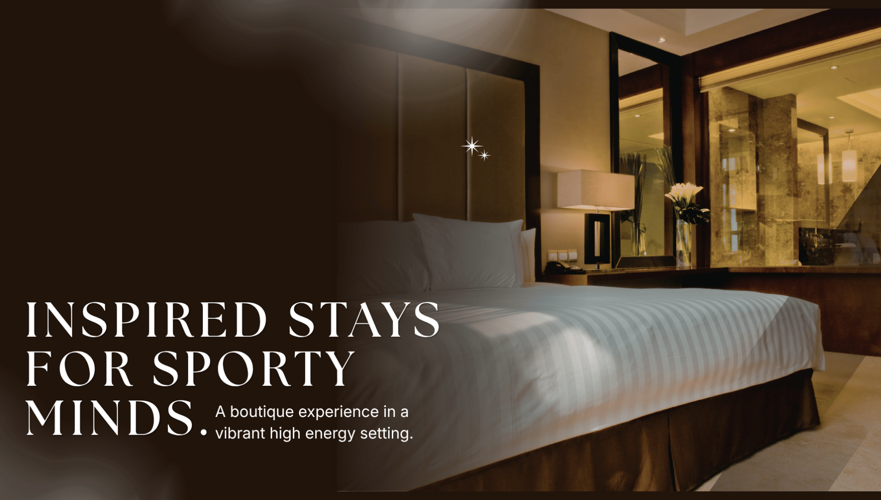
Sports-inspired resorts represent an interesting part of that shift. Rather than treating athletics as another amenity on a long recreation list, these properties can use sporting culture to shape the atmosphere of the stay itself.
That distinction is important.
A tennis court beside a hotel does not necessarily make it a sports destination. The more interesting concept is a property where fandom, design, events, fitness, gathering spaces and the surrounding city combine to make sport part of the travel experience.
Family travel is becoming more experience-ed
One of the difficulties of planning a family vacation is finding something that several generations genuinely want to do.
Parents may appreciate good dining and comfortable accommodations. Children want entertainment. Teenagers need something engaging enough to compete with their phones. Grandparents may be interested in the destination itself rather than a packed activity schedule.
Shared interests can solve part of that problem.
A sporting event already provides a focal point around which a trip can be built. The vacation then becomes bigger than the game: arriving in the city, exploring its neighborhoods, eating together, discussing the matchup beforehand and replaying favorite moments afterward.
This is where a well-designed sports-oriented property has an advantage. Instead of forcing families to separate the game from the rest of the vacation, it can extend some of that enthusiasm into the hotel environment.
It also gives family members who are not attending every event something more substantial than simply waiting for the rest of the group to return.
Sports culture can be part of the design
The most compelling sports-themed spaces avoid looking like oversized locker rooms.
Sport has an enormous visual history to work with: photography, typography, uniforms, architecture, championship moments, old magazine covers and stories that span generations. Used thoughtfully, those references can create interiors that feel sophisticated while still being immediately recognizable to fans.
Sports Illustrated Resort stays is a particularly interesting example because its source material comes from more than seven decades of sports storytelling.
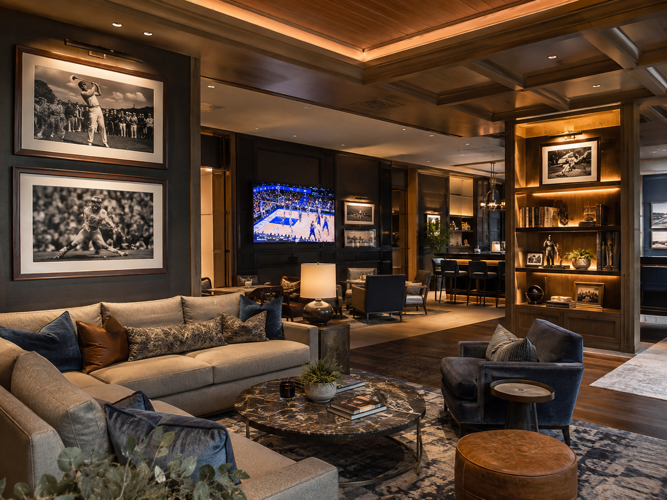
The brand describes its Hall of Champions as a lobby environment surrounded by iconic Sports Illustrated covers and sports content.
Other concepts in its hospitality playbook include a Trophy Room built around screens and social viewing, SI Fit training areas, The Stadium for food and game watching, and an Outfield Pool designed to combine swimming and lounging with following the action.
These aren't simply decorative references to sport. They are spaces organized around behaviors that fans already understand: gathering, watching, discussing, training and celebrating.
For families, that creates something a conventional hotel lobby often struggles to deliver—a natural reason to spend time together outside the guest room.

The destination matters as much as the property
A credible sports resort cannot exist entirely inside its own walls.
The location has to contribute something.
That makes cities with established sporting identities especially logical choices. Sports Illustrated Resorts currently promotes stays in Chicago and Nashville, destinations with very different personalities but strong connections to live sports and entertainment.
Chicago, in particular, brings generations of professional and collegiate sporting history together with architecture, dining, museums and a major urban tourism scene.
The company's Chicago project illustrates how the concept can work without constructing an artificial sports destination from scratch. The property is an existing hotel in the Loop being transformed with Sports Illustrated-inspired interiors and amenities.
Travel + Leisure Co. has said the approximately 250-unit project will preserve the building's grand staircase while introducing sports imagery, a signature fitness center, an owners' lounge, dining venues and a sports bar. Completion of the full branded transformation is expected in late 2026.
For families comparing Sports Illustrated Resort stays, that connection between accommodation and destination is worth paying attention to. The appeal is not simply sleeping in a sports-branded property. It is being based somewhere that can turn a game, rivalry weekend or shared sporting interest into a broader city break.
The brand is also looking toward markets where college sports are closely woven into local identity. Baton Rouge and Tuscaloosa are listed as future destinations.
The Tuscaloosa development, which broke ground in May 2026 and is expected to open in 2028, has announced plans including an owners' lounge with stadium-style seating for watch parties, a game lounge, indoor and outdoor bars, a fitness center, pool-deck amenities and even a broadcast booth.
That is a much more specific proposition than putting a few jerseys on a wall.
Watching together still matters
Technology has made it possible to watch virtually any major competition from almost anywhere. Paradoxically, that has made communal viewing feel more distinctive.
A championship watched alone on a phone is technically accessible. The same match watched with parents, children, grandparents and dozens of excited fans becomes an occasion.
Hospitality operators have started designing around that difference.
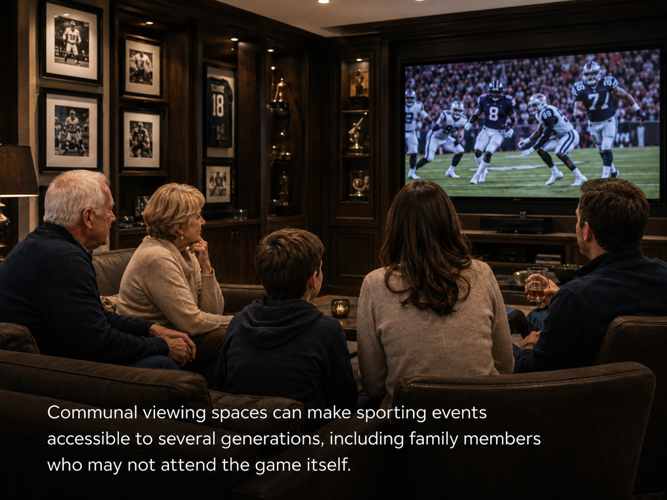
Large screens, comfortable seating, food and beverage service and spaces where groups can gather are not revolutionary individually. Their value comes from combining them in an environment where watching the event is an intentional part of the stay.
For multigenerational families, these spaces also lower the barrier to participating in sporting culture. Not everyone needs a ticket, detailed knowledge of the league or the stamina for an entire day inside a stadium. Someone can join the family for dinner and the second half of a game and still share in the occasion.

That inclusiveness may ultimately be more important than how much sports memorabilia a property owns.
Active travel does not have to mean an athletic vacation
There is another distinction worth making: sports-inspired travel is not necessarily about being highly athletic.
A family should not have to spend every morning completing a training session for a property to justify its sporting identity.
Some guests may want to use a serious fitness facility. Others may want to swim, walk a city, attend a match or simply spend an evening watching their favorite team together. The strongest hospitality concepts leave room for all of those interpretations.
Sports Illustrated Resorts' own positioning reflects that broader idea. Its SI Fit concept introduces training space, while other signature areas focus on watching, dining, socializing and sports history. Its current experience offering also extends beyond the resorts themselves into ticketed sporting and entertainment occasions.
This mix matters because family travel works best when participation is optional rather than prescribed.
A different definition of an elevated family getaway
Experience-led hospitality does not eliminate the things travelers already value. Comfortable rooms, thoughtful service, good food, appealing design and time to decompress still matter.
What is changing is what families expect around them.
The memorable resort is increasingly the one that gives people something to participate in, talk about and remember together. Sports-inspired properties are one expression of that movement, particularly for travelers whose family calendars and traditions already revolve around teams, competitions and game days.
Done poorly, sports theming can easily become novelty décor. Done well, it can provide a framework for design, fitness, dining, entertainment, travel and intergenerational connection.
And that points toward a broader change in family hospitality: the finest stay may no longer be the one that simply gives everyone enough space to do their own thing. It may be the one that gives them a compelling reason to come together.


(0) comments
We welcome your comments
Log In
Post a comment as Guest
Keep it Clean. Please avoid obscene, vulgar, lewd, racist or sexually-oriented language.
PLEASE TURN OFF YOUR CAPS LOCK.
Don't Threaten. Threats of harming another person will not be tolerated.
Be Truthful. Don't knowingly lie about anyone or anything.
Be Nice. No racism, sexism or any sort of -ism that is degrading to another person.
Be Proactive. Use the 'Report' link on each comment to let us know of abusive posts.
Share with Us. We'd love to hear eyewitness accounts, the history behind an article.