
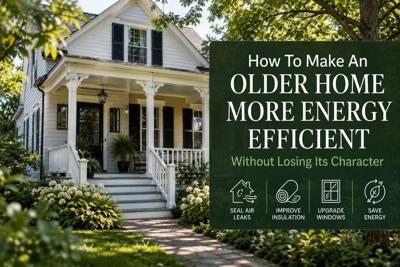

Older homes have a kind of personality that newer homes often try to imitate. The original windows, detailed trim, mature landscaping, solid wood doors and slightly imperfect architecture can make a house feel warm, layered and lived in. That charm is usually the reason buyers fall in love in the first place.
The problem is that older homes can also be drafty, expensive to heat and cool, and uncomfortable from one room to the next. Making an older home energy efficient does not mean stripping away its character or turning it into a generic remodel. The best upgrades are thoughtful, practical and respectful of what made the home special to begin with.
If you are buying an old home or updating one you already own, start with the changes that improve comfort, reduce waste and protect the original details worth keeping.
Start With A Home Energy Assessment
Before replacing windows, buying a new HVAC system or tearing into walls, get a clear picture of how the home is performing. A professional home energy assessment can identify air leaks, weak insulation, inefficient equipment and rooms that are losing conditioned air.
The U.S. Department of Energy notes that an energy assessment can help identify areas that need air sealing and insulation before major upgrades are made. That matters in an older home because the most obvious problem is not always the most important one.
A room may feel cold because of gaps in the attic, an unsealed basement rim joist, poor ductwork or missing insulation rather than the windows alone. When the goal is to make an older home energy efficient, guessing can get expensive quickly.
Seal Air Leaks Before Adding More Equipment
Air sealing is one of the least glamorous upgrades, but it can make an older home feel dramatically better. Gaps around attic penetrations, doors, windows, baseboards, crawl spaces and basements allow heated or cooled air to escape. They also allow outdoor air, dust and moisture to come inside.
According to ENERGY STAR, sealing air leaks and adding insulation can help improve comfort and energy efficiency. Simple fixes may include weatherstripping doors, caulking small gaps and sealing attic leaks. Larger projects may involve professional air sealing in attics, crawl spaces or basements.
In an older home, air sealing should be done carefully. The goal is to reduce waste without creating moisture problems. Work with someone who understands older construction, especially if the house has plaster walls, original windows, a stone foundation or limited ventilation.
Improve Insulation Where It Matters Most
Insulation helps the home hold the temperature you are paying to create. Many older homes have too little insulation, uneven insulation or insulation that has settled, shifted or been disturbed during past renovations.
Attics are often the first place to look. Heat can escape through the top of the home in winter, while summer heat can push down into living areas. Basements, crawl spaces, floors over garages and accessible rim joists can also affect comfort.
The U.S. Department of Energy recommends finding out how much insulation a home already has and where it is before adding more. It also advises making sure the home is properly air sealed before insulating.
This order matters. If air is still leaking freely through gaps, insulation alone may not solve the problem. A smart insulation plan helps make an older home energy efficient without unnecessary demolition.
Respect Original Windows Whenever Possible
Windows are one of the most emotional decisions in an older home. Original windows may be part of the home’s character, especially if they have divided panes, old-growth wood, distinctive trim or proportions that suit the architecture.
Replacement windows are sometimes the right choice, but they are not the only option. Weatherstripping, caulking, repairing sash cords, adding storm windows or restoring existing windows can improve performance while preserving the look of the home.
The National Park Service notes that adding storm windows can improve the thermal efficiency of windows and recommends using an energy audit to determine whether they make sense for a specific building.
For many homeowners, the best answer is not all-or-nothing. Some windows may be restored, while damaged or poor-quality replacements from past remodels may be upgraded. The goal is comfort without erasing the home’s identity.
Update Doors, Drafts And Small Gaps
Doors can be just as important as windows. Older exterior doors may be beautiful, but they can also leak air around the edges or beneath the threshold. Before replacing them, look at weatherstripping, door sweeps, thresholds and hardware alignment.
A classic wood front door can often be improved without losing its style. The same is true for side doors, basement entries and doors leading to garages or patios. These smaller upgrades can make a home feel less drafty and more polished.
Small gaps around trim, attic hatches, recessed lights, plumbing penetrations and utility openings can also add up. When homeowners want an older home energy efficient without a major renovation, these details are a practical place to start.
Make HVAC Upgrades After The Home Is Sealed
It is tempting to blame comfort problems on the furnace or air conditioner, but equipment is only part of the story. If the house leaks air or lacks insulation, even a newer HVAC system may struggle to keep rooms comfortable.
Once the home is air sealed and insulated, a qualified HVAC professional can determine whether the existing system is properly sized and working efficiently. Older homes may also benefit from duct sealing, zoning, heat pumps, smart thermostats or improved ventilation.
This is also the time to think about future electrical needs. If you plan to add high-demand appliances, a heat pump, an EV charger or smart-home systems, review the electrical panel as part of the planning process. This guide on signs you need a new circuit breaker panel explains what to watch for before adding more demand.
Choose Smart Technology That Does Not Fight The House
Smart thermostats, lighting controls, leak detectors and energy monitors can help homeowners understand and manage energy use. In an older home, the key is choosing technology that supports the house rather than overwhelms it.
A smart thermostat can help manage heating and cooling schedules. Leak sensors can protect vulnerable areas near basements, laundry rooms and water heaters. Smart lighting can reduce unnecessary energy use while still working with chandeliers, sconces and lamps that suit the home’s style.
The best technology upgrades are the ones that disappear into daily life. They make the home easier to live in without making it feel less like itself.
Be Careful With Renovations In Pre-1978 Homes
Energy upgrades sometimes involve opening walls, disturbing paint, replacing windows or working around older materials. Homes built before 1978 may contain lead-based paint. The U.S. Environmental Protection Agency warns that renovation, repair and painting projects in pre-1978 homes can create hazardous lead dust when lead-based paint is disturbed.
Some older homes may also contain asbestos in flooring, insulation, pipe wrap or other materials. Before sanding, scraping, demolition or major weatherization work, understand what materials are present and whether certified professionals are needed.
A careful approach protects both the home and the people living in it.
Final Thoughts On Energy Efficient Older Homes
Making an older home energy efficient is not about removing the details that give it charm. It is about helping the home perform better while preserving the architecture, materials and personality that made it worth saving.
Start with information. Seal the leaks. Improve insulation. Respect original windows when possible. Upgrade HVAC and smart technology thoughtfully. When each decision supports both comfort and character, an older home can feel warmer, quieter, more efficient and still unmistakably itself.
(0) comments
We welcome your comments
Log In
Post a comment as Guest
Keep it Clean. Please avoid obscene, vulgar, lewd, racist or sexually-oriented language.
PLEASE TURN OFF YOUR CAPS LOCK.
Don't Threaten. Threats of harming another person will not be tolerated.
Be Truthful. Don't knowingly lie about anyone or anything.
Be Nice. No racism, sexism or any sort of -ism that is degrading to another person.
Be Proactive. Use the 'Report' link on each comment to let us know of abusive posts.
Share with Us. We'd love to hear eyewitness accounts, the history behind an article.