

A beautiful exterior is not just the color of the house or the landscaping around it. It is the feeling the home gives before anyone reaches the front door.
In 2026, homeowners are looking for finishes that do more than photograph well. They want siding, trim, paint, masonry, and architectural details that feel refined, stand up to weather, and do not demand constant attention every time the seasons change. The most desirable homes now have a kind of quiet durability: polished from the street, practical behind the surface, and designed to age gracefully.
That is where exterior finishes matter. Fiber cement siding, brick, stone veneer, stucco, engineered wood, metal accents, composite trim, and weather-resistant exterior paint are not just building materials. Used well, they shape the entire personality of a home.
The right finish can make a house feel more established, more current, more architectural, or more welcoming. It can also help protect the structure from sun, rain, moisture, pests, and everyday wear. The best exterior choices do both. They make the home look better and help it last longer.
Start With the Climate, Not the Color
It is tempting to begin with paint swatches and inspiration photos. That is the fun part. But the smarter place to start is with the climate.
Exterior finishes do not age the same way everywhere. A coastal home may need materials that can handle salt air, moisture, and corrosion. A desert or Southern California home may need finishes that resist sun exposure, fading, heat, and dry conditions. A home in a rainy or colder region may need materials that perform well through moisture, temperature swings, and seasonal wear.
This matters because a finish can look beautiful on day one and still be wrong for the house. Natural wood may be charming, but it usually needs regular care. Stucco can look elegant, but it depends on proper moisture management. Dark paint can add drama, but it may fade faster in direct sun. Brick may be low-maintenance, but the mortar and drainage details still matter.
Before choosing a finish, homeowners should think about what the home actually faces: sun, rain, wind, humidity, salt air, pests, wildfire concerns, or freeze-thaw cycles. They should also be honest about how much upkeep they want to handle.
A refined exterior begins with materials that look beautiful because they belong there.
Fiber Cement: The Polished Workhorse of Modern Exteriors
Fiber cement siding has become popular because it understands the assignment.
It gives homeowners the crisp, painted look of wood siding without the same level of vulnerability to rot, insects, and warping. It can look traditional, coastal, modern farmhouse, or contemporary depending on the profile and color. That flexibility is part of its appeal.
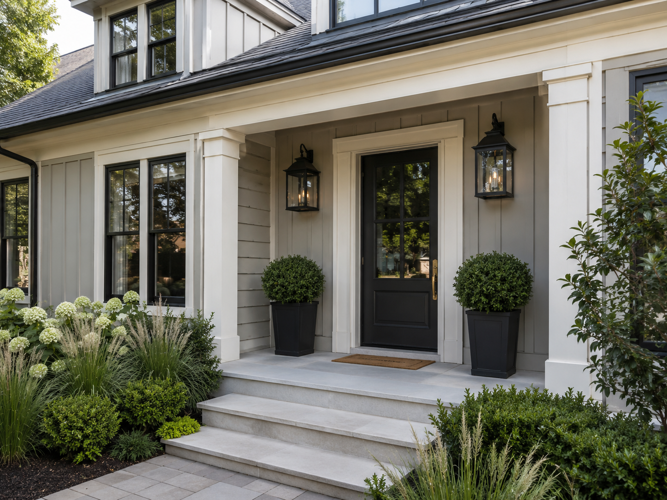
For homes that need a clean and current exterior, fiber cement can create strong curb appeal without looking overly trendy. Wide lap siding can feel classic. Board-and-batten can feel fresh and architectural. Panel siding can give a more modern home a sharper finish.
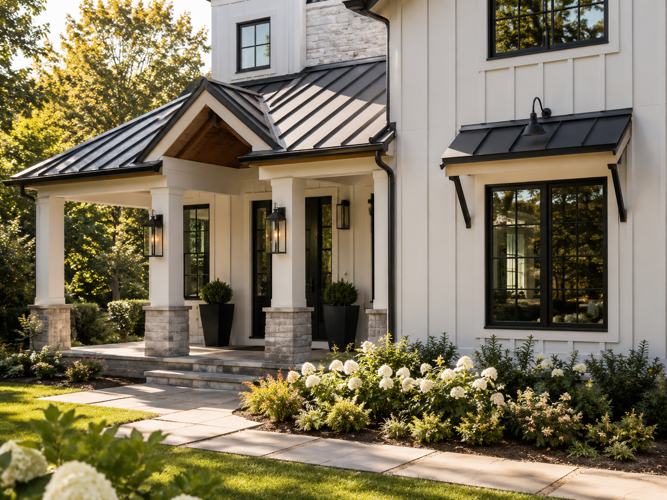
It also works well with other materials. Fiber cement can be paired with stone veneer at the base of a home, brick around an entry, black-framed windows, warm wood accents, or a darker metal roof detail. That layering is often what makes a facade feel more custom.
The main thing to know is that fiber cement needs proper installation. It is heavier than vinyl, and the details matter: flashing, clearances, sealing, and paint quality all affect how well it performs. It is durable, but it should not be treated like an afterthought.
For a FINE-style exterior, fiber cement works best when it feels intentional. The siding profile, trim width, roof tone, window color, and landscaping should all feel like part of the same design conversation. For more inspiration on how exterior materials can elevate a property, Fine Homes and Living’s 7 Elegant Upgrades That Define a Truly Fine Home Exterior offers a helpful look at refined exterior details, cladding, windows, doors, and architectural finishes.
Brick Still Has the Kind of Permanence Trends Cannot Fake
Brick has a confidence that never really disappears.
It brings texture, history, and a sense of permanence to a home. On traditional houses, it can feel classic and established. On newer homes, it can add depth and character. In the right setting, brick can make a house feel as if it has always belonged there.
The style depends on the details. Red brick feels timeless. Pale brick can feel softer and more current. Gray or cream brick can work beautifully on transitional homes. Whitewashed or limewashed brick can update an older facade without stripping away its character.
Brick is also appealing because it does not need the kind of repainting schedule that many other exterior finishes require. That does not mean it is maintenance-free. Homeowners should still watch for damaged mortar, staining, drainage problems, or areas where moisture may be lingering.
The key with brick is restraint and proportion. Too much heavy brick in the wrong place can make a home feel dated or visually crowded. Used thoughtfully, brick can anchor a facade, frame a front entry, add richness to a lower wall, or bring warmth to a clean exterior palette.
A polished brick exterior is rarely about the brick alone. It is about how the brick works with the roof, trim, windows, lighting, landscaping, and front door.
Stone Veneer Adds Weight, Texture, and a Sense of Arrival
Stone veneer can give a home exterior the kind of depth that flat surfaces cannot always create.

It works especially well where the architecture needs emphasis: around a front entry, along the base of a facade, on porch columns, garden walls, outdoor fireplaces, or a feature wall. Used in the right place, stone makes a home feel grounded and substantial.
The most successful stone veneer applications are usually not the loudest. A tasteful stone base, a textured entry surround, or a pair of stone-clad columns can do more for curb appeal than covering every possible surface. The goal is architectural depth, not visual clutter.
Stone veneer pairs well with stucco, fiber cement, engineered wood, painted siding, and metal accents. It can make a contemporary home feel warmer, a traditional home feel richer, or a simple exterior feel more finished.
Still, homeowners should be selective. Stone color, size, pattern, and grout lines all affect whether the result feels refined or dated. Installation is also important. Stone and masonry-style claddings need proper flashing, drainage, and moisture control behind the visible surface. Building Science Corporation offers building-science guidance on how claddings, water management, and wall assemblies work together, which is a useful reminder that exterior beauty should be supported by sound construction.
The best stone veneer does not look pasted on. It looks like it belongs to the home.
Stucco Gives a Home a Smooth, Quiet Elegance
Stucco can make a home feel calm, sculptural, and sun-washed in the best possible way.
It is especially effective on Mediterranean, Spanish, desert-modern, contemporary, and warm-weather homes. In those settings, stucco has an easy elegance. It does not need much ornament when the proportions, color, and surrounding details are right.
Soft white, cream, sand, clay, warm gray, and muted earth tones can all make stucco feel refined. It also works beautifully with arched windows, black-framed glass, wood beams, tile roofs, iron railings, stone paving, and drought-tolerant landscaping.
The strength of stucco is that it creates a continuous exterior surface. That smoothness can make a home look more cohesive and architectural. But stucco also needs attention. Cracks, staining, and trapped moisture should be addressed early. In wetter climates or areas with freeze-thaw cycles, installation and drainage details become especially important.
For a more elevated look, stucco benefits from contrast. A warm wood door, a metal awning, a stone walkway, or layered planting can keep the exterior from feeling too flat. The best stucco homes feel simple, but never unfinished.
Engineered Wood Brings Warmth Without Feeling Too Rustic
Many modern exteriors need warmth.
That is where engineered wood can be especially useful. It can soften a crisp facade, add texture to a neutral palette, or make a contemporary home feel more welcoming. It can be used as siding, board-and-batten, porch ceilings, soffits, garage doors, accent panels, or entry details.
The appeal is emotional as much as practical. Wood tones make a home feel lived-in, relaxed, and layered. A white stucco home with warm wood accents feels more inviting. A charcoal exterior with wood soffits feels less severe. A coastal-style home with engineered wood details can feel polished without becoming too formal.
Engineered wood can offer improved performance compared with untreated natural wood in many applications, but it still needs proper finishing and care. Homeowners should pay attention to exposure, sealing, clearances, and product quality.
The most refined applications are usually simple. A warm porch ceiling. A handsome garage door. A vertical accent panel near the entry. A soffit detail that catches the afternoon light. Used this way, engineered wood adds character without making the exterior feel overdesigned.
Metal Accents Make an Exterior Feel Current
Metal accents are one of the clearest ways to make a home exterior feel current in 2026.
They add structure, contrast, and a more architectural edge. A standing-seam metal roof over a porch, a slim metal awning, black-framed windows, bronze gutters, steel railings, or dark lanterns can sharpen the exterior without changing the entire home.
The trick is to use metal like punctuation. A few repeated accents can make the exterior feel cohesive. Too many competing metal finishes can make it feel busy.
Metal works particularly well with stucco, brick, stone veneer, fiber cement, and engineered wood. It can also help bridge older and newer styles. A traditional home with a dark metal porch roof and black-framed windows may feel instantly more polished without losing its original character.
Climate matters here too. Coastal homes may need corrosion-resistant materials and finishes. Dark metal can absorb heat. Painted or coated metal should be chosen for long-term exterior exposure, not just appearance.
Metal accents should feel deliberate. When they do, they give the home a cleaner, more finished edge.
Composite Trim Keeps the Details Crisp
Trim is one of those details people notice even when they do not realize they are noticing it.
Window casing, fascia, porch columns, railings, corner boards, and door surrounds all frame the exterior. When trim is clean and crisp, the house feels polished. When it is cracked, rotting, separating, or peeling, the whole exterior can look tired.
Composite trim can be a smart choice for homeowners who want sharper lines with less worry about moisture damage and rot. It is often used around windows, doors, fascia, columns, and other areas exposed to weather.
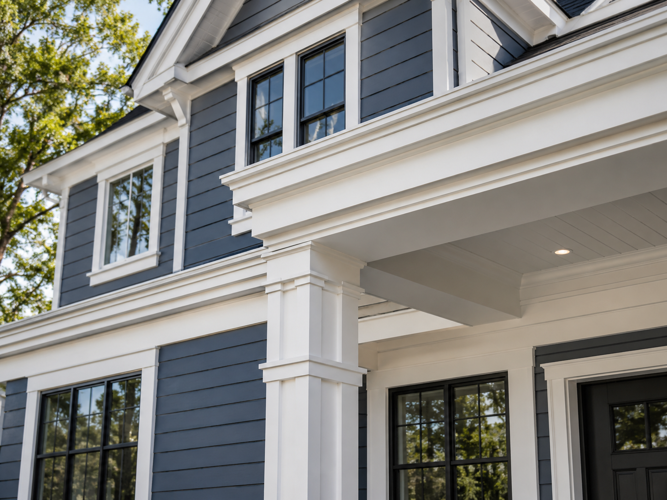
This matters because trim creates definition. White trim against gray siding can look classic. Dark trim against stucco can feel modern. Soft neutral trim around brick can make the whole facade feel calmer. The right trim choice can make even a simple exterior look more considered.
Composite trim still needs proper installation and regular checks. Homeowners should look for gaps, failing caulk, loose boards, damaged paint, or water stains. Durable materials perform best when the details around them are maintained.
Weather-Resistant Paint Is More Than a Pretty Color
Paint may be the most visible exterior finish, but it is also one of the easiest to underestimate.

A high-quality weather-resistant exterior paint helps protect siding, trim, doors, and other surfaces from UV exposure, moisture, mildew, and daily wear. It also has a major impact on whether a home feels current or dated.
The most appealing exterior palettes in 2026 tend to feel calm and lasting. Warm whites, soft grays, deep charcoals, sage greens, muted blues, clay tones, and natural neutrals all work because they feel stylish without trying too hard.
Color should also be chosen with climate in mind. Darker shades can look dramatic, but they may show fading more quickly in intense sun. Lighter colors can feel fresh and may help surfaces stay cooler. The U.S. Department of Energy explains that cool roofs are designed to reflect more sunlight and absorb less solar energy than conventional roofs, which is a useful reminder that exterior color and material choices can affect performance as well as appearance.
A good paint job should also be maintained before it fails. Wash exterior surfaces, touch up worn areas, and repaint when needed. Waiting until peeling becomes widespread can turn a simple refresh into a larger repair project.
Landscaping and Drainage Matter More Than People Think
Exterior finishes perform better when the areas around them are well cared for.
Landscaping can either protect a home or quietly work against it. Shrubs planted too close to siding can trap moisture. Sprinklers aimed at walls can stain finishes and cause wear. Property owners experiencing broken sprinkler heads or overspray should schedule a timely irrigation repair to avoid this exact type of facade damage. Poor drainage can affect masonry, stucco, siding, and foundations.
A refined exterior should have breathing room. Keep plants trimmed away from siding and windows. Use mulch, gravel, or stone thoughtfully near the foundation. Make sure gutters and downspouts direct water away from the home. Where possible, consider drainage-friendly hardscape and landscaping.
TheU.S. Environmental Protection Agency explains that green infrastructure, including rain gardens, planter boxes, green roofs, and permeable pavements, can help reduce and treat stormwater where it falls.
This is not just a technical detail. It affects how the home looks over time. Clean siding, dry foundations, healthy plantings, and well-planned drainage all help exterior finishes age more gracefully. For readers thinking about the landscape as part of the whole exterior picture, Fine Homes and Living’s The Real Benefits of Landscaping Beyond a Pretty Yard explores how thoughtful landscaping can support curb appeal, privacy, water management, and outdoor living.
Maintenance Is What Keeps the Exterior Looking Expensive
Durable does not mean maintenance-free. It is easier to maintain when the right materials are chosen well.
A simple seasonal routine can make a major difference. Wash exterior surfaces to remove dirt, pollen, mildew, and salt residue. Check caulking around windows, doors, trim, vents, and other openings. Recaulk when gaps or cracks appear.
Inspect trim for soft spots, separation, peeling paint, or water stains. Look at brick, stone veneer, and stucco for cracks, staining, or damaged mortar. Clean gutters and make sure downspouts move water away from the foundation. Repaint or touch up surfaces before the finish begins to fail.
Homeowners should also choose materials that match their maintenance personality. Natural wood can be beautiful, but it requires care. Brick, fiber cement, composite trim, stone veneer, stucco, and quality exterior paint can all be strong choices when they match the climate and are installed properly.
A home exterior does not need to look brand new forever. It needs to age well.
The Best Exterior Finishes Protect the Home and Elevate It
The right exterior finishes do more than cover a home. They define it.
Fiber cement siding can create a clean, long-lasting facade. Brick can add permanence and texture. Stone veneer can bring architectural depth. Stucco can make a home feel smooth and elegant. Engineered wood can add warmth. Metal accents can sharpen the design. Composite trim can keep the details crisp. Weather-resistant paint can protect surfaces while giving the home a more current look.
For FINE readers, the best exterior choices are both practical and beautiful. They consider proportion, climate, texture, color, architecture, and how the home should feel from the street. A durable finish should never make a home look overly utilitarian. It should make the exterior feel more polished, more protected, and more complete.
That is the real value of choosing exterior finishes well. They help shield the home from weather, improve curb appeal, and keep the property looking cared for year after year. When beauty and durability work together, the result is not just a better-looking house. It is a home that continues to make a graceful first impression long after the update is complete.
(0) comments
We welcome your comments
Log In
Post a comment as Guest
Keep it Clean. Please avoid obscene, vulgar, lewd, racist or sexually-oriented language.
PLEASE TURN OFF YOUR CAPS LOCK.
Don't Threaten. Threats of harming another person will not be tolerated.
Be Truthful. Don't knowingly lie about anyone or anything.
Be Nice. No racism, sexism or any sort of -ism that is degrading to another person.
Be Proactive. Use the 'Report' link on each comment to let us know of abusive posts.
Share with Us. We'd love to hear eyewitness accounts, the history behind an article.