
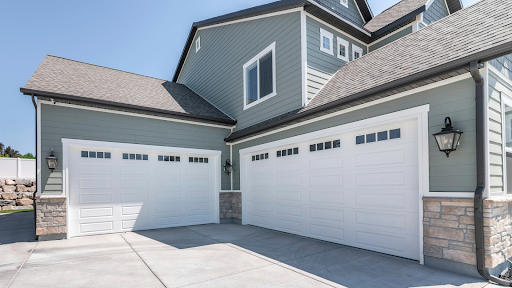
A garage door is not a small exterior detail. It is often one of the largest visual elements on a home, which means it can either elevate the entire facade or quietly drag it down. The right door can make a house look more finished, more current, and more intentional. The wrong one can make even a beautiful home feel dated.
That is why garage door design deserves the same level of attention as windows, front doors, exterior lighting, landscaping, and paint color. A garage door affects curb appeal, security, daily convenience, and even how finished the garage feels from the inside.
For homeowners updating a property, choosing a new garage door is not only about replacing something old. It is about selecting a style, material, finish, and feature set that supports the architecture of the home and the way the household actually lives.
Why Garage Doors Matter for Curb Appeal
Garage doors can take up a surprising amount of visual space, especially on homes where the garage faces the street. On some properties, the garage door is nearly as visible as the front entry. That makes it a major part of the first impression.
A dated, dented, faded, or poorly matched garage door can make the rest of the exterior feel less polished. On the other hand, a well-chosen garage door can sharpen the architecture, balance the facade, and make the home feel more complete.
This is especially true for luxury homes, coastal homes, modern builds, and properties with prominent driveways. The garage door should not look like an afterthought. It should feel like part of the design plan.
For homeowners already thinking about garage upgrades, FINE has also covered why garage door openers are the quiet luxury upgrade homeowners forget about. Once the door itself is chosen, the opener can make the garage quieter, smarter, and easier to use every day.
Modern Glass Garage Doors for Contemporary Homes
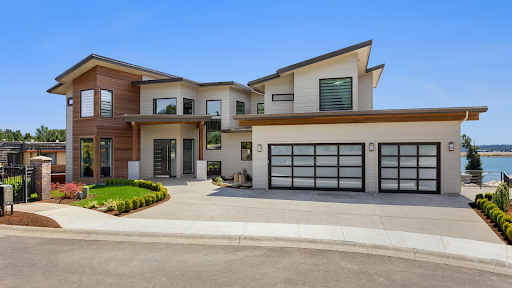
Modern glass garage doors can create a clean, architectural look that works beautifully with contemporary homes. They often feature aluminum frames with frosted, tinted, or opaque glass panels, giving the exterior a sleek and refined appearance.
This style is especially strong on homes with flat rooflines, large windows, minimalist landscaping, and modern exterior materials such as stucco, steel, stone, or smooth wood. The glass can soften the garage facade while still keeping the look crisp.
Privacy matters with glass garage doors, so homeowners should think carefully about the panel type. Frosted or opaque glass can allow light into the garage without fully exposing the interior. Tinted glass can also create a more dramatic look, especially on homes with black window frames or darker exterior accents.
For a garage used as a gym, studio, workshop, or polished storage space, a modern glass door can make the interior feel brighter and more connected to the home’s overall design.
Wood and Wood-Look Garage Doors Add Warmth
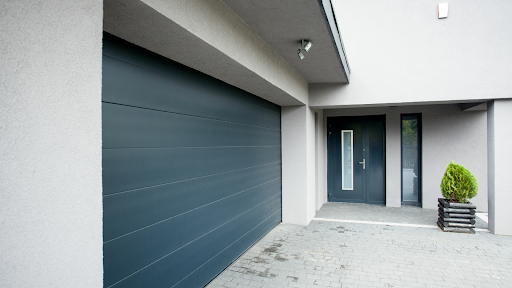
Wood garage doors bring warmth, texture, and natural character to a home. They can be especially beautiful on coastal, Spanish, Craftsman, farmhouse, and transitional properties where the exterior needs softness and depth.
True wood can look stunning, but it also requires maintenance. Sun, salt air, moisture, and seasonal changes can all affect the finish over time. For homeowners who love the look but want something easier to care for, wood-look steel or composite garage doors can be a practical alternative.
Wood-look finishes have improved significantly, and many now offer the warmth of natural grain with better durability and lower upkeep. This can be a smart choice for busy homeowners who want curb appeal without adding another maintenance project to the list.
The key is choosing a tone that works with the home. A warm walnut finish may look beautiful against white stucco, while a lighter oak tone may pair better with coastal neutrals. Darker woods can feel rich and dramatic, but they should be balanced with the rest of the exterior palette.
Carriage-Style Doors Still Work for Traditional Homes
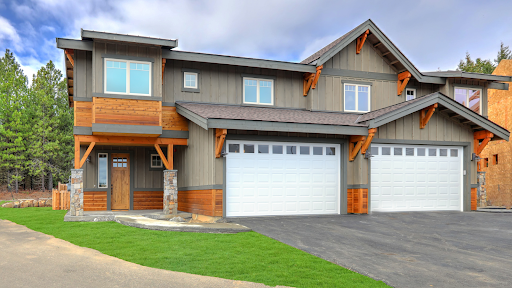
Carriage-style garage doors remain popular for a reason. They bring charm, symmetry, and a classic residential feel to homes with more traditional architecture. These doors often include decorative hardware, panel details, and window options that give the garage a more custom look.
The trick is to avoid choosing a version that feels too busy. Heavy hardware, overly ornate windows, and exaggerated paneling can make the door feel dated. A cleaner carriage-style door, especially in a refined neutral color, can look timeless without becoming fussy.
This style works well for traditional, cottage, farmhouse, and estate-style homes. It can also help soften newer construction that might otherwise feel too plain from the street.
For homeowners who want classic curb appeal, carriage-style garage doors can still be a strong choice when the details are restrained and the proportions fit the house.
Steel Garage Doors Offer Clean Durability
Steel garage doors are one of the most practical options for many homeowners. They are durable, widely available, and can be designed in a range of styles from simple raised panels to sleek modern profiles.
A clean steel door can work well on homes where the garage should look polished but not overly decorative. It can also be a good fit for homeowners who want strength, security, and lower maintenance.
Design still matters. A flat, modern steel door can give a home a more contemporary look, while a paneled steel door may feel more traditional. Window placement, color, and texture can all change the final effect.
If the garage faces the street, homeowners should avoid treating steel as the default choice without thinking through the look. The right steel door can be elegant. The wrong one can feel purely functional.
Black Garage Doors Create a Bold Exterior Moment
Black garage doors have become a popular way to add contrast and drama to a home’s exterior. When done well, they can look crisp, modern, and expensive. They pair especially well with white stucco, light stone, natural wood, black-framed windows, and contemporary landscaping.
However, black is not always the right choice. On homes with a small facade or very prominent garage placement, a black garage door can become the loudest element on the exterior. In warmer climates, darker colors may also absorb more heat, which is worth considering if the garage gets strong afternoon sun.
A black garage door works best when it repeats another exterior detail. Black window frames, lighting, railings, planters, or hardware can help the garage door feel intentional rather than random.
For homeowners who want contrast but not full black, charcoal, bronze, deep taupe, or warm dark gray may offer a softer version of the same idea.
Windows Can Make a Garage Door Feel More Designed
Windows can change the entire personality of a garage door. They add light, break up a large surface, and make the door feel more architectural. But placement is everything.
A row of windows across the top can feel traditional and discreet. Vertical window panels can create a more modern look. Asymmetrical placement may work beautifully on contemporary homes, while arched windows may suit more traditional architecture.
Privacy should be part of the decision. Frosted or obscure glass can allow natural light while keeping the garage interior less visible from the street. This is especially useful if the garage stores valuable tools, bikes, vehicles, or sports equipment.
Windows should also relate to the rest of the home. If the house has black-framed windows, the garage door windows should not feel disconnected. If the home has divided-light windows, the garage door can echo that detail without copying it too literally.
Insulation and Weather Sealing Matter Too
A garage door is not only an exterior design feature. It also affects comfort, noise, and how the garage performs. This is especially important for attached garages, garages with bedrooms above them, and spaces used as gyms, workshops, or storage areas.
An insulated garage door can help moderate temperature swings and reduce outside noise. Weather sealing around the edges of the door can also help limit drafts, dust, and moisture. For attached garages, this can be part of a larger comfort and energy-efficiency strategy.
The U.S. Department of Energy notes that air sealing and insulating between an unconditioned garage and conditioned living space can improve comfort, save energy, and help safeguard indoor air quality. That does not mean every homeowner needs the highest-insulation garage door available, but it does mean the garage should not be ignored in the larger home-performance conversation.
Before choosing a new door, homeowners should think about how the garage is used. A detached storage garage may not need the same insulation strategy as an attached garage beneath a bedroom or next to a family room.
Security Should Still Be Part of the Design
A beautiful garage door still needs to function as part of the home’s security plan. The garage often holds vehicles, tools, bikes, luggage, outdoor gear, and a direct entry point into the house. That makes strength, hardware, opener compatibility, and visibility important.
The Door & Access Systems Manufacturers Association develops ANSI-accredited standards for garage door and access-system products, including sectional overhead-type doors and residential counterbalance systems. For homeowners, the practical takeaway is simple: a garage door is a serious moving system, not just a decorative panel.
Professional installation matters, especially when springs, cables, tracks, and openers are involved. A door that looks good but is poorly balanced, incorrectly installed, or paired with the wrong opener can become frustrating or unsafe.
For more on this topic, FINE has covered how garage door technologies can enhance home security, as well as the essential components of modern home security systems.
How to Choose a Garage Door That Fits the Home
The best garage door is not always the trendiest one. It is the one that feels right for the home’s architecture, climate, layout, and lifestyle.
Start with the facade. Is the home modern, traditional, coastal, Mediterranean, farmhouse, or transitional? Then look at the exterior materials. Stucco, stone, brick, siding, metal, and wood all influence which door will feel natural.
Next, think about proportion. A garage door should not overpower the front entry or compete with the main architecture. If the garage is front-facing, the door may need to be more refined. If it is tucked to the side, a simpler style may work beautifully.
Color is another major decision. Matching the garage door to the body of the house can make it recede. Choosing contrast can make it a design feature. Neither approach is automatically better. It depends on whether the garage should be quiet or prominent.
Finally, think about the inside of the garage. If the space is used daily, upgraded lighting, storage, flooring, and a quieter opener may be worth planning at the same time as the door replacement.
Final Thoughts
A garage door can do more than close off a garage. It can sharpen curb appeal, improve security, support energy comfort, and make the home feel more polished from the street.
The best choice is not simply the most expensive or the most dramatic. It is the door that fits the architecture, works with the home’s color palette, supports daily life, and feels intentional from every angle.
For homeowners planning a larger garage upgrade, this is the design piece of the puzzle. Pair the right garage door style with a smart opener, thoughtful lighting, secure access, and a better-organized interior, and the garage becomes more than a storage zone. It becomes a finished part of the home.
Related Articles You May Enjoy From FINE Magazine
Cutting-Edge Garage Door Technologies for Enhanced Home Security
What Are The 7 Essential Components of Modern Home Security Systems
Garage Door Openers Are the Quiet Luxury Upgrade Homeowners Forget About
```
(0) comments
We welcome your comments
Log In
Post a comment as Guest
Keep it Clean. Please avoid obscene, vulgar, lewd, racist or sexually-oriented language.
PLEASE TURN OFF YOUR CAPS LOCK.
Don't Threaten. Threats of harming another person will not be tolerated.
Be Truthful. Don't knowingly lie about anyone or anything.
Be Nice. No racism, sexism or any sort of -ism that is degrading to another person.
Be Proactive. Use the 'Report' link on each comment to let us know of abusive posts.
Share with Us. We'd love to hear eyewitness accounts, the history behind an article.