

Water damage can escalate quickly. A burst pipe, appliance failure, roof leak, or sudden flooding can affect floors, walls, belongings, and air quality within hours. The longer water sits, the higher the risk of structural issues, mold, and higher repair costs.
Understanding the process and acting promptly helps protect both the property and your health.
Why Speed Matters
- Structural damage increases the longer materials stay wet.
- Mold can begin growing within 24–48 hours in damp conditions.
- Electrical systems can become hazardous when exposed to water.
- Early drying and cleanup usually cost less than delayed repairs.
Shut off the water source if it is safe to do so, and avoid using electrical outlets in affected areas until they have been checked.
Common Causes
Water damage can come from several sources:
- Burst or leaking pipes
- Failed appliances (water heaters, dishwashers, washing machines)
- Roof or window leaks during storms
- Sewer backups
- Overflowing toilets or sinks
- Flash flooding or poor drainage
Identifying the source helps determine whether the water is relatively clean or contaminated, which affects the cleanup approach.
What Professional Restoration Typically Involves
Most restoration companies follow a similar sequence:
- Assessment — Technicians inspect the extent of the damage, locate the water source, and classify the water (clean, gray, or black/contaminated).
- Water extraction — Standing water is removed with pumps and specialized vacuums.
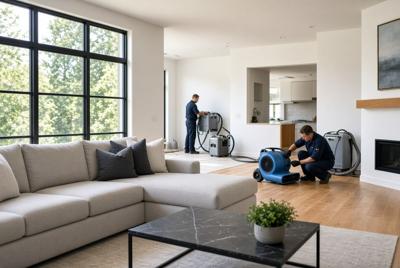
- Drying and dehumidification — Industrial air movers and dehumidifiers pull moisture from floors, walls, and the air.
- Cleaning and sanitizing — Affected surfaces are cleaned; contaminated water requires more thorough disinfection.
- Repairs — Damaged drywall, flooring, insulation, or other materials are repaired or replaced as needed.
The goal is to dry the structure thoroughly and return the space to a safe, usable condition.
When to Call Professionals
Small, contained leaks that are dried within hours can sometimes be handled by homeowners. Professional help is usually recommended when:
- Water has soaked into walls, subfloors, or insulation
- The water is dirty or from a sewer backup
- The affected area is large
- Mold is already visible or the water has been sitting for more than a day
- You need documentation for an insurance claim
Professionals have moisture meters, industrial drying equipment, and training to handle contaminated water safely. Many also assist with insurance documentation.
How to Choose a Restoration Company
Look for:
- Proper licensing and insurance
- Experience with the type of damage you have
- Clear explanation of the process and pricing
- Availability for emergency response
- Positive reviews that mention communication and results
- Willingness to work with your insurance company when applicable
Get the scope of work in writing before major repairs begin.
Reducing Future Risk
You cannot prevent every incident, but regular maintenance lowers the odds:
- Inspect visible plumbing and appliance connections
- Keep gutters and downspouts clear
- Check the roof after storms
- Know the location of your main water shut-off valve
- Address small leaks promptly
- Consider a sump pump or moisture alarm in vulnerable areas
Bottom Line
Water damage is stressful, but prompt, thorough drying and cleanup significantly reduce long-term problems. Acting quickly, documenting the damage, and bringing in qualified help when needed protects both the structure and the people living in it.

(0) comments
We welcome your comments
Log In
Post a comment as Guest
Keep it Clean. Please avoid obscene, vulgar, lewd, racist or sexually-oriented language.
PLEASE TURN OFF YOUR CAPS LOCK.
Don't Threaten. Threats of harming another person will not be tolerated.
Be Truthful. Don't knowingly lie about anyone or anything.
Be Nice. No racism, sexism or any sort of -ism that is degrading to another person.
Be Proactive. Use the 'Report' link on each comment to let us know of abusive posts.
Share with Us. We'd love to hear eyewitness accounts, the history behind an article.