
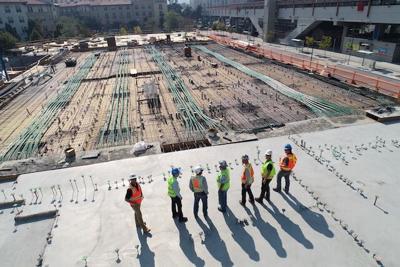

Construction sites are dangerous, home to large machinery and equipment, a need to work at height, and many vehicles and people moving alongside each other in all weathers to keep the build on track.
Keeping on top of health and safety to reduce the risks of accidents and injury is essential to ensure that your workforce and site visitors aren’t avoidably harmed by something you’ve done or failed to do.
As a construction site manager, you are responsible for assessing and acting to remove or reduce the risks by identifying hazards and implementing safety measures. The process should start long before work begins on site.
As part of an effective health and safety working policy, it is essential to be aware of the areas that can cause issues and reduce them by implementing safety measures and safe working practices. Measures must be in place for training and ensuring that all site workers and visitors understand the importance of site safety and know how to identify and report issues.
Statistics published by The Health and Safety Executive place construction sites as the top industry for accidents, injuries and fatalities, and their guidance is an excellent place to start in ensuring that you operate safely.
Understanding the type of risks inherent within construction workplaces
Risks within construction workplaces can include:
Moving vehicles and equipment
Working at height
Falling, tripping or slipping
Excavation risks
Crush injuries and contact with moving objects
Unsuitable material and manual handling practices
Working with or alongside hazardous materials
Electricity supplies
Airborne fibers and dust particle contact
Personal risk from repetitive heavy or vibrating machinery use
However, you can eliminate or reduce construction site risks by:
Regular training on safety measures and hazard awareness.
Continuing professional development measures to keep up with legislation changes and best industry practices.
Ensure equipment is used correctly, suitable for the task, and regularly inspected and maintained.
Use signs, barriers, protective clothing, safety equipment, and safe practices at all times.
Ensure that pedestrians, moving equipment, and vehicles have sufficient space to operate safely.
Maintain vehicle-only routes that allow for the safe movement of site workers around or near moving equipment and vehicles.
Keep the site clean and clutter-free. Observe good housekeeping throughout the site.
Provide proper rest and welfare facilities for the number of workers on site.
Construction site managers must also ensure they and their teams hold all necessary licences and certifications relevant to their roles. Obtaining a recognised NEBOSH certificate is a key step in demonstrating competence in managing health and safety effectively. These certifications not only improve safety awareness but also support legal compliance and industry best practices.
Hiring welfare cabins and site facilities from leading event and construction site hire companies such as SRP Hire Solutions will ensure you have all you need tailored to each project. You are required by law to ensure that your workers can access suitable areas for meal times, breaks, toileting and washing facilities, and respite from inclement weather, and hiring relevant equipment is likely cheaper and ultimately more versatile and trouble-free than buying and storing the range of equipment required. Hired site cabins enable secure equipment storage, site administration and canteen facilities, and generators, water supply and waste removal services, and one-hire solutions companies reduce administration too.
Your assessment should be followed with the right actions because it ensures the project progresses without unnecessary delays or complications. Proper site prep and excavation can only be achieved if the land is thoroughly examined and prepared, removing any obstructions and ensuring the soil is properly compacted. This foundational work creates a stable environment for any structures, equipment, or cabins that will be installed on the site. When done correctly, site preparation helps to avoid costly mistakes and improves the overall efficiency of the project.
Risks must be identified before work starts and continuously reassessed throughout the build. It is up to you to ensure best practices are understood and adhered to by everyone on site. You should also ensure safety equipment is available and site safety measures are adhered to.
Risk assessments and safety checks should be recorded and evidenced to show that you take compliance with best health and safety practices and are committed to keeping a safe and orderly construction site. If there is an accident or injury, written evidence could be critical to proving the measures you take to ensure you have taken all the precautions to protect your workforce.
Here are some other articles related to your search:
Four Best Practices to Improve Safety on a Construction Site
The Vital Role of Lifting Solutions in the Modern Construction Industry


(0) comments
We welcome your comments
Log In
Post a comment as Guest
Keep it Clean. Please avoid obscene, vulgar, lewd, racist or sexually-oriented language.
PLEASE TURN OFF YOUR CAPS LOCK.
Don't Threaten. Threats of harming another person will not be tolerated.
Be Truthful. Don't knowingly lie about anyone or anything.
Be Nice. No racism, sexism or any sort of -ism that is degrading to another person.
Be Proactive. Use the 'Report' link on each comment to let us know of abusive posts.
Share with Us. We'd love to hear eyewitness accounts, the history behind an article.