
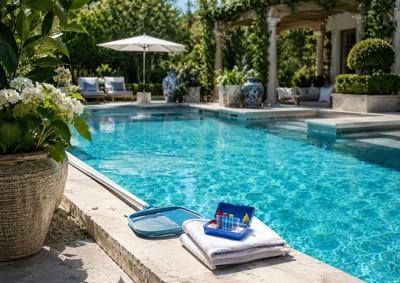

Pool algae has a way of arriving like an uninvited guest who did not bring wine and refuses to leave. One day the water looks clear and inviting. The next, there is a suspicious green tint, slippery steps, or a patch on the wall that seems to be developing its own personality. Algae can make a beautiful backyard pool look neglected fast, even when the rest of the space is perfectly lovely.
The good news is that algae is much easier to prevent than it is to battle after it takes over. To prevent algae in a swimming pool, homeowners need a routine that supports circulation, brushing, filtration, water testing, sanitizer balance, and debris removal. It is not glamorous, but neither is explaining to guests that the pool is “just resting” while it turns the color of soup.
Understand Why Algae Shows Up
Algae usually appears when pool conditions give it an opening. Warm water, poor circulation, low sanitizer, dirty filters, debris, inconsistent brushing, and unbalanced chemistry can all help algae grow. It can start on walls, steps, corners, ladders, tile lines, behind light niches, or in areas where water does not move well.
There are different types of pool algae, including green algae, mustard algae, and black algae. Green algae is the one most homeowners recognize first because it can quickly turn water cloudy or green. Mustard algae often appears as yellowish dust along walls or shaded areas. Black algae can look like dark spots and may be more stubborn because it can root into rough surfaces. None of them improves the backyard.
Keep The Water Moving
Circulation is one of the most important parts of algae prevention. When water moves properly, sanitizer and filtration can reach more areas of the pool. When circulation is weak, stagnant spots can develop, and those are exactly the places algae likes to settle.
Make sure return jets are aimed to help move water around the pool, not simply ripple one pretty corner. Check that the pump is running long enough for the size of the pool, the weather, and the amount of use. If water flow seems weak, bubbles appear in the return lines, or the pump sounds different, the system may need attention. Algae loves neglect, but it also loves poor circulation.
Test Water Before Adding Chemicals
Testing is the part of pool care that keeps homeowners from guessing. The Centers for Disease Control and Prevention recommends keeping pool pH between 7.0 and 7.8 because that range helps balance germ-killing, equipment protection, and swimmer comfort. The CDC also notes that chlorine becomes less effective as pH rises, especially above 8.0.
For algae prevention, this matters because sanitizer cannot do its job well if the water is not balanced. Test strips, liquid kits, or digital testers can help track chlorine, pH, alkalinity, stabilizer, and other levels. The exact routine depends on the pool, weather, and usage, but the rule stays the same: test first, treat second.
Maintain A Proper Sanitizer Level
Chlorine or another appropriate sanitizer helps keep the water clean and reduces the chance that algae will grow. If sanitizer levels drop too low, algae can take advantage quickly, especially during warm weather or after heavy pool use.
This is where the article on pool chemicals explained fits naturally into the bigger routine. Chlorine, pH, alkalinity, stabilizer, shock, and algaecide all play different roles. Using them properly starts with knowing what the water actually needs.
Brush Before Algae Gets Comfortable
Brushing may not be the most exciting part of pool ownership, but it is one of the most useful. Algae often begins on walls, steps, benches, corners, tile lines, and shaded surfaces. These areas need physical attention because chemicals alone may not reach or remove buildup effectively.
Brush the pool regularly, especially after heavy use, hot weather, storms, or visible debris. Use the right brush for the surface. Nylon brushes are generally gentler for delicate surfaces, while some plaster or concrete pools may tolerate more aggressive brushes. When in doubt, choose the safe option. A scratched pool finish is a very expensive reminder that enthusiasm and the wrong brush are not the same thing as maintenance.
Keep Filters Clean
A clean filter helps remove fine particles, debris, and contaminants that can contribute to cloudy water and algae-friendly conditions. Cartridge, sand, and DE filters all have different maintenance needs, but every pool owner should know what type of filter they have and how it should be cleaned.
If the filter pressure rises, circulation weakens, or the water stays cloudy despite regular care, the filter may need cleaning or service. This is one reason practical pool maintenance tools matter. The right brush, skimmer, test kit, vacuum, and filter-cleaning supplies make prevention much easier.
Remove Leaves And Debris Quickly
Leaves, flowers, dirt, grass, and other organic debris can affect water quality and give algae more to feed on. Skimming the pool regularly reduces the burden on the filter and helps keep the water looking fresh between deeper cleanings.
Debris is especially important after windy days, storms, yard work, and pool parties. A few leaves may not seem like a big deal, but they can quickly collect in corners, skimmers, baskets, and behind steps. The cleaner the pool stays physically, the easier it is to keep the water balanced chemically.
Vacuum The Pool Floor
Even when the surface looks clean, dirt and fine particles can settle on the pool floor. Vacuuming removes what skimming cannot. Manual vacuums, suction-side cleaners, pressure-side cleaners, and robotic pool cleaners can all help depending on the pool and the homeowner’s maintenance style.
If algae has already appeared, vacuuming may be part of cleanup, but prevention is easier. Regular vacuuming keeps the pool from becoming a collection zone for debris and sediment. A clean floor also makes it easier to see early warning signs before they turn into a full green-water performance.
Pay Attention To Shaded And Low-Flow Areas
Algae often starts where circulation is weak or sunlight is limited. Steps, ladders, corners, benches, behind pool lights, around returns, under floating toys, and shaded walls deserve extra attention. These areas may look fine from a distance while quietly becoming trouble spots.
During regular maintenance, take a slow look around the pool. If one corner always looks dusty, slick, or slightly discolored, do not ignore it. Brush it, check circulation, and test the water. Small clues are easier to handle than a pool that has fully committed to becoming green.
Use Shock Treatments Carefully
Shock treatments can help oxidize contaminants and restore sanitizer effectiveness, especially after heavy use, storms, or early algae signs. However, shock is not a substitute for regular testing, brushing, filtration, and balanced water.
Different products have different instructions for dosage, timing, circulation, and when it is safe to swim again. Follow the label and never mix pool chemicals. The U.S. Environmental Protection Agency warns that pool chemicals can create risks, including fires, toxic vapor releases, and injuries, when they are stored or handled improperly.
Know What Algaecide Can And Cannot Do
Algaecide can be useful as part of a prevention or treatment plan, depending on the product and the pool’s condition. It may help reduce the chance of algae returning, especially in pools that are prone to recurring problems.
However, algaecide is not a cure for poor maintenance. If sanitizer is low, the filter is dirty, circulation is weak, or the pool is not being brushed, algaecide will only do so much. Think of it as support, not a substitute for the basics. Pool care rarely rewards shortcuts for long.
Keep Pool Toys And Covers Clean
Floats, toys, covers, loungers, and cleaning accessories can carry debris and residue back into the water. If they sit wet, dirty, or piled in the sun, they can become part of the problem. Rinse and dry pool toys when possible, and store them in a way that allows airflow.
Pool covers can help reduce debris, but they also need care. A dirty cover can introduce leaves, dirt, and stagnant water into the pool when removed. If a cover is used regularly, keep it clean and make sure it is suited to the pool’s needs. A cover should help the pool, not quietly plot against it.
Do Not Ignore The Pool Area Around The Water
The space around the pool affects the water more than many homeowners realize. Leaves on the deck, messy planters, dirty furniture, overflowing towel bins, clogged drains, and food debris can all make their way toward the pool. A polished pool area is also a practical pool area.
Keeping the surrounding space clean supports algae prevention because less debris enters the water. A broader guide on how to keep your pool area clean can help homeowners manage the deck, furniture, towels, storage, lighting, landscaping, and drainage that all influence the pool environment.
Watch For Recurring Algae
If algae keeps coming back, the pool may have an underlying issue. Recurring algae can point to poor circulation, dirty filters, low chlorine, high stabilizer, inadequate brushing, hidden debris, equipment problems, or a maintenance schedule that is not keeping up with the pool’s real use.
Repeated algae problems are a sign to stop treating symptoms and start looking for the cause. This may require a closer inspection of the pump, filter, plumbing, return jets, skimmer, water chemistry, and shaded areas. A pool that keeps growing algae is not being difficult for sport. It is usually telling you something is out of balance.
Know When To Call A Professional
Some algae issues can be handled with better brushing, testing, filtration, and chemical balance. Others need professional help. If the pool stays cloudy, algae returns quickly, black algae appears, sanitizer levels are difficult to maintain, the filter pressure is unusual, or circulation seems weak, it may be time to bring in a specialist.
A qualified swimming pool service company can test the water, inspect equipment, clean filters, evaluate circulation, and help set up a maintenance routine that keeps algae from returning. Sometimes the most elegant pool care decision is admitting that your weekends deserve better.
How Algae Prevention Fits Into Pool Maintenance
To prevent algae in a swimming pool, homeowners need more than one product. They need a routine. Testing supports chemical balance. Brushing disrupts buildup. Filtration removes particles. Circulation moves treated water. Skimming and vacuuming reduce debris. Safe chemical handling protects both the pool and the people caring for it.
This is why algae prevention belongs inside a broader maintenance plan. Start with core pool maintenance tips, then add the right tools, water testing, pool-area cleanup, and professional support when needed. Prevention is not complicated, but it does ask for consistency.
The Bottom Line On Preventing Pool Algae
The best way to prevent algae in a swimming pool is to keep water balanced, sanitizer levels appropriate, filters clean, circulation strong, surfaces brushed, debris removed, and problem areas watched closely. Algae is opportunistic. It thrives when maintenance gets inconsistent or when the pool has hidden trouble spots.
A clear pool is not just prettier. It is easier to enjoy, easier to maintain, and far more inviting for guests. With regular testing, brushing, filtration, and common sense, homeowners can keep algae from turning the backyard into a science project with lounge chairs. The pool gets to stay blue, the guests get to swim, and nobody has to pretend green water is a design choice.


(0) comments
We welcome your comments
Log In
Post a comment as Guest
Keep it Clean. Please avoid obscene, vulgar, lewd, racist or sexually-oriented language.
PLEASE TURN OFF YOUR CAPS LOCK.
Don't Threaten. Threats of harming another person will not be tolerated.
Be Truthful. Don't knowingly lie about anyone or anything.
Be Nice. No racism, sexism or any sort of -ism that is degrading to another person.
Be Proactive. Use the 'Report' link on each comment to let us know of abusive posts.
Share with Us. We'd love to hear eyewitness accounts, the history behind an article.