
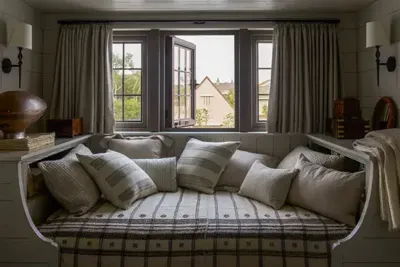

A guest room does not need to resemble a boutique hotel suite to feel generous. In fact, the most comfortable rooms tend to be the ones that make a visitor feel oriented within the first five minutes: there is somewhere to set down a suitcase, an available outlet near the bed, a glass of water within reach and enough empty space that they do not feel as though they have moved into someone else’s storage closet.
That is the useful standard. A beautiful throw and a carefully chosen candle can certainly add atmosphere, but they come after the practical details. When a room works well, your guests can wake up, get dressed and settle in without having to ask where the extra towels are or whether the lamp actually turns on.
Begin by Removing What Does Not Belong
The fastest way to improve a guest room is usually subtraction. Many spare rooms become holding areas for off-season clothes, paperwork, exercise equipment and furniture that did not work anywhere else. Guests may be grateful for a place to sleep, but they should not have to navigate an obstacle course to get there.
Start with the closet, dresser and bedside surface. Aim to leave at least a few empty hangers, one clear drawer or shelf and a flat surface for personal items. A luggage rack is ideal, but a sturdy bench or small table works just as well. What matters is giving a suitcase a home that is not the floor.
This also makes housekeeping much simpler. Clear surfaces collect less visual clutter, and a room with breathing space feels more intentional even when its furnishings are modest.
Make the Bed Easy to Sleep In
Guest-room bedding is often treated as an opportunity to display the decorative pillows nobody uses. A better approach is to make the bed adaptable. Most people sleep at a different temperature from their hosts, and the bedding should give them options without requiring a midnight search through the linen closet.
Use freshly laundered sheets in a breathable fabric.
Provide two pillows per guest when space allows, ideally with different levels of firmness.
Layer a lightweight blanket beneath a duvet or coverlet rather than relying on one extremely warm option.
Keep an extra blanket visible in a basket or folded at the end of the bed.
If the mattress is older or more firm than you remember, a quality mattress topper can make a surprisingly significant difference. This is one area where comfort is more important than visual impact. Your guest will remember whether they slept well, not whether the coverlet had the perfect amount of texture.
Think Through the First and Last Ten Minutes of the Day
Good guest-room design is mostly about anticipating small moments. At night, visitors need light, water, a charging point and a place for glasses, jewelry or a phone. In the morning, they need to know where to find a towel, whether the bathroom is occupied and how to make coffee without opening every cabinet in the kitchen.
A bedside table with a functioning lamp is essential. Add a small tray or dish, a carafe and glass, tissues and a visible charging station or extension cord. If the room has a clock, make sure it does not cast an overly bright light or tick loudly enough to become the room’s defining feature.
For the morning, a short printed note can be genuinely helpful, especially for first-time visitors. Keep it simple: Wi-Fi information, the location of fresh towels, a note about the coffee machine and any household details that might prevent awkward questions. If pets have rules, or if a particular door sticks, this is the place to mention it.
Give the Room a Point of View, Not a Theme
A guest room should feel connected to the rest of the home, but it does not need to become a miniature showroom. One or two thoughtful visual choices are enough: a framed landscape, a sculptural bedside lamp, a beautiful lumbar pillow or a small vase with seasonal branches.
Neutral bedding gives you flexibility, while art and textiles can introduce personality without overwhelming the room. If you use fragrance, keep it subtle. Fresh air, clean linens and a lightly scented hand soap are generally more welcoming than a powerful diffuser that a guest cannot turn off.
Plants can be lovely, but only if they are healthy and placed where they will not become another responsibility for the person staying in the room. A small arrangement of fresh greenery is often a better choice for a weekend visit.
Do Not Forget Privacy
Privacy is one of the least glamorous parts of hospitality and one of the most important. Check that window coverings actually block early light and provide adequate coverage at night. Add a mirror where a guest can get dressed without needing to step into a shared bathroom. If the bedroom door does not close properly, fix it before worrying about accessories.
Sound matters, too. A white-noise machine can be useful in a room near a busy street, a child’s bedroom or a lively common area. At the very least, avoid placing a guest directly beside a laundry basket of noisy appliances or a clock that seems determined to mark every second.
Stock a Small, Sensible Basket
There is no need to recreate a hotel amenity display, but a few basics eliminate the inconvenience of forgotten items. A basket or drawer might include travel-size toothpaste, a sealed toothbrush, cotton swabs, tissues, a lint roller, pain reliever if appropriate for your household and a spare phone charger with clearly labeled connections.
Consider your own routines when choosing what to include. If your home tends to run cold, add slippers. If guests use a shared bathroom, offer a toiletry caddy they can carry back and forth. If children or grandparents often stay, adjust the room around their needs instead of assuming one setup works for everyone.
Let the Room Evolve With Your Guests
The best guest room is not finished once and forgotten. Notice what visitors ask for. If everyone hunts for an outlet, add a charging station. If guests repeatedly mention the morning sun, upgrade the shades. If the room works as an office between visits, make the transition easy with a lidded basket for work supplies.
Homes become more useful when ideas can be exchanged as easily as guests can be welcomed. Readers with a practical design lesson, entertaining perspective or home project worth sharing can find the site’s guest posting information in one place.
Ultimately, a welcoming guest room is not about predicting every possible preference. It is about removing friction. Leave room for a suitcase, offer an extra blanket, make the light and Wi-Fi easy to find, and give people enough privacy to feel at home. Those details are quiet, but they are exactly what make a stay feel considered.


(0) comments
We welcome your comments
Log In
Post a comment as Guest
Keep it Clean. Please avoid obscene, vulgar, lewd, racist or sexually-oriented language.
PLEASE TURN OFF YOUR CAPS LOCK.
Don't Threaten. Threats of harming another person will not be tolerated.
Be Truthful. Don't knowingly lie about anyone or anything.
Be Nice. No racism, sexism or any sort of -ism that is degrading to another person.
Be Proactive. Use the 'Report' link on each comment to let us know of abusive posts.
Share with Us. We'd love to hear eyewitness accounts, the history behind an article.