
In this guide:
- Our ranked list of the best cooling fans
- How we chose and tested
- Three things UK buyers get wrong
- How to choose the right cooling fan
- FAQs
UK homes are built to withstand colder temperatures, which is brilliant in January and miserable in July. All that insulation and heavy masonry is designed to keep warmth in, so when the warmer months arrive the heat has nowhere to go and the house turns hot and sweaty. And unlike much of Europe, where air conditioning is fitted as standard, it's unlikely you'll have a unit in every room, or in any room at all. That's where a good cooling fan comes in.
In this article we're reviewing the best cooling fans of 2026/27, covering premium brands like Dyson alongside more cost effective alternatives like Vortex Air. For our shortlist we tried and tested each model and looked at price, performance, what we liked about it and what we didn't love so much. The goal is simply to help you choose the right fan for your home, rather than the one that happened to still be in stock when it hit 30 degrees.
Our top picks at a glance
Below are the cooling fans that made our shortlist, covering everything from near silent bedroom fans through to the high output pedestal models for people who genuinely overheat. Whether you're working to a tight budget or want the best cooling fan full stop, start here.
Rank / Best for | Model | Type | Approx. price | Claimed noise (low) | Standout feature |
|---|---|---|---|---|---|
Best overall | Bladeless tower, cools and heats | £139.99 | Whisper quiet mode | Bladeless cooling plus winter heating | |
Best airflow to noise | Pedestal, 12 speeds | Around £120 | Near silent to speed 3 | Silent on the first three speeds | |
Best raw power | Corded or cordless pedestal | £150 to £200 | Quiet for the output | Runs off the stand and off the cable | |
Best quiet budget pick | Slim tower | £70 to £90 | Around 20dB | Quiet and slim for the money | |
Best for hay fever | Bladeless tower with HEPA | See site | Whisper quiet mode | Cools, heats and filters | |
Best premium, with caveats | Bladeless tower | £300 to £400 | Around 40dB | HEPA filtration and wide oscillation | |
Best for small rooms | Desk circulator | £50 to £60 | Low | Proper build in a desk sized unit |
*Prices move constantly, so check the retailer for today's price.
Our top pick
For most UK homes, the Vortex Air Pro Plus is the cooling fan we'd buy.
Not because it produces the highest raw airflow on this list, because it doesn't, and we'll be straight about that further down. It wins on the things you actually live with. The airflow is smooth enough to sit close to, there are ten speeds so you can find the right one rather than picking between too little and too much, there are no blades to clean, the footprint fits a bedroom, and it becomes a thermostatic heater once October arrives rather than sitting in a cupboard for nine months.
At £139.99 it also answers the most common complaint in UK fan discussions, which is that searching for a decent bladeless fan returns nothing but results costing £300 to £600. Bladeless doesn't have to cost that.
Our ranked list of the best cooling fans
1. Vortex Air Pro Plus
Best overall cooling fan for UK homes
The cooling case. This is a bladeless tower with ten speed settings, wide angle oscillation and a timer you can set anywhere from one to nine hours. The bladeless format matters for cooling specifically because of airflow quality. A bladed fan chops the airstream every time a blade passes the housing, which produces a pulsing draught. Across a room you won't notice it. At bedside distance, on hour three of a hot night, you notice every single pulse. Bladeless output is continuous, and that's why people tend to tolerate it closer and for longer.
Why we like it. The ten speeds are more useful than they sound, because on most fans the right setting sits somewhere between "barely on" and "far too much", and three or four speeds simply don't get you there. The airflow is smooth and continuous rather than pulsing, so it's comfortable at close range. Wide-angle oscillation spreads the cooling across a room instead of down a single line. There are no blades and no grille, which makes it safe around children and pets and means cleaning is a wipe rather than an unscrewing job. The nine hour timer covers a full night and then shuts itself off. And because it works as a thermostatic heater in winter, it earns its floor space for twelve months rather than three. It comes with a two year warranty, free next day UK delivery and UK-based after-sales.
What to watch out for. Let's be honest about the form factor. Tower fans, bladeless or not, house a smaller impeller than a 16 or 18 inch pedestal fan, which means that as a category they move less raw air per decibel than a big floor standing fan does. If your single overriding priority is maximum air movement and you genuinely don't care what it looks like or sounds like, a large pedestal fan is the better tool, and we'd rather say so than pretend otherwise. What a bladeless tower buys you instead is smooth airflow, a small footprint, safety, easy cleaning and winter use. That's the trade, and for most bedrooms it's the right one. It's also worth knowing that on heating mode it draws 1,650W, so treat it as a proper room heater rather than something you leave ticking over in an empty room.
Best for. Bedrooms, living rooms and home offices where you want effective cooling without a plastic cage in the corner, and without spending upwards of £300 to get bladeless.
UK buying practicality. £139.99 direct, also listed on Tesco Marketplace, with several colour options.
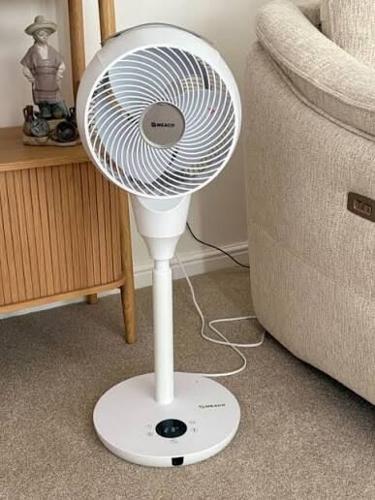
2. Meaco 1056P Pedestal

Best airflow to noise
The cooling case. If you want the most air movement for the least noise, this is the benchmark, and it's the model that keeps coming up from people who've owned one for several summers rather than several weeks.
Twelve speed settings is the spec that does the work here. The first three are effectively silent while still producing enough movement for a comfortable night's sleep, which is a genuinely rare combination. Height adjustment and tilt mean you can aim it at bed level rather than at the ceiling.
Why we like it. The airflow per decibel is outstanding, and that's the number that actually matters rather than headline output. Twelve speeds means the low end is properly low, not just quieter. Height and tilt adjustment plus a remote make it easy to live with. Most usefully, owners report three or four summers of trouble free running, and it moves noticeably more raw air than any tower fan at the same noise level.
What to watch out for. At around £120 it isn't a supermarket impulse buy, and it cools only, so it does nothing for you in winter. A pedestal fan also takes up floor space and, frankly, most of them are ugly.
Best for. Anyone whose priority is maximum cooling with minimum noise and who has the floor space to give it.
UK buying practicality. Roughly £120, available from Meaco direct (meaco.com) and major UK retailers.
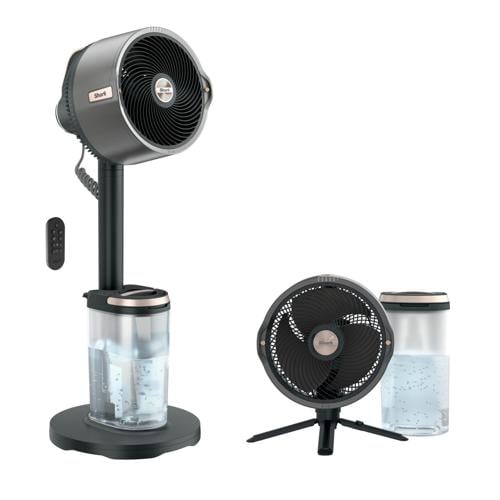
3. Shark FlexBreeze

Best for raw power
The cooling case. This is for people who find that standard fans simply aren't strong enough. It pushes a lot of air, and it does it without the noise you'd usually pay for that kind of output.
The flexible part is genuinely the useful part. It runs corded or cordless and detaches from its stand to work as a floor or table unit. During a heatwave the coolest room in a British house shifts through the day, and being able to carry the fan with you rather than hunt for a socket turns out to matter more in practice than it sounds on paper.
Why we like it. It's properly powerful, which makes it the answer for anyone who's tried ordinary fans and found them underwhelming, and it stays quiet relative to how much air it's shifting. Running it corded or cordless, on or off the stand, gives you options most fans don't. It also looks considerably better than most pedestal fans, which is admittedly a lower bar than it ought to be.
What to watch out for. It costs more than a standard pedestal fan, the battery adds weight, and it's a cooling fan only.
Best for. People who overheat easily, larger rooms, and anyone who's been let down by supermarket fans.
UK buying practicality. Typically £150 to £200 from SharkNinja UK (sharkninja.co.uk) and major retailers.
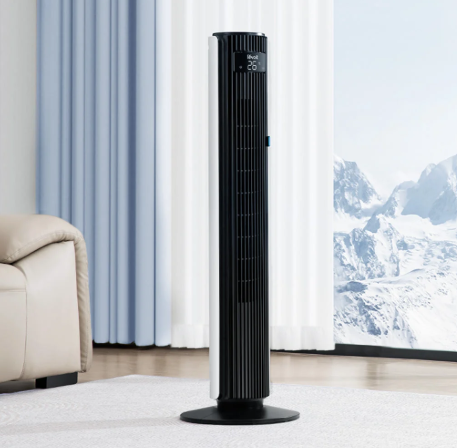
4. Levoit Tower Fan
Best quiet budget pick
The cooling case. This is the value option, and one that people regularly choose over fans costing three or four times as much. It's quiet enough for a bedroom at low speed, slim enough to tuck into a corner, and comes with sleep mode, a remote and a timer at a price that doesn't require much deliberation.
It produces a directional breeze rather than whole room circulation, so it's worth being realistic about what you're getting. For a rental, a spare room, a second fan or student accommodation, that's a perfectly sensible trade.
Why we like it. It's very quiet at low speed for the money, and the slim footprint genuinely helps where floor space is tight. Getting sleep mode, a remote and a timer at this price is unusual, and for a single bedroom it's simply enough fan.
What to watch out for. The airflow is directional rather than circulating, and build quality is proportionate to the price, so treat it as a three or four year product rather than a decade of service. As with all tower fans, the airflow per decibel maths favours a larger pedestal fan if you have room for one.
Best for. Student rooms, rentals, narrow bedrooms and tight budgets.
UK buying practicality. Usually £70 to £90.
5. Vortex Air 3 in 1 Purifying Fan

Best cooling fan for hay fever
The cooling case. This one solves a specific and very British problem. Pollen season and heatwave season overlap almost exactly. If you have hay fever, the standard advice about opening the windows at night to purge the heat is advice you can't take. Worse, a plain fan actively works against you, because it lifts settled pollen and dust off surfaces and pushes it straight back into your breathing zone.
A purifying cooling fan draws air through HEPA filtration before it reaches you, so you get the air movement without the allergens. It uses the same bladeless format as the Pro Plus and keeps the same heating capability in winter.
Why we like it. Cooling, heating and filtration in a single unit means three plugs become one, and it filters pollen, dust, pet dander and smoke rather than just moving them about. Because it's bladeless and easy to wipe down, the fan itself doesn't become a dust reservoir the way a grille does. Buying the three functions separately would cost considerably more.
What to watch out for. Filters are a consumable, so budget for replacements, and a purifier only treats the room it's standing in rather than the whole house.
Best for. Hay fever and asthma sufferers, pet owners, and anyone living on a main road where the windows stay shut whatever the temperature.
UK buying practicality. Check current pricing and colours on site. Two year warranty and next day delivery as standard.
6. Dyson Purifier Cool
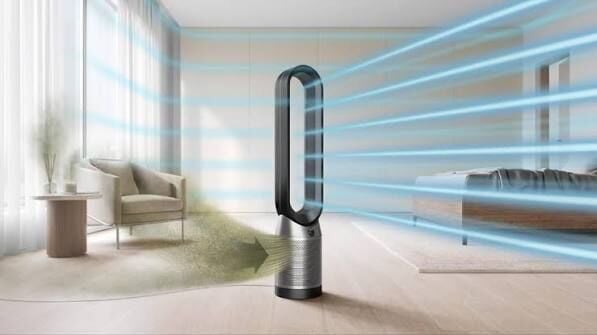
Best premium fan, with real caveats
The cooling case. This is the fan Google shows you first, whether or not it's the fan you need. The build quality is excellent, the filtration is genuine HEPA and the oscillation is wide.
But we're going to be straight about it, because the people who own them are. As a cooling fan it isn't good value. It's relatively loud for the amount of air it moves, and a pedestal fan at £120 will beat it on both airflow and noise. What you're paying for is industrial design, the brand and the purification, and if purification is the thing you want, there are units doing that job for half the money. There's a reason so many people report returning one and replacing it with something cheaper that cooled better.
Why we like it. The build and finish are genuinely excellent, the HEPA filtration is real rather than token, the oscillation is wide, and the bladeless design is safe and easy to clean.
What to watch out for. The price, the ongoing cost of replacement filters, and the noise relative to output. If your priority is cooling rather than appearance, your money goes considerably further elsewhere.
Best for. Design led homes and allergy sufferers with budget to spare.
UK buying practicality. Commonly £300 to £400 from Dyson UK (dyson.co.uk) and major retailers.
7. MeacoFan 260c Desk
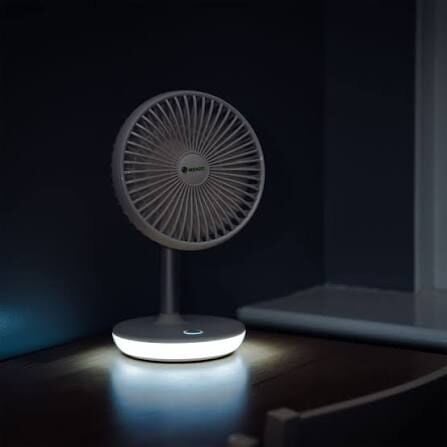
Best cooling fan for small rooms
The cooling case. Not every heat problem is a room problem. If the unbearable part of your day is specifically your desk between 1pm and 4pm, or you need airflow over a bed in a room with no spare floor space, a small circulator does that job for a fraction of the price.
It's particularly relevant for student accommodation, where air conditioning and air coolers are usually banned, the rooms are small, and the heating often runs regardless of what the weather is doing.
Why we like it. It fits on a desk corner or a bedside table, it's quiet and efficient, and it works well as a second fan alongside a main unit. It's also properly built, which puts it in a different category to the £15 clicking plastic end of the market.
What to watch out for. This is personal cooling only and it won't do anything measurable for a whole room.
Best for. Working from home, student halls, bedside use, and rooms with no floor space to spare.
UK buying practicality. Around £50 to £60.
How we chose and tested
We weighted the things that decide whether a fan still gets used in week three of a heatwave rather than the things that look good on a box.
Airflow per decibel came first. Not raw output, and not the quoted noise on setting one, but how much air you get at a noise level you can actually sleep through. After that came airflow quality, meaning whether the output is smooth and continuous or choppy and pulsing, because that's what determines whether you can tolerate a fan at close range. Reach matters too. Can you feel useful airflow from two or three metres away, which is where beds and sofas actually sit?
Longevity was the next consideration. Fans fail in a fairly predictable order, with the oscillation mechanism starting to click, then the motor bearing developing a hum, then the blade assembly loosening and rattling. A fan that lasts two summers is a false economy. Running cost we treated as a threshold rather than a ranking factor, since a cooling fan drawing 25 to 50W costs pennies a night and anything much higher rather defeats the point. We also gave credit for usefulness outside summer, because British summers are short and a unit that works in December earns its storage space. Finally we looked at cleaning and safety, since grilles trap dust and then blow it at you, and bladeless designs simply don't have that problem.
Three things UK buyers get wrong
"A fan is a fan."
Half true, and worth engaging with honestly rather than dismissing. Any fan moves air, and the physics is identical across all of them. Nobody has invented a new kind of wind.
Where fans genuinely differ is airflow per decibel, and how long they survive. A cheap supermarket fan and a Meaco will both cool you down. One does it at a noise level you can sleep through and is still going in four summers; the other develops a click in the oscillator by the second August. Buy a £25 fan three summers running and you've spent more than one good fan costs, with three broken ones in the loft to show for it. The other real difference is form factor, meaning which fan physically suits your room and whether it's any use to you in December.
"Search results only show me fans costing £300 to £600."
This is the single most common frustration in UK fan discussions, and it's a search results problem rather than a market reality. Premium bladeless pricing isn't the price of bladeless technology, it's the price of one particular brand's positioning. You can get bladeless airflow, ten speeds, oscillation, a remote and a timer for well under half that, which is roughly where our Vortex Air cooling fans sit. And if you'd rather have maximum raw airflow than a bladeless design, a pedestal fan at £120 will beat a £400 one on cooling alone. Either way, spending upwards of £300 is a choice rather than a requirement.
Running a fan in a sealed room.
A fan in a closed, hot room with nowhere for the heat to go is just stirring the same warm air around. Air movement and ventilation are separate jobs. Once the outside temperature drops below the inside temperature, which in the UK usually happens somewhere around 10pm, set up flow through the room rather than around it, with air coming in at the window and a route for it to leave. A fan sitting in a bedroom doorway pushing air out onto a cooler landing often does more good than the same fan aimed straight at the bed.
How to choose the right cooling fan
Match the fan to the problem
Start by matching the type of fan to the actual problem you have.
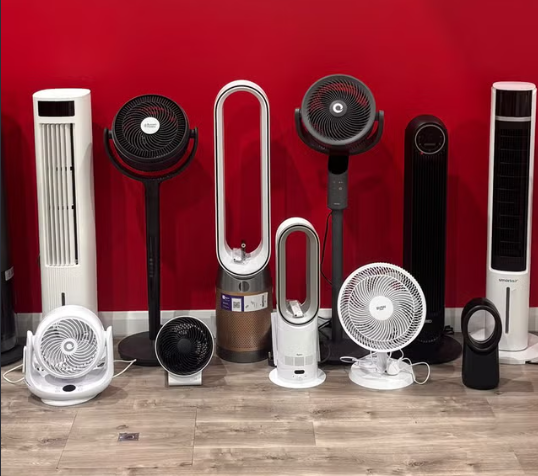
A pedestal fan gives you the most raw airflow per decibel, which makes it the right answer if you overheat badly or need to cool a larger room. It costs you floor space and, usually, some dignity where looks are concerned. A bladeless tower gives you smooth airflow, a small footprint, safety around children and pets, the easiest cleaning of any format, and it's the only category that commonly heats in winter too, which makes it the best all rounder for bedrooms and living rooms. A conventional bladed tower fan is slim and cheap, but the smaller internal fan means more noise for the amount of air moved, so it works best as a second fan. An air circulator is the tool for a room that traps heat and where the air sits stagnant, which usually means loft rooms and box rooms. And a desk or clip on fan handles personal cooling where there's no floor space at all.
Read past the headline noise figure
Quoted decibel numbers are almost always measured on the lowest setting, which may well not be the setting that actually cools you. A better question is how many speeds the fan has, because a fan with ten or twelve steps has a genuinely usable low end while a fan with three does not.
Controls matter more than they sound
Multiple speeds, tilt, oscillation and a remote sound like marketing until you're lying in bed at 1am weighing up whether it's worth getting out to turn the thing down. They're worth paying for.
Running costs are lower than people assume
A decent cooling fan draws 25 to 50W, which comes to a few pence across a full night even at current unit rates. Set against a portable air conditioner drawing over 1,000W, it isn't a close contest. Heating modes are an entirely different power bracket, so treat those separately.
When a cooling fan isn't enough
If you need the air temperature genuinely reduced rather than the sensation of being cooler, a fan has a ceiling. That applies to a fairly specific set of situations: a loft bedroom facing south during a sustained heatwave, high humidity where evaporative cooling is working against you, or heat that's affecting someone's health or a baby's sleep.
In those cases portable air conditioning is the honest answer, with the trade offs that come attached. You're looking at a high purchase price, running costs above 1,000W, an exhaust hose out of a window and a compressor cycling all night. In most rented flats, and in all student accommodation, it isn't permitted anyway.
For the large majority of UK homes, in the large majority of hot weather, a good cooling fan is the better buy.
FAQs
Why is Dyson considered overpriced?
Many people do consider Dyson expensive, and that's a fair reading, particularly when you set one against the cheaper alternatives reviewed in this article and see what they deliver for the money. Dyson is a genuinely premium brand, the engineering and finish are excellent, and the filtration is real rather than token. What you're also paying for, though, is the design work and the name on the front. For anyone willing to look past the logo, there are fans on the market that cool just as effectively for considerably less, and in some cases move more air at a lower noise level than a Dyson does. Whether that makes it overpriced or simply premium depends on how much the design matters to you.
If you were choosing an alternative to Dyson, which cooling fan would you buy and why?
For us it would be the Vortex Air Pro Plus, and the reasoning is fairly practical rather than brand loyalty.
Most people looking at a Dyson want three things in particular: the bladeless design, because it's safer around children and pets and far easier to clean; the smooth airflow you get without blades chopping the airstream; and a machine that doesn't look like an appliance in the corner of a room. The Pro Plus delivers all three at around a third of the price, alongside ten speeds, wide angle oscillation and a nine hour timer.
The one thing you give up is the HEPA filtration, which is the genuinely distinctive part of the Dyson proposition. If that's what you're buying it for, it's worth paying for, though it's worth noting that the 3 in 1 purifying model covers the same ground for less. And if filtration isn't a priority, then you're paying a substantial premium mostly for design, which is a perfectly reasonable thing to want but shouldn't be confused with better cooling.
(0) comments
We welcome your comments
Log In
Post a comment as Guest
Keep it Clean. Please avoid obscene, vulgar, lewd, racist or sexually-oriented language.
PLEASE TURN OFF YOUR CAPS LOCK.
Don't Threaten. Threats of harming another person will not be tolerated.
Be Truthful. Don't knowingly lie about anyone or anything.
Be Nice. No racism, sexism or any sort of -ism that is degrading to another person.
Be Proactive. Use the 'Report' link on each comment to let us know of abusive posts.
Share with Us. We'd love to hear eyewitness accounts, the history behind an article.