
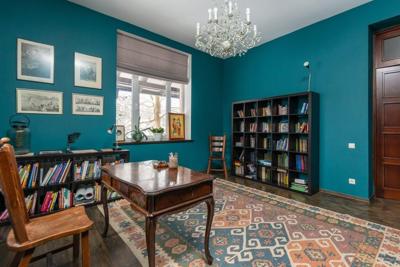
Older homes tend to win people over with the details newer construction often tries to imitate: substantial doors, original millwork, divided rooms, tall windows, mature landscaping, and floors that may have survived several generations of questionable decorating decisions.
The charm is real. So are the undersized closets, mysterious drafts, inconvenient outlets, uneven temperatures, and kitchens designed before anyone owned an air fryer, espresso machine, or six devices requiring a charger.
The smartest modern upgrades for an older home do not strip away everything that made the property appealing in the first place. They improve how the house functions while allowing its architectural character to remain visible. The goal is not to make an older home look brand-new. It is to make it feel considerably better to live in.
Begin With an Energy Assessment
Before replacing windows, purchasing a new heating system, or opening walls, find out where the house is actually losing energy. A professional home energy assessment can identify air leaks, missing insulation, duct problems, moisture concerns, and equipment that is working harder than it should.
This matters in an older home because the most noticeable problem is not always the underlying one. A cold bedroom may appear to need a larger heating vent when the real issue is an unsealed attic hatch, deteriorated weatherstripping, or insufficient insulation.
Sealing unnecessary air leaks and improving insulation can make rooms feel more consistent without changing the appearance of the house. The U.S. Department of Energy offers guidance on professional and do-it-yourself home energy assessments.
Improve the Windows Before Automatically Replacing Them
Original windows are often blamed for every draft in an older house. Sometimes replacement is appropriate, particularly when frames are extensively damaged or units no longer operate safely. In other cases, repair and thoughtful improvements may preserve more of the home’s character.
Weatherstripping, repaired glazing, interior or exterior storm windows, insulated shades, and lined drapery can improve comfort while retaining original proportions and materials. This is particularly important in historically significant homes, where changing window dimensions, muntin patterns, or trim can noticeably flatten the exterior design.
Replacing a beautiful old wood window with a poorly proportioned modern version may solve one problem while creating a much more visible one. Evaluate condition, efficiency, architectural value, and repair costs before making a decision.
Choose Heating and Cooling That Fits the House
Older homes frequently have additions, converted attics, limited duct space, radiators, or rooms that seem to experience entirely different climates. Updating the heating and cooling system can improve comfort, but the equipment should be selected for the structure rather than simply being fitted wherever it is easiest.
Air-source heat pumps provide both heating and cooling, while ductless mini-split systems can be useful in homes where installing conventional ductwork would damage walls, ceilings, or decorative details. ENERGY STAR notes that heat pumps can serve as an efficient year-round alternative to conventional heating and cooling equipment.
A qualified contractor should calculate the heating and cooling load rather than automatically replacing an old system with equipment of the same size. Oversized equipment can cycle too frequently, reduce humidity control, and leave different parts of the house uncomfortable.
Mechanical equipment is not glamorous until the upstairs bedroom stops feeling like a greenhouse in July.
Add Electrical Capacity Where Daily Life Requires It
Many older houses were built when a lamp, a radio, and perhaps a vacuum cleaner represented a fairly ambitious electrical load. Modern households ask considerably more of their wiring.
Have a licensed electrician assess the electrical panel, wiring condition, grounding, outlet placement, and capacity before adding high-demand appliances, electric vehicle charging, induction cooking, or extensive smart-home equipment.
Once the essentials are addressed, outlets can be added more discreetly inside bathroom vanities, kitchen cabinets, bedside drawers, home offices, and entry consoles. Built-in charging locations keep cords off countertops without making every room look like the electronics department.
USB outlets may be useful, although standard electrical outlets paired with replaceable charging adapters can be easier to update as technology changes.
Make Smart Technology Less Visible
An older home can benefit from smart lighting, thermostats, security devices, leak sensors, automated shades, and whole-home audio. It does not need to look like a technology showroom.
Choose devices with simple profiles and finishes that do not compete with original hardware or millwork. Routers, hubs, printers, and charging equipment can be incorporated into ventilated cabinetry or purpose-built storage. Televisions can sit inside restrained built-ins rather than becoming the only object visible in the room.
Connected devices should also receive regular software updates, secure passwords, and appropriate privacy settings. The Federal Trade Commission recommends enabling available security features and keeping device firmware and related apps current.
The most successful technology usually disappears into the routine of the house. It turns on the lights, adjusts the temperature, or warns you about a leak without demanding to become part of the decorating scheme.
Rework Storage Without Flattening the Architecture
Older homes are not always short on space, but they are often short on the kind of storage modern households expect. A shallow closet with one rod may have been perfectly respectable in 1925. It becomes less impressive once it is expected to hold luggage, sports equipment, holiday decorations, and a wardrobe that has expanded beyond three sensible outfits.
Before removing walls, improve the storage already present. Double hanging rods, full-height shelving, pull-out baskets, drawer inserts, and custom doors can make a small closet work significantly harder.
Built-ins can also occupy underused areas beneath stairs, around doorways, beside fireplaces, or along hallway walls. When their proportions, materials, and trim profiles echo the original architecture, new cabinetry can look as though it has always belonged there.
Freestanding furniture remains useful as well. An antique armoire can become a linen cabinet, media center, bar, or home office without requiring permanent structural changes.
Give Formal Rooms an Everyday Purpose
Older homes often contain rooms with very specific original jobs: formal parlors, separate dining rooms, breakfast rooms, libraries, and sitting rooms. That distinction is part of their appeal, but it can also leave entire spaces waiting for a holiday dinner that occurs twice a year.
Rather than removing every wall in pursuit of one enormous room, give formal spaces secondary uses. A dining room can include a reading corner, writing desk, or handsome cabinet that functions as a bar. A front parlor can double as a music room, library, or quiet television-free sitting area.
Defined rooms are becoming an advantage for households that work, entertain, study, and relax at home. They offer privacy and acoustic separation that open layouts often lack.
The solution may not be demolition. It may simply be better furniture placement and permission to use the “good room” on an ordinary Tuesday.
Turn the Entry Into a Working Arrival Zone
A graceful entry hall may have been designed to receive callers, not backpacks, dog leashes, packages, shoes, sunglasses, and the keys someone will insist have disappeared.
Preserve attractive flooring, stairs, trim, and doors while adding practical pieces that suit the scale of the space. A narrow console, upholstered bench, wall hooks, umbrella stand, and closed baskets can create function without overwhelming a small foyer.
In homes without a traditional mudroom, an adjoining hallway, back entrance, laundry area, or section of kitchen cabinetry can become a more durable drop zone. Closed storage keeps daily clutter accessible without allowing it to greet every guest at the front door.
Improve the Kitchen Without Making It Look Generic
An older kitchen may need substantial work, but replacing every recognizable detail with a standard showroom package can make the room feel disconnected from the rest of the house.
Preserve or reinterpret elements that belong to the architecture, such as inset cabinetry, furniture-style islands, unlacquered or aged metal finishes, substantial trim, natural stone, wood floors, or glass-fronted cabinets.
Modern function can be introduced through quiet-close drawers, deep storage, concealed trash and recycling, efficient appliances, improved task lighting, and outlets placed where small appliances are actually used.
A kitchen should not pretend it still operates as it did a century ago. It should simply avoid looking as though it arrived in a flat-packed box yesterday.
Upgrade the Bathrooms With Restraint
Bathrooms are another place where comfort and character can coexist. Improved ventilation, heated floors, better lighting, larger showers, accessible storage, and water-efficient fixtures can make an enormous difference in daily use.
The design can still respect the home through appropriate tile scale, traditional cabinet proportions, framed mirrors, thoughtfully selected hardware, and lighting that relates to the rest of the architecture.
Not every old fixture deserves preservation, especially when it leaks, wastes water, or is impossible to clean. The objective is not historical reenactment. It is choosing new pieces that feel visually compatible rather than aggressively trendy.
Use Lighting to Reveal the Details Already There
Older rooms often rely on one central ceiling fixture, leaving corners dim and architectural features unnoticed. Layered lighting can change the atmosphere without altering the layout.
Combine ambient lighting with table lamps, floor lamps, sconces, picture lights, and task lighting. Highlight built-in cabinetry, plasterwork, art, fireplaces, and textured walls rather than flooding every surface with the same level of brightness.
Warm, dimmable bulbs generally complement woodwork and traditional interiors better than harsh, blue-toned light. Smart controls can add convenience, but the visible switches and fixtures should still suit the room.
Know When Preservation Requires a Specialist
Some older homes contain materials or conditions that require professional evaluation, including lead-based paint, asbestos-containing materials, outdated wiring, moisture intrusion, structural movement, and deteriorated masonry.
Contractors experienced with older buildings are more likely to understand why an apparently simple alteration can affect plaster walls, original flooring, ventilation, drainage, or structural systems. They may also recognize which features are repairable before they are unnecessarily discarded.
Homes located within historic districts or subject to preservation restrictions may require approval for exterior alterations. Confirm local requirements before replacing windows, changing roofing materials, installing visible mechanical equipment, or altering the façade.
Modern Comfort Should Still Feel Like the Same House
The strongest modern upgrades for an older home are not necessarily the ones visitors notice first. They are the quieter changes that eliminate drafts, improve air quality, provide enough outlets, reduce clutter, balance room temperatures, and make the house work for the people living there now.
Original character does not have to be treated as an obstacle to modern life. With careful planning, an older house can keep its substantial doors, imperfect floors, divided rooms, and irreplaceable craftsmanship while gaining the efficiency and convenience expected today.
That balance is what modern comfort should look like: not a new house hidden inside an old shell, but an older home that has learned a few useful new tricks.


(0) comments
We welcome your comments
Log In
Post a comment as Guest
Keep it Clean. Please avoid obscene, vulgar, lewd, racist or sexually-oriented language.
PLEASE TURN OFF YOUR CAPS LOCK.
Don't Threaten. Threats of harming another person will not be tolerated.
Be Truthful. Don't knowingly lie about anyone or anything.
Be Nice. No racism, sexism or any sort of -ism that is degrading to another person.
Be Proactive. Use the 'Report' link on each comment to let us know of abusive posts.
Share with Us. We'd love to hear eyewitness accounts, the history behind an article.