
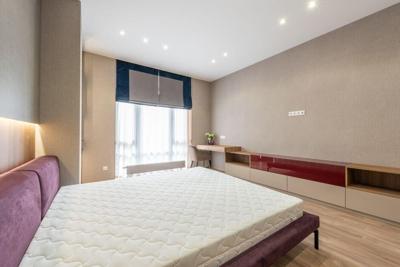

Your mattress affects more than how sleepy you feel during first period or your morning meeting. It shapes your posture, your mood, and even how your bedroom functions as a real place to recover. Practical concerns like seasonal temperature swings, room size, comfort preferences, and long-term value can all influence the decision. Picking the right mattress is less glamorous than a kitchen renovation, but your back will probably argue it matters more.
Your Mattress Affects More Than Sleep
You probably think of a mattress as a sleep product, which is fair, but it also plays a big role in how your body handles everyday stress. If you wake up stiff, sweaty, or weirdly tired after eight hours, your mattress may be doing more sabotage than support.
A poor fit can affect:
- Spinal alignment
- Pressure on your shoulders and hips
- Temperature regulation overnight
- Motion transfer if you share a bed
- How often you wake up during the night
In real homes, this turns into regular problems. Maybe your lower back complains every morning. Maybe your partner moves once, and the whole bed reacts like a trampoline. Small sleep issues stack up fast. Over time, your bedroom stops feeling restful and starts feeling like a place where you negotiate with discomfort.
Start With Your Sleep Style, Not Marketing Hype
Mattress ads love dramatic language. Cloud-like. Zero-gravity. Game-changing. It can sound impressive until you realize none of that tells you whether the bed supports your body.
Start with how you actually sleep:
- Side sleepers usually need more pressure relief
- Back sleepers often need balanced support and contouring
- Stomach sleepers usually do better on a firmer surface
- Combination sleepers need responsiveness for easy movement
Body weight matters too. A mattress that feels medium-firm to one person may feel much softer to someone else. If you deal with shoulder pain, hip pain, or overheating, those details should lead the decision.
A smart first move is testing options from a specialized provider like Custom Comfort Mattress, where the focus is on fit, construction, and sleep performance rather than flashy claims and showroom theatrics.
Materials Change the Feel, Performance, and Lifespan
Not all mattresses are built the same, even when labels make them look almost identical. The materials inside affect firmness, bounce, airflow, durability, and how the bed ages after a few winters and humid summer nights.
Here are the main categories:
- Memory foam: contours closely, reduces motion transfer, can retain heat
- Latex: responsive, breathable, durable, usually pricier
- Innerspring: bouncy, supportive, often cooler, less pressure relief
- Hybrid: combines coils with foam or latex for mixed performance
If you sleep hot, airflow matters more than fancy branding. If you share a bed, edge support and motion isolation deserve attention. If you want a mattress that lasts, density and build quality are not boring specs. They’re the whole plot.
A mattress is not just about what feels nice for two minutes in a showroom. It needs to keep doing its job after hundreds of nights.
Firmness Is Personal, Not Universal
People talk about firmness like it’s objective, but it really depends on your body, sleep position, and comfort preferences. One person’s perfect medium is another person’s “absolutely not.”
A useful way to think about firmness:
- Soft: more sink, better for lighter side sleepers
- Medium: balanced feel, works for many sleep styles
- Firm: more support, often better for stomach sleepers or heavier bodies
You also need to separate firmness from support. A mattress can feel soft on top and still support your spine well. It can also feel firm and still create pressure points if the comfort layers are poorly designed.
Testing matters, but so does asking better questions. How does it feel after fifteen minutes, not fifteen seconds? Does your lower back stay neutral? Can your shoulders relax? Your body usually gives a clearer review than the sales copy does.
Don’t Ignore Motion Transfer, Edge Support, and Cooling
These details sound technical until they ruin your sleep. Then suddenly they’re very personal.
Motion transfer matters if you sleep with a partner, a kid who wanders in at 3 a.m., or a pet that believes the bed belongs to them. Better motion isolation means fewer disturbances when someone rolls over.
Edge support is important if you:
- Sit on the side of the bed often
- Need easier entry and exit
- Share the mattress and use the full surface
Cooling features can include breathable covers, open-cell foam, latex, and coil systems that allow more airflow. If your room gets warm in summer, these features can make a noticeable difference.
A mattress that checks every buzzword box but traps heat and dips at the edges won’t feel premium for long. Sleep quality often depends on these less flashy performance details.
Match the Mattress to Your Bedroom and Lifestyle
A mattress should work with your actual life, not some ideal version of it. If you read in bed, edge stability matters. If you work odd hours, deep pressure relief and motion control may matter more. If you’re furnishing a family home, durability becomes a budget issue, not just a comfort issue.
Keep your setup in mind:
- Platform beds may change how a mattress feels
- Slatted bases need proper spacing for support
- Adjustable bases require compatible construction
- Bedroom temperature affects comfort over time
Design also plays a role. In a well-planned bedroom, your mattress supports the whole point of the space: recovery, quiet, and consistency. It is not the most visible feature in the room, but it may be the one you notice most by morning.
A beautiful bedroom with a bad mattress is basically excellent staging for poor sleep.
A Better Mattress Is a Long-Term Home Upgrade
People usually think about home upgrades in visible terms: floors, lighting, paint, storage. Those changes matter, but sleep quality influences how you experience every one of them. When your mattress supports you properly, your room becomes more functional, your nights more restorative, and your mornings less irritating.
Before you buy, compare:
- Construction quality
- Sleep trial length
- Warranty coverage
- Support for your sleep position
- Temperature performance
- Real comfort after extended use
A mattress is one of the few home purchases that affects you every single day. Choose one with the same care you’d give any major investment in your living space. Your back, your energy, and your patience with the world may all improve a little. Not bad for something you spend half your life on.


(0) comments
We welcome your comments
Log In
Post a comment as Guest
Keep it Clean. Please avoid obscene, vulgar, lewd, racist or sexually-oriented language.
PLEASE TURN OFF YOUR CAPS LOCK.
Don't Threaten. Threats of harming another person will not be tolerated.
Be Truthful. Don't knowingly lie about anyone or anything.
Be Nice. No racism, sexism or any sort of -ism that is degrading to another person.
Be Proactive. Use the 'Report' link on each comment to let us know of abusive posts.
Share with Us. We'd love to hear eyewitness accounts, the history behind an article.