
A beautiful home can forgive a lot. A slightly scuffed floor, a cabinet door that needs adjusting, even that light fixture you have been meaning to replace for three years.
Water is less forgiving.
A slow leak beneath a sink, an aging supply connection, a toilet that quietly runs or a sudden change in water pressure can begin as a minor annoyance and become a much larger repair if it goes unnoticed.
That is why good plumbing maintenance is less about becoming your own plumber and more about knowing what deserves your attention.
The most useful routine is surprisingly simple: inspect visible plumbing for moisture, watch for changes in pressure and drainage, know where the main water shutoff is located, pay attention to the water heater and investigate leaks instead of hoping they disappear.
A few well-chosen tools can make that easier, but the products should support good maintenance habits rather than replace them.
Start With the Plumbing You Can Actually See
Much of a home's plumbing disappears behind walls and beneath floors, but there is still plenty homeowners can inspect without dismantling anything.
Look beneath kitchen and bathroom sinks for damp cabinetry, staining, corrosion around fittings or small puddles. Check around toilets, dishwashers, washing machines and the water heater. Run faucets while looking at the pipes below, and pay attention to anything that appears newly wet.
The EPA WaterSense home-maintenance guidance recommends routinely checking for leaks and watching for moisture around plumbing connections. It also suggests comparing water use over time because an unexpected increase can sometimes reveal a leak that is not immediately visible.
This matters because small leaks have a habit of damaging everything around them before they become dramatic enough to demand attention.
FINE has explored that issue in more detail in The Importance of Getting a Leaking Shower Fixed as Soon as Possible, where identifying the actual source of the water is the first step before deciding whether a simple repair or professional intervention is necessary.
Smart Leak Detection Can Add Another Layer of Protection
Regular visual inspections still matter, but technology can help when nobody is there to notice a problem.
The EPA's guidance on leak-detection and flow-monitoring devices explains how these systems can identify unusual water use, detect unexpected moisture and, in some cases, activate a shutoff valve to reduce water loss.
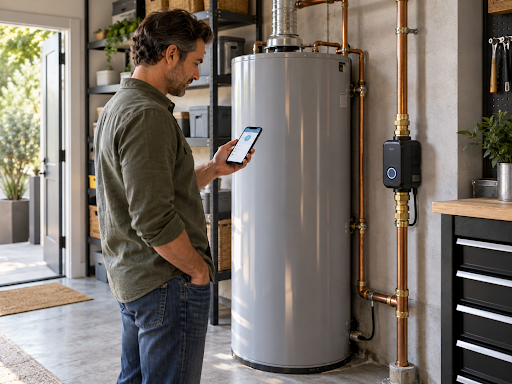
A system such as the Moen Flo Smart Water Monitor and Shutoff is one example of how this technology can work. Installed on the home's water line, it monitors water activity and can automatically shut off the supply when it identifies a potentially serious leak. Homeowners can also monitor and control the system through the accompanying app.
That level of protection will not be necessary for every home. It becomes more compelling, however, for second homes, frequently vacant properties or houses where a plumbing failure could go unnoticed for hours or days.
It also complements rather than replaces common sense. A smart valve cannot repair a failing supply line. What it may do is reduce how much water escapes before somebody discovers the problem.
For more on what happens when a plumbing problem becomes urgent, FINE's guide to The Most Common Plumbing Emergencies at Home and How You Should Respond covers burst pipes, major leaks and other situations where acting quickly matters.
Pay Attention to Water Pressure
Most homeowners develop a sense of how the water in their house normally behaves without ever measuring it.
That makes an obvious change worth investigating.
If pressure drops at one faucet, the issue may be something as simple as mineral buildup in an aerator. If the change affects several fixtures, comes and goes or suddenly becomes unusually strong, it deserves a closer look.
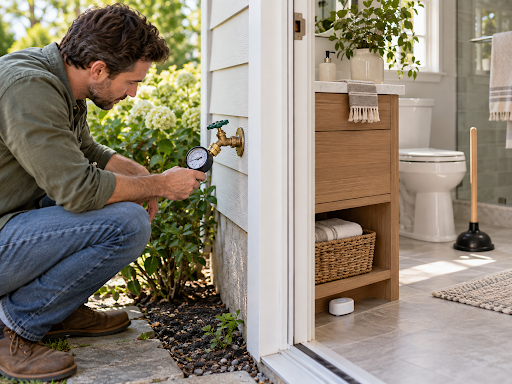
EPA WaterSense says incoming residential water pressure generally performs best between 45 and 60 psi and recommends checking service pressure with a pressure-test gauge connected to a hose bibb. If pressure is substantially higher, professional adjustment or installation of a pressure-regulating valve may be appropriate.
This is one of the rare situations where a very simple tool can produce genuinely useful information.
For example, the Watts IWTG Water Pressure Test Gauge attaches to a standard 3/4-inch hose connection and measures supply pressure. Its secondary indicator records the highest pressure reached, which can also help reveal pressure surges rather than providing only a single snapshot.
You do not need to test the plumbing every weekend. The gauge is useful when something has changed or when you want to establish a baseline rather than relying solely on how powerful the shower feels.
Treat Slow Drains as Early Warnings
A slow drain is surprisingly easy to tolerate.
First the sink empties a little more slowly than usual. Then the shower begins holding water around your feet. Eventually the inconvenience becomes a proper blockage.
Addressing the problem earlier is usually simpler.
Start with accessible causes. Remove hair from shower or sink stoppers, clear visible debris and clean strainers. For an ordinary toilet clog, a properly designed plunger should usually come before chemical solutions.
The Korky BEEHIVE Max Toilet Plunger, for example, uses a flexible beehive-shaped head designed to create a seal with both traditional and newer high-efficiency toilet outlets. That matters because modern toilet drain openings are not always shaped like older round outlets, and a poor seal makes plunging unnecessarily difficult.
This is less a product recommendation than an argument for having the correct basic tool before there is water rising toward the rim.
Repeatedly reaching for harsh chemical drain cleaners is not a maintenance plan. Persistent clogs, repeated backups or several slow drains at once can indicate a problem farther down the system.
Those are situations where diagnosis becomes more important than force.
Be Careful About What Goes Down the Drain
Some of the easiest plumbing repairs are the ones homeowners never create.
In the kitchen, keep cooking grease and fats out of the drain. A garbage disposal can handle appropriate food scraps, but it does not turn the plumbing into an all-purpose waste system.
The same restraint applies in the bathroom.
Hair-catching strainers can help reduce buildup in shower and sink drains. Toilets should not be treated as convenient trash cans simply because a product appears capable of flushing.
Preventative plumbing maintenance often comes down to placing less stress on the system in the first place.
Do Not Ignore the Water Heater
The water heater tends to become invisible until the morning it stops producing hot water.
Occasionally look around the unit for moisture, corrosion, aged gaskets, loose connections or other visible changes. Pay attention to unusual noises and any noticeable change in hot-water performance.
WaterSense recommends regularly inspecting water heaters for leaks, corrosion and connection issues and following the manufacturer's instructions for maintenance. Sediment buildup and other maintenance needs can vary by system, which makes the owner's manual more useful than a universal checklist.
Storage tanks, tankless units and heat-pump water heaters are not maintained identically.
If you notice pooling water, significant corrosion or repeated performance problems, call a qualified professional rather than experimenting with gas, electricity or pressurized hot water.
Know Where the Main Water Shutoff Is
This may be the least glamorous feature in your home worth finding today.
Every adult in the household should know where the main water shutoff is located and how it operates.
Do not make the first search for it while water is crossing the kitchen floor.
Its location varies by house and climate. It may be in a garage, basement, utility area or near the point where the supply line enters the building. Individual toilets, sinks and appliances generally have their own local shutoffs as well.
Knowing how to stop the flow quickly can make a significant difference when a supply line or pipe fails.
If the valve is difficult to reach, heavily corroded or does not appear to operate correctly, that is something worth addressing before an emergency rather than during one.
Older Homes Deserve a Little More Attention
Age alone does not mean a plumbing system is failing, but older homes can contain a mixture of original pipes, later repairs, replacement fixtures and decades of alterations.
That makes changes particularly worth noticing.
Discolored water, corrosion, unexplained pressure problems, repeated leaks or recurring drain issues should not simply be accepted as the personality of an older house.
During renovations, it is also worth remembering that new tile, fixtures and cabinetry do not correct problems hiding behind the finished surfaces. If walls or floors are already being opened, it can be an opportune time to evaluate accessible plumbing and replace visibly deteriorated components where appropriate.
The most attractive room in the house will not feel particularly luxurious if a hidden leak is slowly damaging it.
Know What You Can Handle and When to Stop
Homeowners can perform plenty of useful plumbing maintenance without pretending to be plumbers.
You can inspect visible connections, monitor the water bill, clean faucet aerators, clear accessible hair and debris from drains, use a proper plunger, check water pressure and familiarize yourself with shutoff valves.
You can also use the water meter as a basic leak-detection tool. WaterSense recommends reading it during a period when no water is being used and checking it again two hours later. If the reading changes despite no intentional water use, the house probably has a leak that warrants investigation.
What homeowners should not do is allow DIY confidence to turn into guesswork.
Persistent sewer odors, several clogged drains at once, water appearing inside walls or ceilings, unexplained whole-house pressure changes, badly corroded plumbing or a leak whose source cannot be identified all justify professional attention.
The same applies to work involving gas, significant alterations to supply or drain lines, concealed plumbing or anything subject to permitting and code requirements.
The goal of DIY maintenance is to catch a problem early—not to turn a manageable repair into an accidental renovation.
The FINE Take
Good plumbing maintenance is mostly about noticing change.
Open the cabinet beneath the sink occasionally. Pay attention when water pressure feels different. Deal with the drain that becomes a little slower every month. Look at the water heater rather than simply walking past it. Know where the shutoff valve is before somebody urgently asks where the shutoff valve is.
Technology can help. A smart shutoff system may provide another layer of protection, a simple pressure gauge can replace guesswork with a useful measurement, and the right plunger can solve a straightforward clog without unnecessary chemicals.
But the most important plumbing tool in the house is still attention.
A well-maintained home is not one in which nothing ever goes wrong. It is one where small problems are noticed early enough that they have a chance to remain small.
That may not be the most glamorous side of homeownership, but neither is discovering water dripping through the ceiling.

(0) comments
We welcome your comments
Log In
Post a comment as Guest
Keep it Clean. Please avoid obscene, vulgar, lewd, racist or sexually-oriented language.
PLEASE TURN OFF YOUR CAPS LOCK.
Don't Threaten. Threats of harming another person will not be tolerated.
Be Truthful. Don't knowingly lie about anyone or anything.
Be Nice. No racism, sexism or any sort of -ism that is degrading to another person.
Be Proactive. Use the 'Report' link on each comment to let us know of abusive posts.
Share with Us. We'd love to hear eyewitness accounts, the history behind an article.